My son didn’t ask for my pension. He simply announced it was happening. Then he came back for his free Friday dinner and found his wife screaming in my empty doorway.
Marcus sat at my kitchen table that gray Thursday afternoon, stirring his coffee with calm patience. He didn’t ask if I needed help. He didn’t ask if I was struggling. He just told me my life now belonged to him.
I looked at his face and searched for the little boy I had carried through fevers, school projects, and every heartbreak his father left behind. That boy was gone.
“If you think it’s best,” I said quietly.
He patted my hand like I was a nervous puppy. “You’ll see. This will make things easier for everyone.”
After he left, I walked through my house and saw it the way they did — not a home, but a free restaurant and lounge.
The next day I sold almost everything in the living room.
By Friday, only the kitchen table and one chair remained.
At 6:30 the key turned. Lauren screamed. Marcus stormed in.
I told them there was no dinner tonight.
His voice dropped. “Maybe this proves my point. Maybe you’re not in the right condition to make decisions anymore.”
I told them both to leave.
That night I sat in my nearly-empty house and laughed once — not because anything was funny, but because after thirty-six years I finally stopped losing myself to keep him.
I thought about the boy born in a January snowstorm, the father who vanished, the nights I worked two jobs while he slept on my hip. I had given him everything — debt-free college, a down payment on his house, three years of free Friday dinners — and he still wanted more.
On Monday he returned with power-of-attorney papers that would give him total control over everything I owned, even if I became unable to fight back.
I asked for time to read them.
That night I couldn’t sleep. The next morning I went to the bank and asked for six months of statements.
That’s when I found the $1,500 cash withdrawal I never made.
The secret credit card in my name with $4,500 in charges near his neighborhood.
The utility account in my name at his address that had wrecked my credit.
Every piece of evidence pointed straight to Marcus.
I hired Mr. Garrett Kline, a quiet attorney above a bakery. He looked at my folder and said the words I had been avoiding: “This is not a family disagreement. This is systematic financial exploitation.”
Over the next week I changed banks, froze my credit, filed fraud reports, and copied every document. My neighbor Mrs. Langley took a sealed envelope with copies “just in case.”
Marcus tried silence. He thought loneliness would break me.
Instead I cooked dinner for one, slept better than I had in years, and waited.
When he finally called demanding I come over, I told him I had found the withdrawal, the credit card, the utility account.
He came to my door anyway. I kept the chain on and held up my folder.
“My attorney has copies. Mrs. Langley has copies. The bank has reports. Contact me again outside legal channels and I’ll document that too.”
For the first time, my son looked afraid of me.
The court complaint was simple: more than twenty-two thousand dollars in fraud, plus damages.
When he was served, the voicemails went from rage to begging to threats. Then he posted an old photo of us online claiming I was a toxic parent with mental decline.
But the court filing was public. Facts don’t lie.
His lawyer quickly pushed for settlement. I agreed on one condition he fought harder than the money itself: he had to publicly correct the lie on the same platform where he had smeared me.
The statement went up — stiff, lawyer-written, but crystal clear. He admitted unauthorized access. He admitted the accounts. He admitted regret.
I received full repayment, damages, and my legal fees.
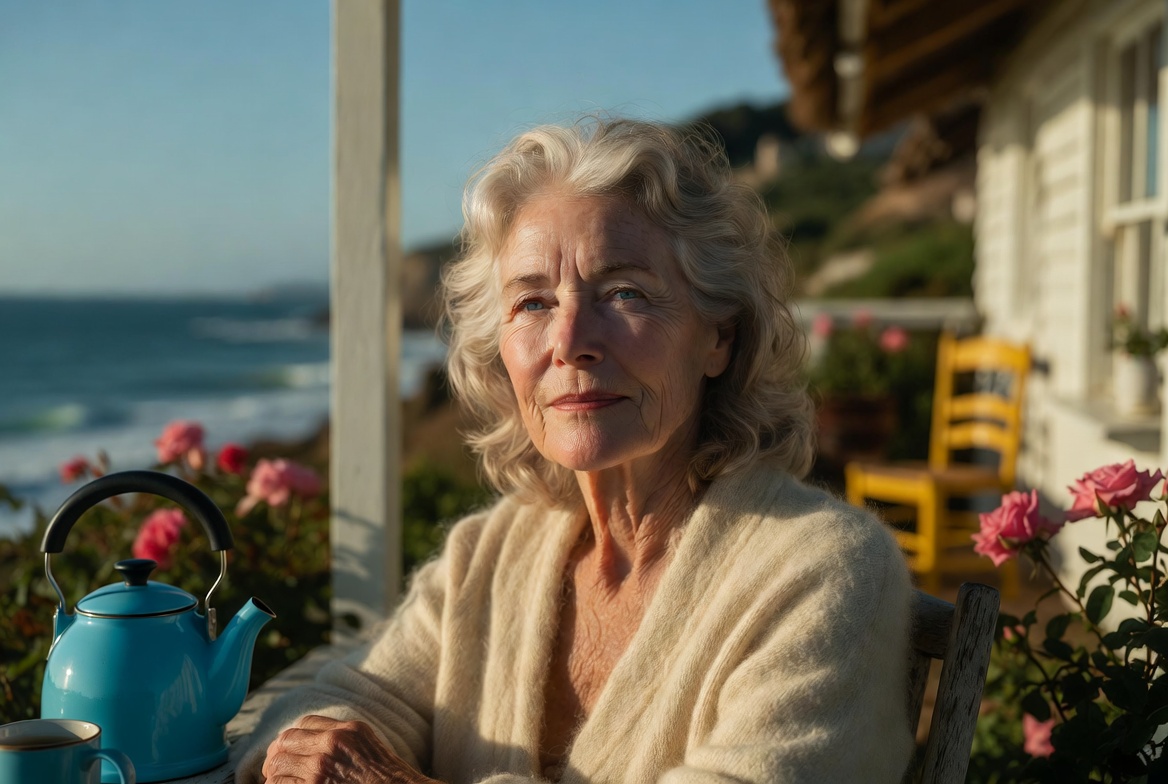
Then I moved three hours away to a small coastal cottage with pale siding, a narrow porch, and a garden just big enough for roses, tomatoes, and a birdbath. I bought a bright blue kettle, two mugs, and one yellow chair for the porch.
Only one chair at first. Because I wanted to remember what it felt like to choose who sits beside me.
Marcus called after the final payment cleared. His voice sounded small.
“I’m sorry. I miss you.”
I closed my eyes.
“I miss who I thought you were,” I said. “I’m still your mother. But I am no longer your resource.”
He asked what I wanted from him.
“Nothing,” I told him. “No money. No visits. No performances of guilt. I hope you become a better man one day, Marcus. But you’ll do it far away from me.”
I cried afterward. Peace doesn’t mean your heart turns to stone. I still remember the little boy running across the school parking lot shouting “Mom, wait!” I loved every version of him I raised.
But I no longer confuse the child I loved with the man who tried to erase me.
These days I wake early, make coffee in my blue kettle, and drink it on the porch while the light changes over the water. I volunteer at the library. When another older woman whispered that her nephew “just needed access to her account to help,” I gently gave her Mr. Kline’s number and told her: being careful is not being unkind.
I spent thirty-six years terrified of losing my son.
What I got back was my pension in my own account, new locks on my doors, a garden that’s blooming beautifully, and every Friday evening the quiet, radical freedom of cooking exactly what I want.
My name is Vivian Hayes. I am sixty-four years old. I live by the sea.
And I finally opened the most important account of my life — the one where only I hold the key.