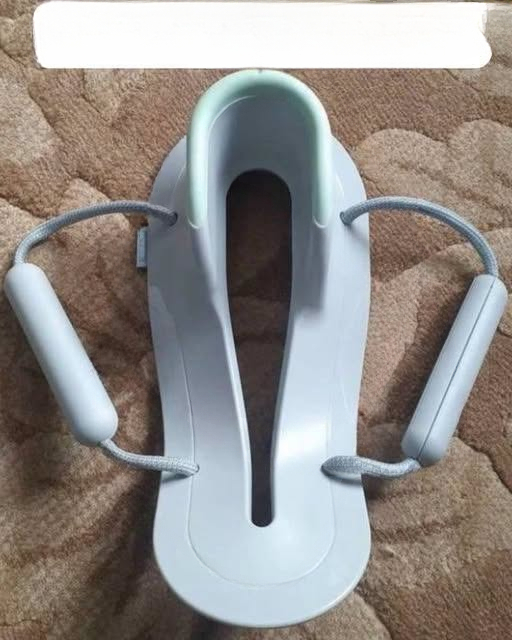
We have all experienced that sudden moment of sheer panic while tackling a deep bedroom closet purge. You pull out a storage bin, reach past a tangle of winter scarves, and your fingers close around a bizarre piece of curved metal and molded plastic that looks like a miniature tractor seat. Finding a strange mystery gadget in your drawer is practically a rite of passage for anyone sharing living space with another human being.
Actually, you are not alone if you hesitate before asking your partner what on earth they bought at two in the morning. Before you post a blurry snapshot to an online forum or quietly hide it back beneath your wool socks, let us break down what that odd curved contraption really is, why it ended up in your apartment, and what you should actually do with it.
Decoding the Mystery: Why Your Drawer Holds a Secret Workout Tool
Most mysterious plastic-and-steel contraptions stashed inside apartment drawers turn out to be compact home fitness accessories. Specifically, two-handled curved devices are almost always targeted core trainers or portable resistance gliders. Impulse buys from late-night social media feeds happen to the best of us, especially when sleek video demonstrations promise flat abs with five minutes of effortless floor rocking.
However, these lightweight accessories often present a distinct set of design quirks that confuse anyone who discovers them out of context:
- Ergonomic Contour Plates: The curved center plate is engineered to cup your lower back, knees, or chest during bodyweight crunches and rolling planks.
- Dual High-Tension Grips: Rubberized or foam handles on either side provide stability, preventing wrist strain during repetitive floor motions.
- Internal Spring Mechanisms: Many compact toners hide internal steel tension bands that resist movement when squeezed between the thighs or palms.
- Smooth Floor Gliders: Underside plastic skids are made to slide across low-pile carpets or hardwood floor protector mats.
Consequently, when separated from its original retail box and user manual, the device loses all obvious context. It ends up looking less like an exercise machine and more like an experimental kitchen utensil.
3 Common Compact Fitness Tools Disguised as Mystery Junk
To help you figure out what you are holding without starting an awkward conversation, let us cross-reference your mystery item against the three most popular small-space core devices on the market today.
1. The Ergonomic Rocking Crunch Support
This design features a sweeping steel arch with dual top grips and a padded head rest. Users lie flat on their back, hold the upper handles, and rock forward to guide the spine during abdominal crunches without straining delicate neck muscles.
2. The Dual-Wheel Ab Roller with Resistance Straps
If the device has a center rolling cylinder flanked by two rubber handles and detachable elastic cables, it is an ab wheel system. These lightweight tools deliver intense core stabilization work, but they quickly migrate into bottom drawers when users realize how challenging proper form really is.
3. The Multi-Position Grip Board Accessory
Some gadgets feature curved handles that click into color-coded slots on a fold-flat baseboard. These modular push-up handles allow users to target specific muscle groups, including triceps, lats, and anterior deltoids, without putting direct pressure on flat wrists.
The 4-Step Action Plan: Keep, Sell, or Toss?
Now that you know what that strange contraption is, you face an immediate organizing decision. Do you slide it back into the abyss, or do you clear up precious drawer real estate once and for all? Here is a simple, no-fuss plan to help you and your partner decide.
Step 1: Test Its Functional Value
First, unroll a high-density non-slip yoga mat on the floor and give the gadget an honest three-minute test run. Check whether the movement feels smooth and supportive, or if it pinches your wrists and clinks awkwardly against the floor.
Step 2: Check the Resale Value
Popular brand-name fitness gear often holds surprising resale value on neighborhood marketplaces. For instance, branded core wheels and portable push-up boards from reputable fitness lines can easily fetch $15 to $30 when listed in clean condition with clear photos.
Step 3: Upgrade to Multi-Use Equipment
If single-purpose plastic gadgets are eating up your closet space, consider swapping them for versatile, space-saving alternatives. A set of color-coded fabric loop resistance bands and a pair of compact neoprene hex dumbbells can replace a dozen cheap plastic infomercial devices while occupying a fraction of the footprint.
Step 4: Establish Dedicated Modular Storage
Instead of tossing miscellaneous fitness gear into clothes drawers, introduce clear stackable acrylic storage bins with latching lids. Labeling your bins keeps workout gear, seasonal linens, and everyday wardrobe essentials in their own dedicated zones.
Simple Habits to Stop Drawer Clutter Before It Starts
Preventing your dressers from turning into a graveyard of abandoned hobbies comes down to setting straightforward boundaries for impulse purchases. For example, implementing a 72-hour cooling-off rule before buying trending fitness accessories online saves hundreds of dollars every year.
Additionally, keeping a shallow woven basket inside your bedroom closet gives you a clean drop zone for small items you are actively testing. If you do not pull an accessory out of the basket for thirty consecutive days, you have your answer: clean it, pack it, and pass it along to someone who will actually put it to good use.
Discovering a strange mystery gadget in your drawer might give you a funny story to share over dinner tonight, but it also gives you the perfect excuse to streamline your storage. Take a quick look through your closets, clear out the forgotten impulse buys, and reclaim your living space today.