
Picture a calm and cozy maternity room inside a hospital. The whole space feels warm and inviting, like the perfect spot for those first precious moments with a new baby. A young mom is resting in bed, gently holding her newborn close to her chest while she smiles softly. Beside her stands the doctor, checking that everything is okay with both of them. The room is tidy and organized, with medical tools neatly put away and bright lights casting a gentle glow on the walls.
Most people who look at this picture never suspect a thing is wrong. It all feels so real and natural that your brain just goes along with it without question. Your eyes lock onto the baby, the mother’s happy expression, or the overall tender moment. Hardly anyone bothers to scan the background right away.
Yet right there in the image is one small thing that slips past almost everyone at first glance.
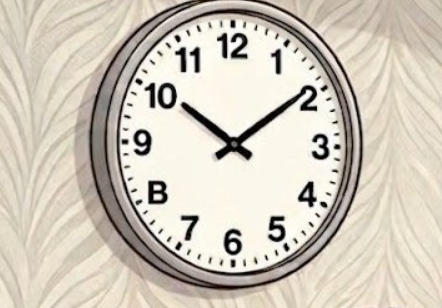
At first the clock on the wall seems completely ordinary, hanging there quietly like any other hospital clock. But take a second look and you’ll see the problem. Where the number 8 should be, the clock has the letter B instead.
It’s such a little change that plenty of folks miss it completely even after staring for a bit.
Why does our brain fall for this so easily?
The truth is our minds rely heavily on what we expect to see. When we spot a clock, we automatically assume the numbers are right because that’s how clocks have always looked. The letter B is close enough in shape to an 8 that, in a quick glance, the brain fills in the gap without thinking twice. We don’t actually read every single number one by one. Instead our mind takes shortcuts based on patterns we’ve seen a thousand times before.
That’s why so many people can study the picture for several seconds and still see nothing unusual. Our brains are wired to work fast rather than perfectly. They skip over tiny details to save time and energy.
In psychology this is called inattentional blindness. It means we can stare straight at something out of place and still not notice it because our attention is focused somewhere else. Really obvious things can become invisible when the brain decides what it should be seeing.
A classic example comes from a famous study where people watched a video of folks passing a basketball back and forth. They were told to count the passes, but most completely missed a person in a gorilla suit walking right through the middle of the scene. Their focus was locked on the ball, so the gorilla simply didn’t register.
Visual puzzles like this one work exactly the same way as optical illusions. They push you to look past your usual habits and actually pay attention. Even though it seems simple at the start, it reveals a lot about how human perception really works.
Another reason these puzzles are so popular is the rush you get when you finally spot the hidden mistake. At first everything looks totally normal, which is why it tricks you. But once you catch the error the whole image feels different. What was invisible suddenly jumps out.
These kinds of challenges also show how much our first impressions can shape what we think we know. We believe we’ve taken in the full picture instantly, yet some key details can hide in plain sight because of the assumptions we make.
Spending time on observation exercises like this one builds patience and sharper focus. You learn to slow down, really look, and avoid jumping to conclusions based on what you expect. Some experts even say puzzles like these can help train your mind and improve attention skills over time.
Patience over brainpower
The coolest part is that raw intelligence alone won’t always solve it. Plenty of smart people miss the answer because it isn’t about knowing facts. It’s about noticing the small stuff. The person who takes their time and examines every corner of the image usually spots the B much faster than someone relying on a quick gut feeling.
In the end, that single letter B on the clock face is a tiny error with a big message. Our brains love making assumptions to keep life simple, but those shortcuts aren’t always accurate. Sometimes stepping back and looking more carefully lets us see things we would have missed otherwise.
And that’s exactly why puzzles like this never get old. They remind us that even in the most everyday scenes, something unexpected can be sitting right there waiting for the right pair of eyes to catch it.