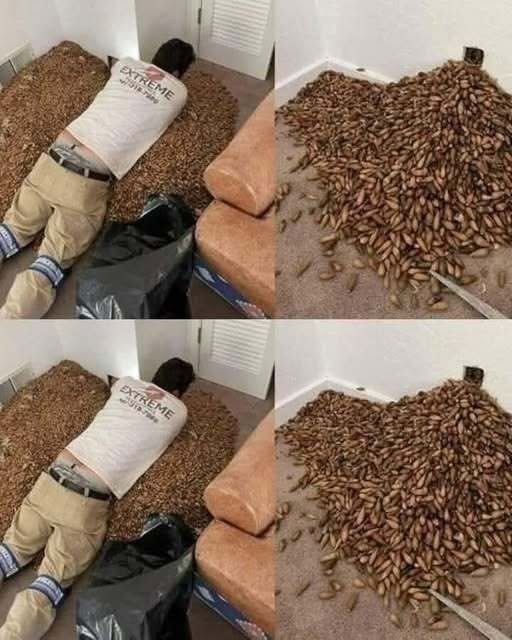
He Opened the Wall and Found Thousands of Acorns
A strange smell in your house is easy to ignore for a day or two. Maybe something spilled. Maybe the trash needs taking out. Maybe an old piece of food somehow rolled behind the furniture. But when a musty, earthy odor keeps returning, especially from one particular wall, it is worth finding the source.
That is exactly what happened in this bizarre home mystery. The smell seemed to be coming from a corner of the living room, and nothing about the room looked obviously wrong. There was no dramatic leak, no visible pile of debris, and no obvious clue that anything unusual was hiding behind the wall.
Then came the knock.
The homeowner noticed that part of the wall sounded hollow. Curious and determined to find the cause, he opened the panel. What happened next turned an ordinary household problem into a story he was unlikely to forget.
Brown objects began spilling out.
Not a handful. Not a dusty pocket of debris. Acorns.
And according to the account, there were thousands.
The Smell Was the First Warning
Musty odors can have plenty of ordinary causes. Damp insulation, hidden moisture, old building materials, mold growth, pests, or trapped debris can all create unpleasant smells inside a home.
That is why a persistent odor should not automatically be blamed on one thing. Instead, homeowners can start by checking the obvious areas: under sinks, around appliances, near baseboards, inside cabinets, and around exterior walls.
In this case, however, the smell appeared to point toward the wall itself.
The homeowner reportedly followed the odor until he reached a corner of the living room. He listened, knocked, and noticed the hollow sound. That small clue was enough to suggest that something unusual might be happening behind the surface.
Then the Wall Gave Up Its Secret
Opening a wall is not something to do casually. Electrical wiring, plumbing, insulation, and structural components can all be hidden behind drywall or paneling. If you ever suspect something is inside a wall, a qualified contractor or pest professional can inspect it without creating unnecessary damage.
Here, the wall was opened, and the surprise was immediate.
A cascade of brown objects poured onto the floor. At first glance, they looked like dirt or ordinary debris. A closer look revealed something much stranger: acorns.
The sheer quantity was the shocking part. The story describes thousands of them packed inside the wall cavity, turning what appeared to be a household maintenance problem into an unusual wildlife discovery.
How Could Acorns Get Inside a House?
Woodpeckers are known for storing food in cavities and other protected spaces. The story’s pest control inspection concluded that a family of woodpeckers had been using openings in the home’s exterior to move acorns indoors.
That detail explains why the homeowner could have missed the problem for so long.
A tiny gap in siding or another exterior opening may not look important from ground level. However, wildlife can take advantage of surprisingly small access points, especially when the location provides shelter from weather and predators.
Once one bird finds a useful storage spot, repeated visits can turn a hidden cavity into a sizable food cache.
Why the Wall Stayed Quiet
A hidden food stash does not necessarily make a house sound like a wildlife documentary. Most of the activity can happen while homeowners are in other rooms or away from the house.
There may also be no obvious visual clue indoors. The wall can look completely normal while the cavity behind it gradually fills with stored material.
That is one reason unusual smells, scratching sounds, unexplained holes, or recurring debris near exterior walls deserve attention.
The Cleanup Was Bigger Than Anyone Expected
Once pest control professionals inspected the area, the cleanup reportedly took hours. The account estimated that more than 700 pounds of acorns had accumulated inside the wall.
That number is what makes the story so memorable. A small opening in siding had apparently become the entrance to a massive hidden pantry.
Removing the material was only part of the job, though. A proper cleanup also needs to address how wildlife gained access in the first place. Otherwise, the same problem can return.
What Homeowners Should Check
If you discover signs that birds or other wildlife are entering a wall, resist the temptation to simply seal the first hole you see. First, make sure animals are no longer inside, because trapping wildlife behind a closed opening can create a much bigger problem.
Instead, inspect the exterior for possible entry points.
- Look for gaps around siding, vents, roof edges, and trim.
- Check for damaged screens or loose exterior panels.
- Watch for repeated bird activity around one section of the house.
- Look for droppings, nesting material, or food debris near openings.
- Have a pest or wildlife professional inspect suspicious wall cavities.
Common Mistakes That Can Make It Worse
The first mistake is assuming every strange smell comes from a drain or refrigerator. Those are common sources, but a smell that repeatedly seems strongest near one wall deserves a closer look.
Another mistake is cutting into drywall without checking what is behind it. A stud finder can help locate framing, but it cannot reliably tell you where every wire or pipe is located. For that reason, professional inspection is often the safer choice.
There is also the cleanup itself. Old nesting material, droppings, and other wildlife debris can require careful handling, so homeowners should avoid disturbing a large hidden accumulation unnecessarily.
A Tiny Opening Can Become a Huge Problem
The strangest part of this story is not really the acorns. It is how an ordinary house can hide an extraordinary amount of activity behind a surface that looks completely normal.
A small exterior gap may seem harmless. A little scratching may sound like nothing. A faint smell may be easy to dismiss.
Put those clues together, however, and they can tell a very different story.
In this case, what looked like a possible mold, plumbing, or household maintenance issue turned out to be a wildlife storage operation hidden inside the wall. The reported 700-pound acorn stash is an especially wild reminder that nature does not always stay outside where we expect it to.
The Takeaway for Homeowners
If your home suddenly develops a persistent musty smell, do not panic—but do not ignore it either. Start with simple checks, pay attention to where the odor is strongest, and look outside for signs of wildlife activity.
Most importantly, do not start tearing open walls blindly. If the evidence points to something living inside a cavity, a qualified wildlife or pest professional can identify the entry point, remove the problem safely, and help prevent another animal from moving into the same space.
And if you ever hear a hollow knock followed by the unmistakable sound of something pouring out of your wall, well, you may want to step back before assuming it is just dust.
Sometimes a house has a secret.
Sometimes that secret is thousands of acorns.