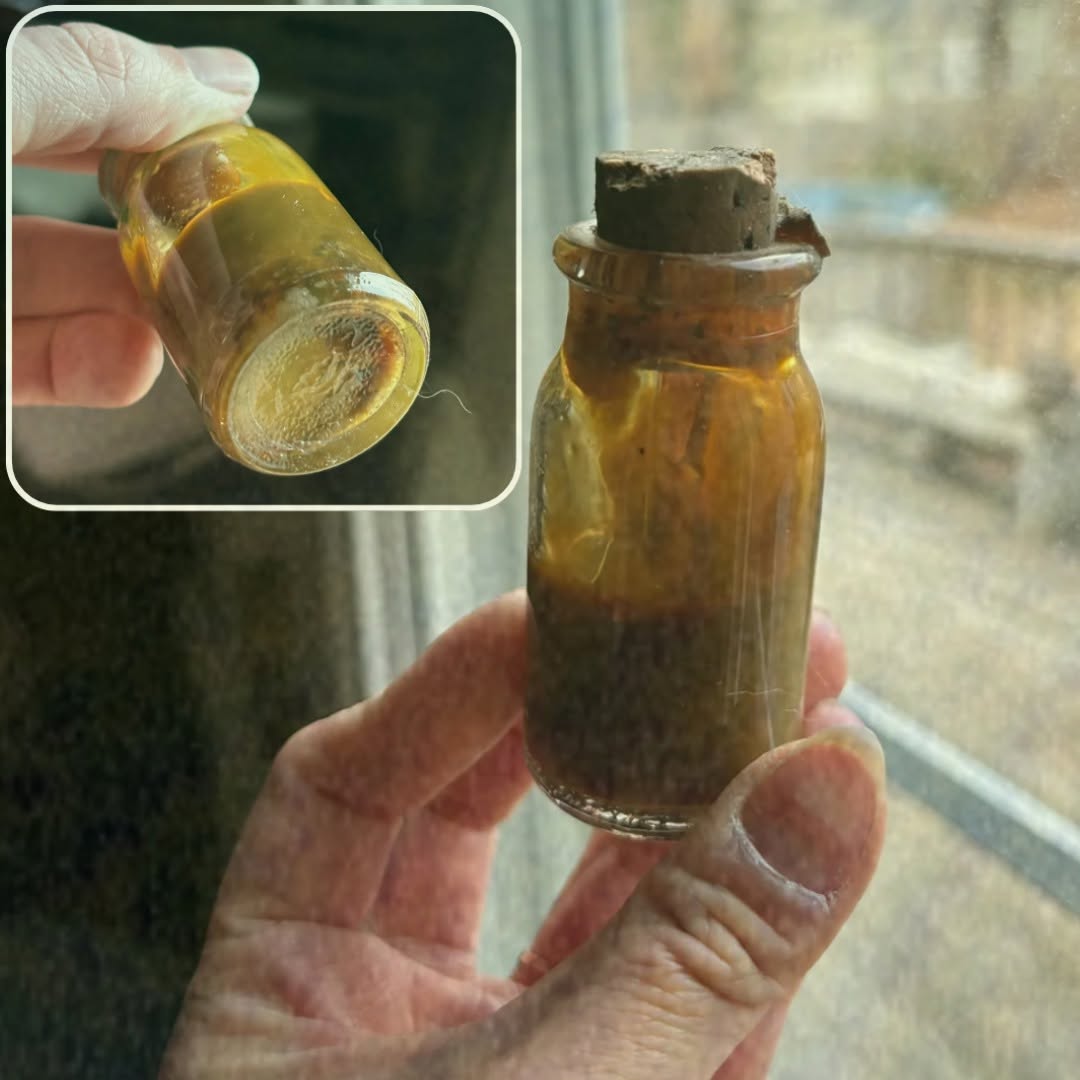
Antique Glue Bottle Found Inside an 1886 Kitchen Wall
Finding something hidden inside an old wall is one thing. Finding a tiny glass bottle with a cork stopper and a little applicator attached to it is another. In an 1886 New England home, this antique glue bottle looks like a forgotten piece of everyday life that somehow survived for more than a century.
At first glance, it could be almost anything. A medicine bottle? Ink container? Cleaning product? However, the combination of its small size, stopper, and unusual cotton-tipped wire points strongly toward a much more practical job: applying liquid glue.
And honestly, that tiny applicator may be the most interesting part.
So, What Was This Little Bottle Used For?
The most likely answer is an old-fashioned liquid adhesive bottle. Before today’s plastic squeeze bottles and glue sticks became common, household adhesives could be kept in small glass containers and applied with a brush, swab, or other built-in tool.
The basic idea was wonderfully simple. Open the cork, use the attached applicator to pick up a small amount of adhesive, and put it exactly where it was needed.
That could have meant repairing a torn piece of paper, attaching a label, sealing an envelope, fixing a book page, or handling a small craft project.
Pro Tip: When identifying an old household object, don’t focus only on its shape. Look at how all the pieces work together. A bottle with an attached applicator tells a very different story from an ordinary storage bottle.
Why the Cork and Cotton-Tipped Wire Matter
The cork stopper is a useful clue. Cork was widely used as a simple closure for glass containers because it could create a snug seal without requiring the molded plastic caps we use today.
The wire applicator adds another clue. Rather than pouring the contents directly, the user could apply a small amount with greater control. That would have been handy for jobs where too much liquid adhesive would make a mess.
Imagine sitting at a kitchen table with a letter, newspaper clipping, school paper, or damaged book. A tiny bottle like this could sit nearby, ready for a quick repair.
Today, we might reach for a glue stick without giving it a second thought. More than 100 years ago, even a small repair could involve a reusable glass container and a carefully designed applicator.
Could It Have Been an Ink or Medicine Bottle?
That’s where antique bottle identification gets interesting.
Small glass bottles from the late 19th and early 20th centuries can look remarkably similar. Ink bottles, medicine bottles, cosmetic containers, and household products were all produced in glass, so size alone doesn’t prove what the container originally held.
However, the applicator changes the picture. A cotton-tipped wire attached to the stopper makes a product designed for controlled application more plausible than a bottle intended simply to store liquid.
- Attached applicator: Strong evidence that the contents were meant to be applied in small amounts.
- Cork closure: Consistent with many older household and office containers.
- Small capacity: Practical for products used a little at a time.
- Glass construction: Durable and reusable compared with many modern disposable containers.
- Period setting: Finding it inside an 1886 home makes a late-19th-century household use especially plausible.
Still, without a manufacturer’s mark, original label, or additional documentation, it is safer to call it a likely antique glue or adhesive applicator bottle rather than claim an exact identification.
Why Was It Hidden Inside the Kitchen Wall?
This may be the best part of the story.
Old houses have a funny habit of collecting the things people stop noticing. During renovations, homeowners routinely discover buttons, coins, scraps of newspaper, tools, toys, bottles, and other objects tucked behind walls or beneath floors.
A bottle like this may simply have fallen into an opening and been forgotten. Someone could also have placed it there temporarily during construction or repair work.
There’s another possibility worth considering: the object may have belonged to someone working on the house decades ago. When walls were opened, repaired, or remodeled, small objects could disappear into cavities and remain there for generations.
So while the bottle doesn’t tell us exactly who owned it, its location gives it something an ordinary antique bottle doesn’t have: provenance tied directly to an old house.
How to Examine an Antique Glass Bottle
If you’ve discovered something similar, resist the urge to immediately scrub it until it shines.
Old glass can have surface deposits, staining, mineral buildup, or residue that formed over decades. Aggressive cleaning can remove evidence that collectors and historians use when identifying an object.
Start With the Basics
- Look for embossed letters, numbers, logos, or symbols.
- Check the bottom for unusual markings or manufacturing details.
- Examine the neck and lip for signs of how the bottle was closed.
- Look for mold seams running along the glass.
- Inspect the cork and applicator without forcing anything loose.
- Photograph the bottle from every side before attempting any cleaning.
A maker’s mark can sometimes provide a far better identification clue than the bottle’s general appearance. Likewise, an original paper label, if any remains, can be enormously useful.
Pro Tip: Photograph the bottom of the bottle in good natural light. Collectors often pay close attention to base markings, and a clear photograph can make online identification much easier.
What About Antique Bottle Value?
This is where expectations need to stay realistic.
Being more than 100 years old does not automatically make a bottle expensive. Many common household containers were manufactured in large quantities, and ordinary examples can be worth relatively little.
Condition, rarity, manufacturer, color, unusual shape, markings, and documented history can all affect collector interest.
In this case, however, the discovery inside an 1886 New England home adds a fascinating layer of history. Even if the bottle isn’t a high-dollar collectible, its connection to the property could make it personally valuable to the homeowner.
For anyone researching an antique bottle, useful search terms include antique glue bottle identification, vintage adhesive applicator bottle, 19th century glass bottle markings, and the name or symbol found on the base.
Don’t Make These Antique Bottle Mistakes
The biggest mistake is assuming that old automatically means valuable. The second is cleaning too aggressively before documenting the object.
Another common error is removing a stuck cork, wire, or metal component simply because it looks dirty. Original parts can be important evidence, especially when the object’s purpose isn’t completely certain.
And don’t throw away scraps of paper, old labels, or pieces found alongside the bottle. Those seemingly boring fragments can sometimes provide the missing clue.
- Don’t use harsh chemicals just to make old glass look new.
- Don’t scrape deposits aggressively before taking photographs.
- Don’t assume the date based solely on appearance.
- Don’t discard the applicator if it is still attached.
- Don’t overlook the house’s history when documenting the discovery.
A Tiny Object With a Surprisingly Big Story
What makes this discovery special isn’t necessarily its price tag. It’s the ordinary nature of the object.
This wasn’t some grand piece of furniture or elaborate decorative item. It was a little bottle designed to handle a mundane job: putting adhesive exactly where it was needed.
Yet that small job connects it to countless everyday moments. Someone may have repaired a letter with it. Someone may have fixed a book. Someone may have labeled a jar, attached a paper notice, or completed a small household project.
Then, somehow, the bottle disappeared into the walls of an old New England house.
More than a century later, somebody found it again.
That is the charm of antique glue bottles. They remind us that history isn’t always found in museums. Sometimes it is sitting quietly behind a wall, covered in dust, waiting for the next person to wonder, “What on earth is this?”
Final Verdict on the Mystery Bottle
Based on its small glass body, cork stopper, and cotton-tipped wire applicator, the object is most reasonably identified as a late-19th- or early-20th-century adhesive or glue applicator bottle.
The exact manufacturer and date would require closer examination of its markings, construction, and any surviving label. Nevertheless, finding an antique glue bottle inside an 1886 home makes the discovery far more interesting than an ordinary old container.
It is a tiny reminder of how people handled everyday repairs before modern plastic packaging filled kitchen drawers and office cabinets. And perhaps that’s why these little forgotten objects are so satisfying: they don’t just show us what people owned. They show us what people actually did.