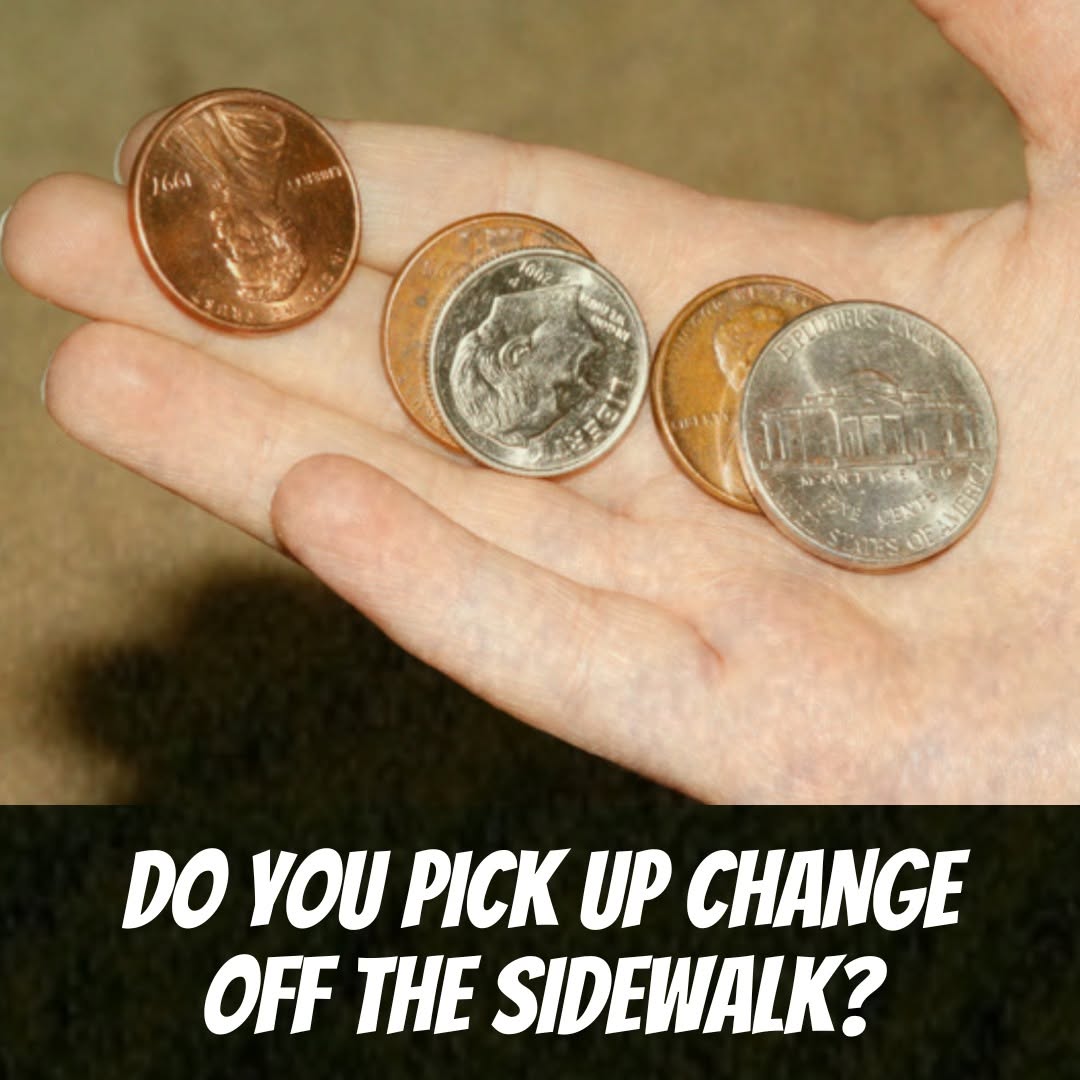
Do You Pick Up Change Off the Sidewalk?
You’re walking down the sidewalk when something shiny catches your eye. It’s a penny. Maybe a quarter. You have about two seconds to decide: stop, bend down, and pick it up—or keep walking like you never saw it.
That tiny moment says more about money habits than you might expect. Picking up change off the sidewalk is an old American habit tied to thrift, luck, childhood lessons, and memories of a time when coins were part of nearly every purchase.
Today, a penny may not buy much. Still, people notice it. Some grab it automatically, some leave it alone, and others pause because a coin on the ground feels like a tiny invitation to remember another era.
Why Do People Pick Up Change From the Sidewalk?
The simplest answer is also the most practical: it is still money. A penny, nickel, dime, or quarter may be small, but several coins collected over time can become enough for a useful purchase.
There is also a habit behind the gesture. People who grew up saving coins in jars or feeding them into parking meters often have a different relationship with loose change. Seeing a coin on the ground can trigger an almost automatic response: spot it, pick it up, pocket it.
Then there is the luck factor. The familiar saying about finding a penny and having good luck has been repeated for generations. Whether someone truly believes it hardly matters. The ritual itself has become part of American everyday culture.
Pro Tip: If you collect sidewalk coins, keep a small change container near your entryway. Empty your pockets there instead of letting coins scatter across counters, drawers, and car cup holders.
What Counts as Loose or Pocket Change?
In everyday American speech, coins are often called loose change or pocket change. The most commonly encountered pieces are the penny, nickel, dime, and quarter.
The penny has a face value of one cent. The nickel is worth five cents, the dime ten cents, and the quarter twenty-five cents. Half dollars and dollar coins exist too, although they are much less common in everyday pockets.
That difference matters when you find a small pile of coins. Four quarters equal one dollar, while ten dimes equal the same amount. A handful that looks insignificant can therefore add up faster than it seems.
For families, loose change can also become a simple money-learning tool. Children can sort coins, count totals, compare values, and practice making exact amounts without turning the lesson into a worksheet.
A Quick History of American Pocket Change
American coinage has a surprisingly long story. The Coinage Act of 1792 established the U.S. Mint and created a national system of coins based on the dollar.
Early U.S. cents were struck in 1793, while early dimes and quarters also appeared in the 1790s. The modern five-cent nickel arrived later, with the nickel coin introduced in 1866.
Of course, the buying power of those coins changed dramatically over time. A few cents once covered everyday treats and small services that would cost far more today. That is why older adults may remember coins as something far more useful than they seem now.
Coins became part of daily routines, especially for vending machines, pay phones, parking meters, laundromats, and arcade games.
What Could a Few Coins Buy?
A coin’s value is not only about the number stamped on it; it is also about what that amount could purchase at the time.
Older generations remember saving coins for candy, newspapers, phone calls, or quick snacks. Prices varied by decade and location, but small amounts of cash had noticeably more spending power than they do today.
That history explains why some people still hate seeing coins tossed aside. A penny may feel nearly worthless in isolation, yet the habit of respecting small amounts of money can stick around for decades.
Try This: Put a labeled coin jar in the kitchen or laundry area. At the end of each week, sort the coins and write down the total. It turns forgotten pocket change into a visible savings habit.
Why Do Some People Leave Coins Where They Are?
Not everyone sees a sidewalk coin as a lucky find. For some people, bending down is simply not worth the effort, especially when the coin is a penny.
Modern payment habits also changed the way people think about cash. Phones, cards, and online payments handle many purchases that once required a pocket full of coins. As a result, younger shoppers may go days without carrying any change at all.
There is another simple issue: cleanliness. Sidewalks can be dusty, wet, muddy, or covered with ordinary street grime. Some people would rather leave a coin alone than touch it and then reach into a bag or pocket.
If you do pick up a coin, a sensible habit is to wash your hands afterward, particularly before eating. There is no need to make the discovery complicated.
Could That “Ordinary” Coin Be Worth More?
Most coins found on sidewalks are worth exactly their face value. However, occasionally someone discovers an older, unusual, or collectible coin.
Before spending a strange-looking coin, check its date, mint mark, and overall condition. A coin that looks different may simply be a normal issue from another year, but unusual features can sometimes make a coin interesting to collectors.
Common mistake: Do not clean a potentially collectible coin with household polish, vinegar, abrasive powder, or a rough cloth. Scrubbing can damage the surface and may reduce collector interest.
If a coin seems genuinely unusual, photograph both sides and compare the details with a reputable coin-reference guide. For valuable-looking finds, consider a professional appraisal.
What Should You Do With a Jar Full of Change?
A change jar works best when it has a job. Otherwise, it becomes that heavy container nobody wants to move.
- Sort it: Separate pennies, nickels, dimes, and quarters.
- Count it: Use a basic coin-counting tray or a small digital coin counter if you collect a lot.
- Roll it: Coin wrappers can make larger quantities easier to store or deposit, depending on what your bank accepts.
- Save it: Set the money aside for a small household purchase, a family outing, or another planned expense.
Empty pockets into the same container each evening. Then, once a month, count everything at once.
Is Picking Up Sidewalk Change Still Worth It?
That depends on what “worth it” means to you. Financially, a single penny is tiny. Habitually, however, picking it up can be a reminder that small amounts still count.
For some people, it is about thrift. For others, it is nostalgia. And for plenty of people, it is simply satisfying to turn an overlooked coin into something useful.
There is a funny social side to it. You can walk past ten coins without noticing them, then suddenly spot one from halfway across a parking lot. Somehow, the brain decides that particular coin deserves your attention.
The Next Time You See a Coin
The next time you spot loose change on the sidewalk, you will probably make the same tiny choice millions of people have made before you: pick it up or keep walking.
If you choose to pick it up, toss it into your change jar and let the little coins accumulate. Picking up change off the sidewalk may not make anyone rich, but it can turn a forgotten penny into a small lesson about saving, history, and the value people once placed on every cent.