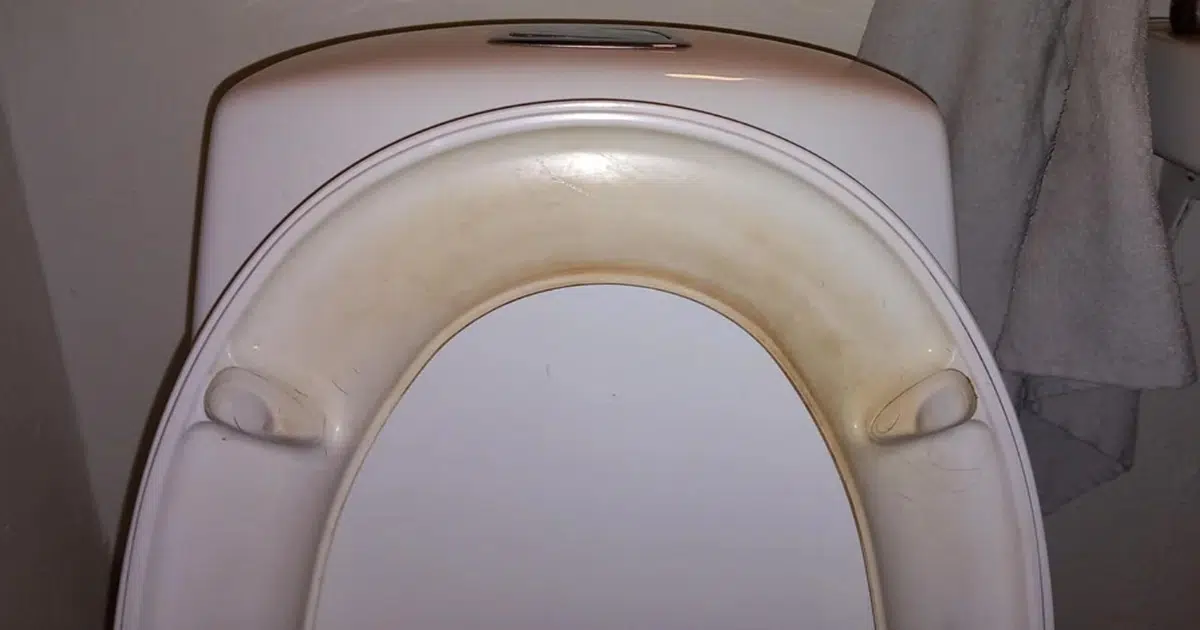
Few things spark instant panic quite like unexpected guests walking toward your bathroom when you know there are stubborn toilet stains waiting inside. You give the bowl a quick swipe with a standard brush, yet that dingy rim and discolored seat refuse to budge. Fortunately, you can restore both porcelain and plastic without harsh fumes or endless elbow grease.
Most persistent marks are not actually permanent damage. Instead, they are stubborn chemical bonds formed by mineral deposits, uric acid crystallization, and trapped moisture. Once you match the right household acid or gentle abrasive to the specific buildup, lifting discoloration becomes remarkably straightforward.
Identify Your Bathroom Grime Before You Scrub
Different discolorations require completely different treatments. For instance, using an alkaline cleaner on an alkaline mineral scale will accomplish almost nothing. Before grabbing your supplies, take five seconds to inspect what you are actually fighting.
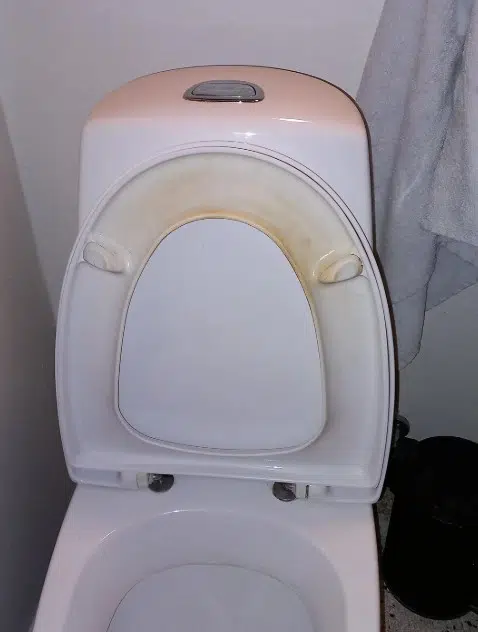
- Yellow Under-Seat Discoloration: Porous plastic absorbs uric acid splashes, body oils, and oxidized chemical cleaners over time.
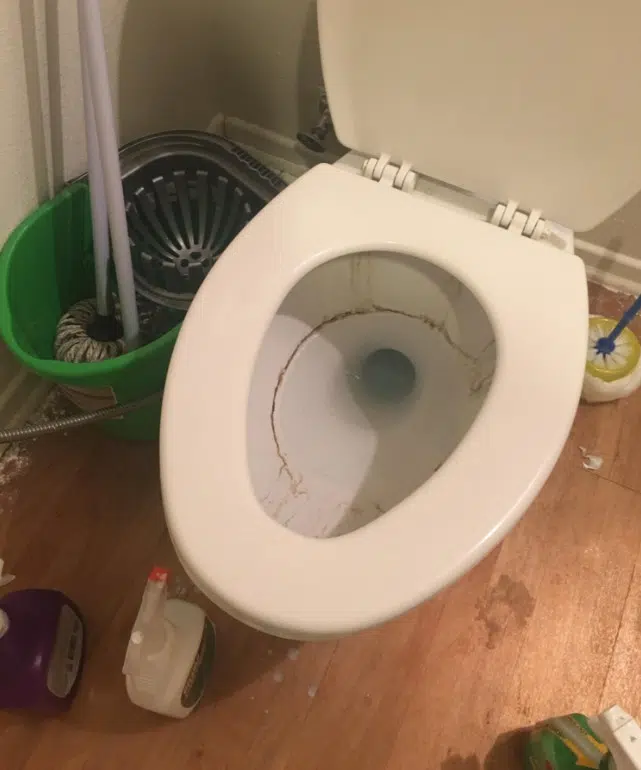
- Chalky Brown or Orange Bowl Rings: Calcium, magnesium, and iron from hard water bind to porcelain at the standing water level.
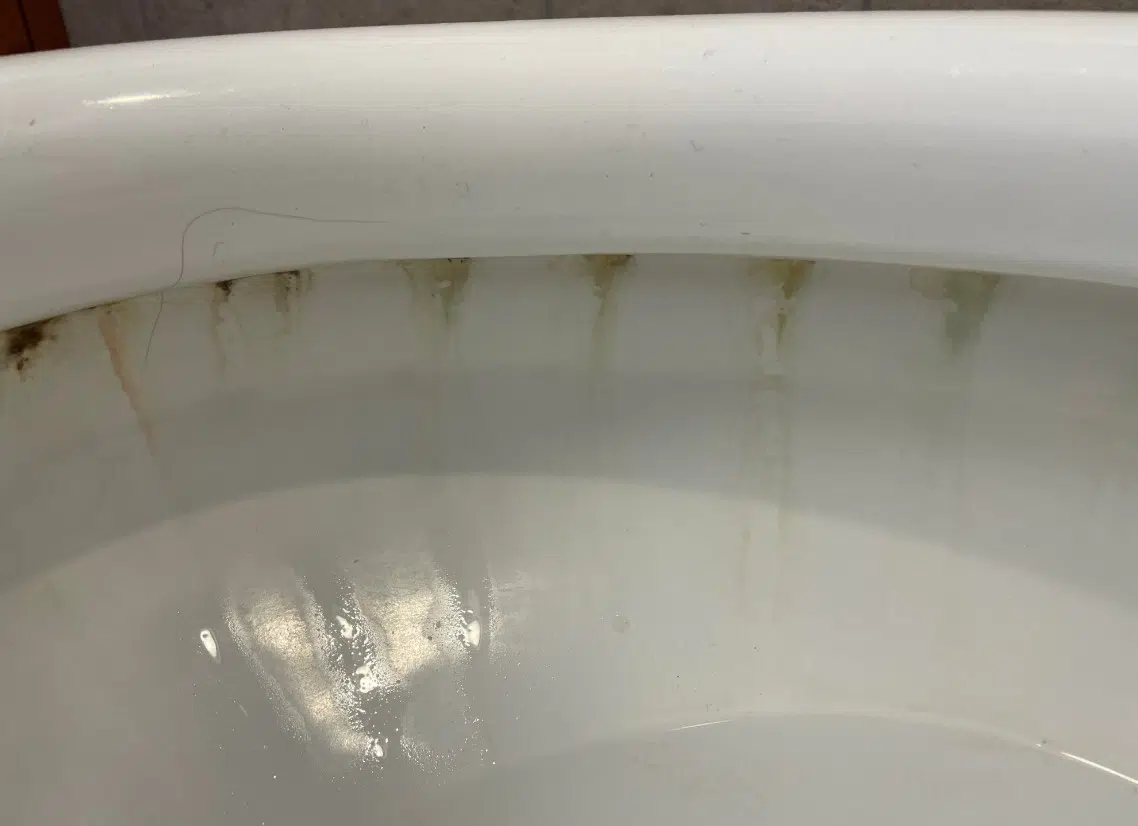
- Black or Dark Green Specks: Mildew thrives under damp rim channels where fresh water rarely rinses thoroughly.
How to Whiten a Yellowed Toilet Seat
Plastic toilet seats are surprisingly porous. Traditional liquid bleach often makes yellow discoloration worse because harsh chlorine oxidizes the plastic resin, turning white materials permanently amber. Instead, you need targeted spot treatments that lift stains out of the microscopic pores.
The Hydrogen Peroxide Dwell Method
Standard 3% hydrogen peroxide works as an oxygen-based brightening agent that safely lifts organic stains from plastic without melting the finish. However, liquid peroxide runs off smooth curves instantly. To make it work, you must create a wet compress.
First, saturate several paper towels with fresh hydrogen peroxide. Next, press the damp towels flat against the discolored undersides and seat bumpers. Allow the compress to sit undisturbed for 45 minutes to one hour, re-wetting if it dries out. Finally, peel the towels away and wipe down the plastic with warm water.
Baking Soda and Citrus Paste
For oily residue or stubborn spots around the hinge covers, make a thick paste using half a cup of baking soda and fresh lemon juice. Spread the paste generously over the yellowed areas using an old toothbrush. Let the mixture sit for 20 minutes before gently scrubbing in small circular motions.
Pro Tip: Never mix baking soda and white vinegar in a small dish before applying it. While the foaming reaction looks impressive, the acid and base quickly neutralize each other into plain salt water. Apply the baking soda paste first, then spray pure vinegar directly on top.
Eliminate Hard Water Rings in the Bowl
Mineral scale forms when standing water evaporates slightly, leaving rock-hard calcium and magnesium crusts behind. Because these deposits are alkaline, mild natural acids are the most effective way to dissolve them without scratching the protective porcelain glaze.
Lower the Water Line First
Pouring cleaning solutions directly into a full bowl dilutes your active ingredients immediately. Therefore, you must lower the standing water level before applying any treatment. You can either push a standard toilet plunger vigorously down into the drain hole three times or shut off the water valve and flush once.
The White Vinegar Soak
Once the water line drops below the mineral ring, soak folded paper towels in distilled white vinegar and press them directly against the scale line. Let the acidic compress dissolve the calcium bonds for at least two hours. Afterward, remove the towels and scrub the ring with a stiff nylon toilet brush.
Gentle Pumice Stone Technique
When heavy iron or lime scale refuses to dissolve, a wet pumice stone provides mechanical lifting without damaging porcelain fixtures. However, you must keep both the stone and the bowl surface soaking wet at all times. A dry pumice stone will permanently scratch and dull the glossy glaze.
Rub the wet stone across the mineral line using light, even pressure until the crust turns to paste. Flush the toilet immediately to rinse away the pulverized mineral residue.
Deep Cleaning the Hidden Rim Jets and Hinges
Do you notice brown streaks reappearing in your bowl just days after a deep clean? The culprit is usually hidden under the upper rim. Flush water flows through tiny siphon jet holes that collect mold, rust, and calcium buildup out of sight.
To clear these hidden channels, take an old toothbrush, dip it in undiluted white cleaning vinegar, and scrub firmly upward into each individual jet hole. Next, pour two cups of warm white vinegar directly down the overflow tube inside your toilet tank. Let it sit for 30 minutes, then flush to send a surge of acid through the inner jet channels.
Detonate Grime Behind the Seat Hinges
Odors often linger around the toilet base because splashes work their way underneath the mounting bolts. Modern quick-release toilet seats pop off with the press of two buttons, allowing you to wipe away grime trapped beneath the hinge plates. If you have fixed bolts, spray hydrogen peroxide around the caps and floss the gap using a folded microfiber cloth.
Weekly Maintenance to Stop Stains Before They Start
Preventative care takes seconds and keeps you from ever having to scrub heavy calcium crusts again. Keep a small spray bottle containing half distilled white vinegar and half water under your sink. Give the seat hinges and bowl a quick mist every few days after your evening routine.
Additionally, avoid leaving drop-in bleach pucks inside your toilet tank for months. Strong chlorine degrades rubber flapper valves and corrodes plastic flush mechanisms, leading to slow tank leaks. Simple natural acid sprays protect your plumbing components while keeping your bathroom looking pristine.
By attacking mineral deposits and organic yellowing with the correct targeted methods, you can eliminate stubborn toilet stains permanently and keep your entire bathroom sparkling clean with minimal effort.