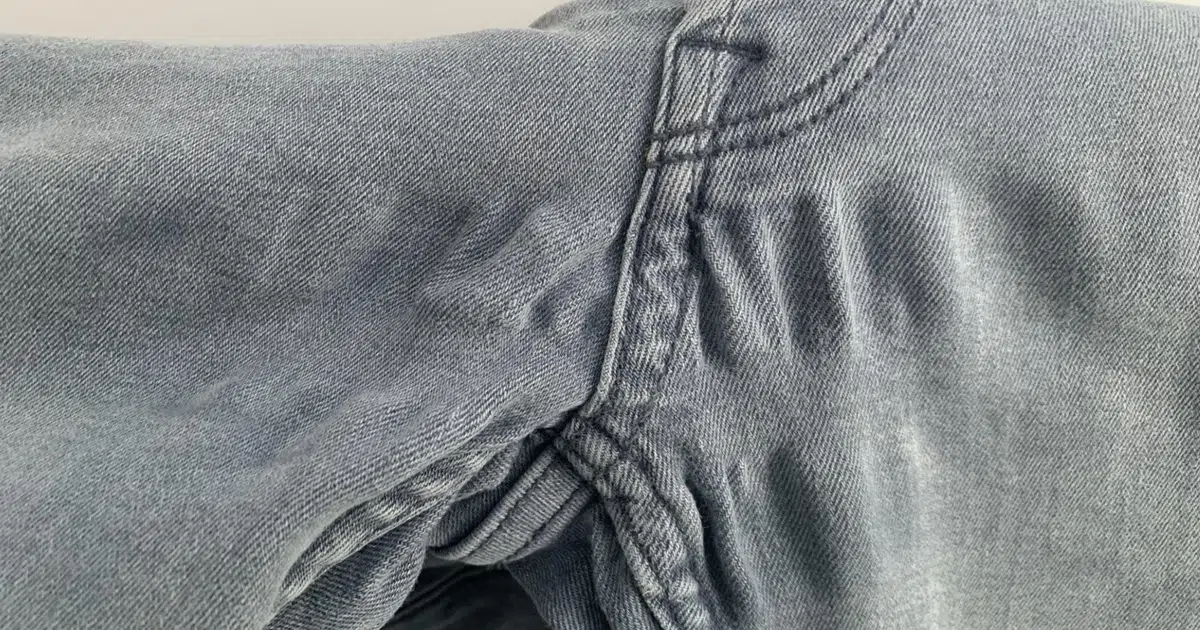
You pull your absolute favorite pair of denim out of the laundry basket, shake them out, and freeze. What on earth happened? Your once-sleek pants now feature strange, wavy ridges running straight across the thighs and waistband.
If you have ever stared in disbelief at weird ripples after washing jeans, you are definitely not alone. It looks like your pants spent thirty minutes in a boxing ring.
Fortunately, you do not have to toss your favorite pair into the donation bin just yet. Let us look at what triggers this strange fabric puckering and how you can prevent it for good.
Why Do Jeans Get Weird Ripples After Washing?
To solve the mystery of weird ripples after washing jeans, you first have to look at the fabric label inside your waistband. Most modern denim is no longer made of pure, rugged 100% cotton.
Instead, fashion brands weave cotton with synthetic elastane, Spandex, or Lycra. This blend gives you that glorious, all-day flexibility without squeezing your waist.
However, synthetic stretch fibers have a massive weakness: high temperatures. When exposed to hot water or scorching dryer air, synthetic elastane core threads melt, snap, and recoil instantly.
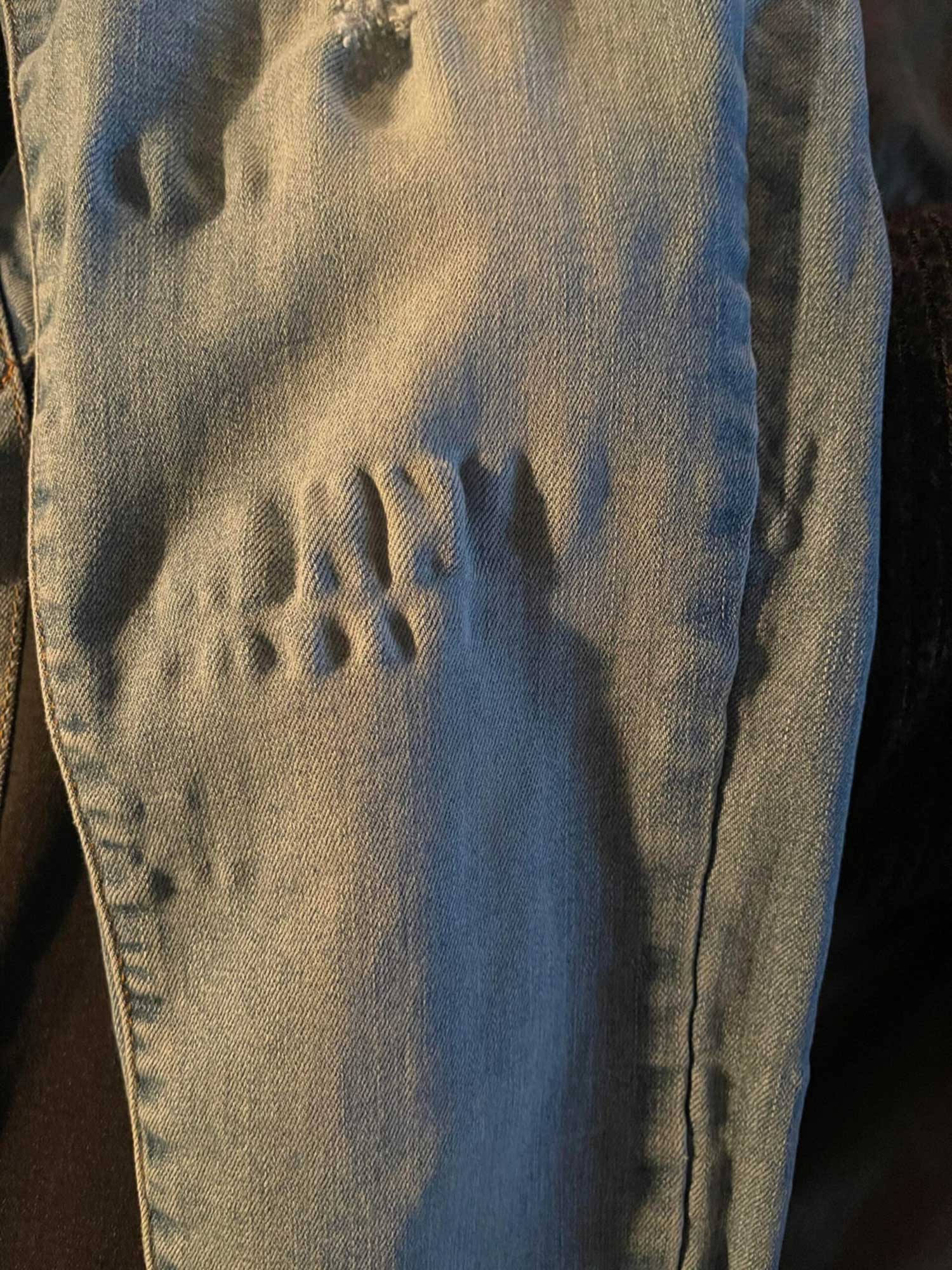
Severe horizontal ripples happen when broken stretch fibers snap back and bunch up the cotton weave.
Meanwhile, the surrounding cotton fibers react to heat by shrinking slightly. When the snapped elastic snaps back while the cotton tightens around it, the fabric buckles unevenly.
As a result, you get those raised, wavy ridges that make your pants look decades older than they actually are.
The Agitation and Water Absorption Factor
Heat is not the only villain in your laundry room. Heavy mechanical agitation plays a major role during the spin cycle.
When denim absorbs water, it becomes heavy and remarkably stiff. If your washing machine drum is crammed full, wet garments twist into tight knots.
Consequently, the washer pulls and yanks on those damp synthetic threads. Some sections stretch out while adjacent areas pull tight, setting wavy creases directly into the weave.
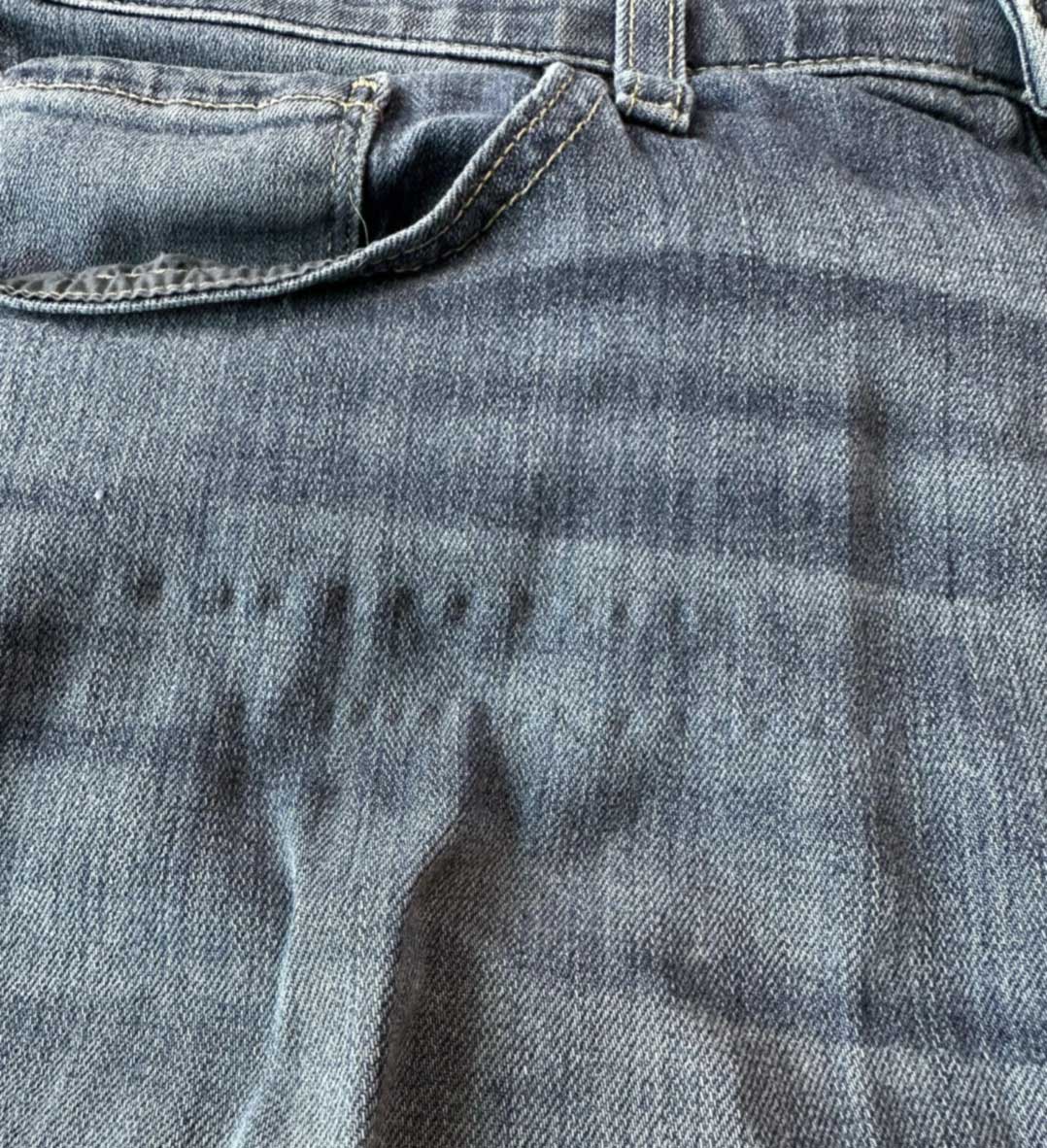
Notice the puckering along the front pocket: agitation and heat pull delicate blend lines out of shape.
Simple Ways to Prevent Denim Puckering in the Wash
Preventing warped denim is far easier than trying to repair snapped synthetic fibers after the damage occurs. A few quick adjustments to your regular wash routine will protect your investment.
- Switch to Cold Cycles: Always set your washing machine temperature dial to cold (30°C or lower) to protect sensitive elastane strands.
- Turn Pants Inside Out: Button the fly, zip the zipper, and flip the fabric inside out before washing to reduce surface friction.
- Use a Gentle Spin Cycle: Select a delicate or wool wash cycle to keep the machine from violently twisting heavy pant legs.
- Avoid Overcrowding the Drum: Give your clothes plenty of breathing room so garments do not wrap around each other into tight ropes.
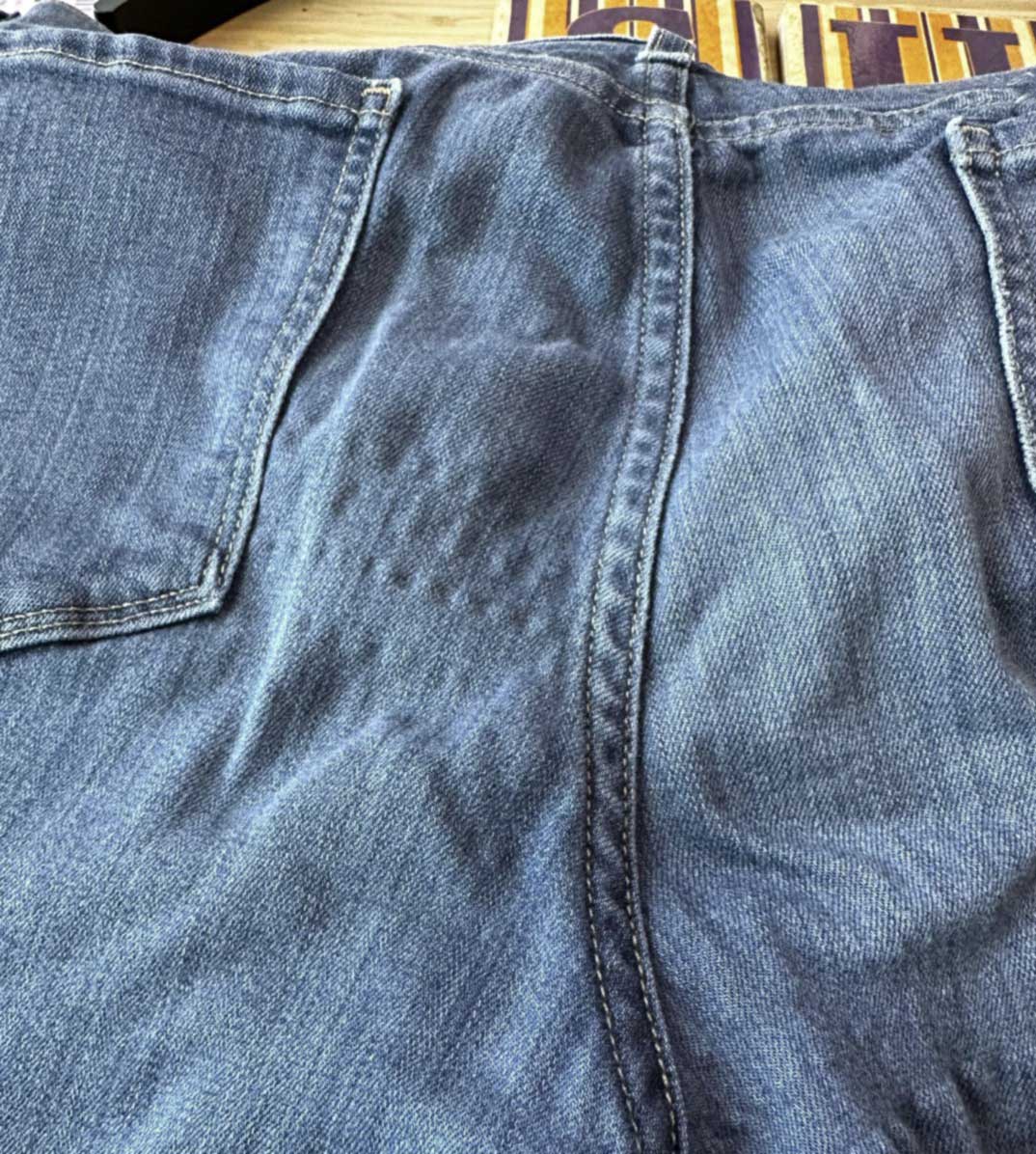
Rear yoke and seat distortion is a classic sign of machine-dryer heat damage on stretch denim.
Ditch the Fabric Softener
It sounds counterintuitive, but liquid fabric softener can actually ruin stretch denim over time. Softeners deposit a slippery chemical coating over synthetic yarns.
As this waxy film builds up, it traps residual moisture and breaks down the elasticity of your pants. Rather than reaching for chemical softeners, pour half a cup of distilled white vinegar into the rinse dispenser to naturally soften the weave.
Drying Strategies That Keep Denim Smooth
The tumble dryer is responsible for nearly ninety percent of warped denim disasters. High heat settings break synthetic fibers in minutes.
The safest approach is hanging your damp denim on a sturdy wooden drying rack away from direct sunlight. Always hang pants upside down by the leg hems using clip hangers to let gravity pull the fabric flat.
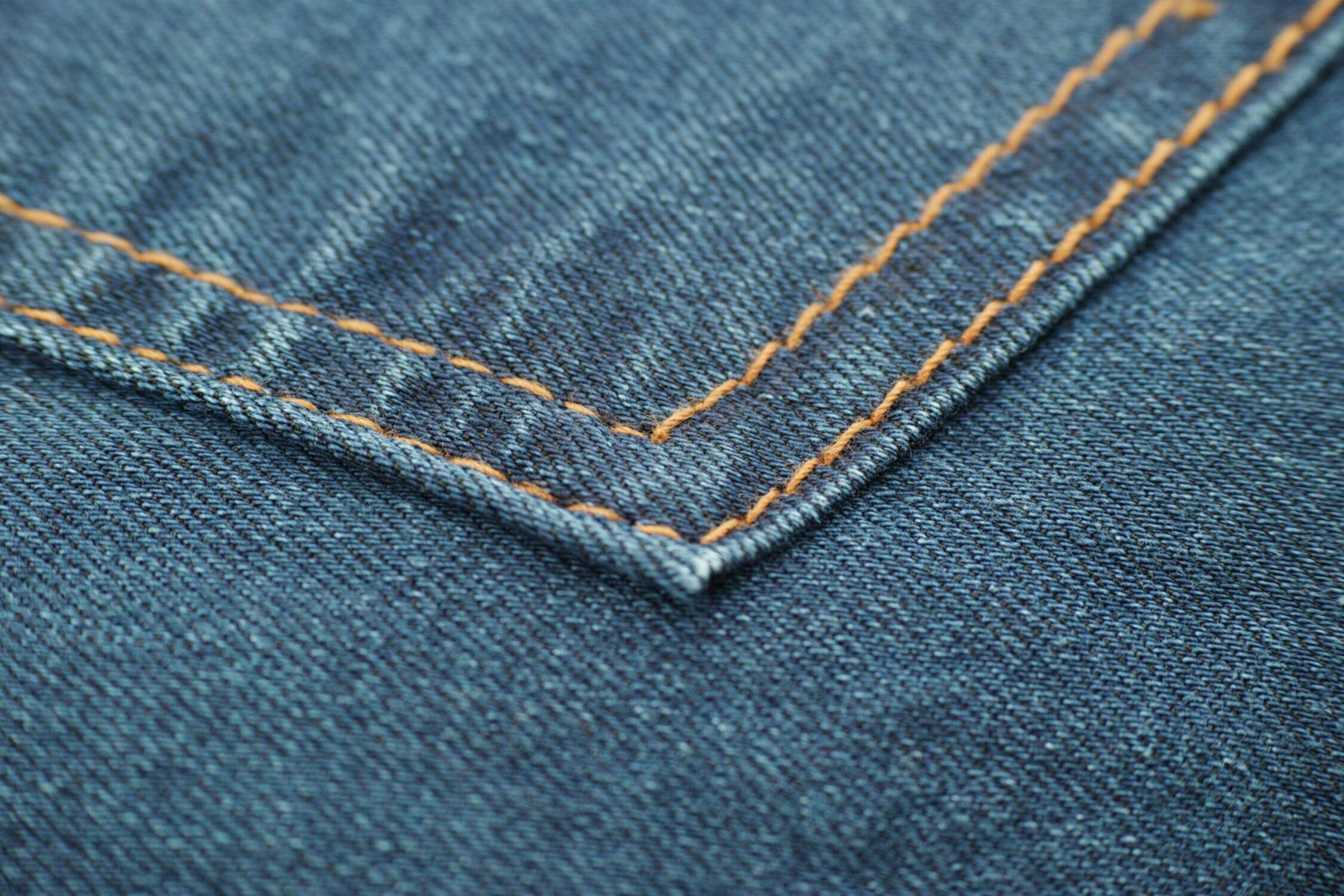
Pristine, flat denim seams are easy to maintain once you ditch high dryer heat and aggressive cycles.
If you must use a tumble dryer for convenience, switch the setting to low heat or air fluff. Remove the pants while they are still slightly damp to the touch, smooth the seams with your hands, and finish air-drying.
How to Salvage and Smooth Puckered Jeans
What should you do if your favorite pair already developed those annoying ripples? While completely melted elastic cannot magically reconnect, you can successfully flatten the surrounding cotton weave using smart steaming and pressing techniques.
1. The Steam Relaxer Routine
Hang your jeans in your bathroom while taking a hot shower, or use a handheld garment steamer along the puckered seams. Gently pull the damp fabric lengthwise to relax compressed cotton fibers.
2. The Damp Pressing Cloth Method
Lay your pants flat on an ironing board. Place a clean, damp cotton tea towel directly over the wavy areas to shield the fabric from direct heat.
Set your iron to a medium steam setting and press down firmly across the pressing cloth for five seconds at a time. Never slide the iron back and forth, as dragging can stretch the fragile fabric further.
3. The Manual Re-Blocking Stretch
Spray the affected areas with lukewarm water until damp. Step firmly onto the waistband while pulling upward gently on the leg seams to realign the weave, then lay flat on a clean dry towel.
How Often Should You Really Wash Your Jeans?
Here is a dirty little laundry secret: you are probably washing your denim far too often. Unless you spill food or work in muddy conditions, you do not need to wash jeans after every wear.
Denim designers typically recommend washing pairs only after five to ten wears. Spot-clean small marks with a damp microfiber cloth and mild soap instead of running a full machine cycle.
To freshen up the fabric between wears, hang your pants in the fresh air outdoors or spritz them with a natural fabric refresher. Fewer wash cycles directly translate to zero heat damage and longer-lasting fits.
Final Thoughts on Keeping Jeans Flawless
Dealing with weird ripples after washing jeans can feel like an impossible laundry puzzle. Fortunately, once you understand how heat and harsh spinning affect modern stretch fabrics, keeping your pants smooth is straightforward.
Stick to cold water, air-dry whenever possible, and skip the aggressive spin cycles. Your wardrobe and your wallet will thank you every time you get dressed.