“`html
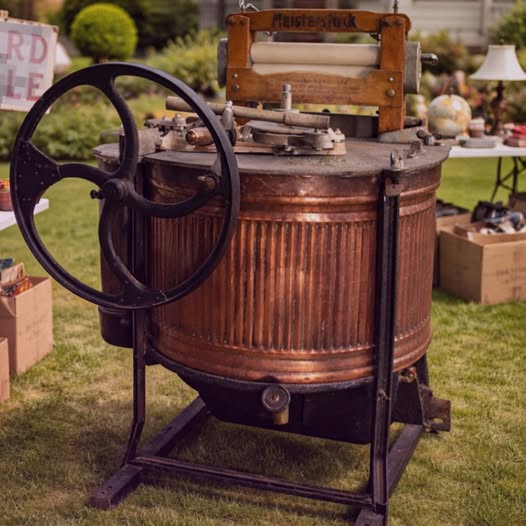
That strange copper contraption from a yard sale may look like a piece of farm equipment, but it tells a surprisingly good story about how people washed clothes before modern appliances took over. If you are trying to identify an old coal-heated washing machine, the big clues are the copper tub, mechanical drive, side wheel, and the heating setup beneath the tub.
What Is This Old Washing Machine?
The machine appears to be an early mechanical washer designed to combine washing and water heating in one sturdy unit. The available description identifies it as a coal-heated washing machine, or in Dutch, “Wasmachine met kolenverwarming.” Its estimated period is around 1925 to 1930.
That date matters because household laundry was still a very hands-on job. Electricity was becoming more common, but electric motors and heating elements were not yet the standard answer for every home. Manufacturers therefore built machines that could use simple mechanical power and a separate heat source.
The Copper Tub Is a Big Clue
Look at the tub and you immediately get a sense of the machine’s age. The cylindrical body is made from copper, with a brass rim and sturdy metal supports.
Copper was useful because it handled repeated exposure to hot water and could last for decades with proper care. The vertical ribs also give the tub a distinctly old-fashioned appearance that you simply do not see on modern plastic washing machines.
How the Coal-Heated Washing Machine Worked
Here is where this old appliance gets genuinely clever. Instead of depending on an electric heating element, the washer used a small coal-fired heater beneath the tub to warm the water.
The basic idea was straightforward: add water, heat it from below, add soap and laundry, and mechanically agitate the clothes. However, controlling the temperature was far less convenient than turning a modern washer to a setting and pressing Start.
Step 1: Heat the Wash Water
The heater underneath the tub supplied the heat needed for washing. Coal provided the fuel, while the copper tub transferred that heat to the water above.
In practical terms, this meant the person doing laundry had another job to manage. The heat had to be watched, and the fuel had to be handled. There was no digital temperature display, automatic shutoff, or convenient heating cycle.
Pro Tip: If you are examining a surviving example, inspect the area beneath the tub closely. A dedicated heating chamber, vent, grate, or soot-darkened section can help distinguish a coal-heated washer from a similar-looking hand-powered machine.
Step 2: Move the Laundry With a Wooden Agitator
Inside the tub was a wooden device described as a “houten waskruis,” or wooden washing cross. Its job was to move the clothes through the hot, soapy water.
Rather than simply spinning in one direction, the mechanism could move alternately from left to right. That back-and-forth action helped work soap and water through the fabric while reducing the tendency of clothes to twist into one giant, miserable knot.
Step 3: Turn the Side Wheel
The large black wheel on the side is one of the most interesting details. Originally, the washer could be operated by hand, with the wheel transferring movement through the mechanical linkages to the agitator.
Think of it as a mechanical chain of motion. Your hand moved the wheel; the wheel moved the linkage; the linkage moved the agitator. No circuit board was required.
Why Was an Electric Motor Added Later?
The later electric motor is an important clue about the machine’s history. At some point, someone upgraded the washer so that mechanical agitation no longer depended entirely on a person turning the large wheel.
That kind of modification makes sense when you consider how quickly household technology was changing. A sturdy copper washer did not necessarily need to be thrown away just because a better power source became available. Adding a motor could extend its useful life.
It also means the machine may have lived through more than one era of laundry technology. Originally, it represented manual labor. Later, the motor brought it closer to the convenience people expected from newer electric appliances.
What the Visible Parts Tell You
- Large side flywheel: suggests the original hand-powered drive system.
- Copper cylindrical tub: points toward a durable early appliance built for heated washing.
- Brass rim: adds another clue about the materials and construction style.
- Wooden agitator: shows how washing action was produced inside the tub.
- Mechanical linkages: transfer motion from the wheel or motor to the washing mechanism.
- Metal frame and legs: provide the rigid support needed for a heavy, mechanically driven appliance.
- Heating area underneath: is the feature that makes the coal-heated identification especially interesting.
The Part That Would Have Made Laundry Hard
Modern washers hide almost all of the work. This machine did not. Heating the water, managing fuel, loading laundry, operating the mechanism, and eventually draining or handling the wash would have required attention from start to finish.
The heating system was also less precise. Too little heat would slow the washing process, while excessive heat could create problems for certain fabrics. Coal itself also meant ash, smoke, and cleanup around the heating area.
And then there was the physical effort. Before the motor upgrade, someone had to operate the machine manually. Washing a full load was not exactly a relaxing afternoon activity.
Common Identification Mistakes
Old washing machines can be easy to misidentify because many early appliances share similar materials and shapes. A copper tub alone does not prove that a machine was coal heated.
Instead, check several clues together. Look for the heating arrangement beneath the tub, the side drive wheel, the agitator mechanism, and evidence of a later motor installation. The combination is much more informative than any single part.
Another Pro Tip: Do not aggressively polish every copper and brass surface if you are trying to preserve the machine as a historical object. Old patina can be part of its story, and harsh cleaning can remove surface details that help document its age.
Could This Old Washer Still Be Valuable?
Possibly, but age alone does not determine value. Condition, completeness, rarity, manufacturer markings, surviving mechanical parts, and the quality of the restoration all matter.
A complete machine with its original tub, agitator, wheel, frame, and heating components will generally be more interesting to collectors than a heavily altered shell. On the other hand, a later motor does not automatically ruin the story. It may actually document how the appliance was modernized and reused.
If you found one at a yard sale, photograph every side before cleaning it. Look for stamped names, badges, numbers, maker’s plates, unusual fittings, and markings around the frame or motor. Those small details can be far more useful for identification than the general shape.
How to Preserve an Antique Washing Machine
If the machine is going to become part of a collection or home display, resist the temptation to make it look brand new. Antique appliance restoration is often about preserving original character rather than removing every mark of age.
For light surface dirt, start with a soft cloth and gentle cleaning method. If copper cleaning is necessary, test any non-abrasive copper cleaner on a small, inconspicuous area first. Harsh polishing compounds can change the appearance of old metal surprisingly quickly.
Also inspect the wooden agitator and mechanical joints carefully. A little dust is one thing; cracked wood, loose fittings, or damaged moving parts are another. If restoration supplies are needed, choose methods appropriate for antique metal and wood rather than treating the washer like a modern appliance.
What This Machine Says About Everyday Life
The real appeal of this washer is not just the copper and brass. It shows how much engineering went into solving a very ordinary household problem: getting dirty clothes clean.
Someone had to heat water. Someone had to provide mechanical movement. Someone had to keep the clothes from becoming tangled. This machine combined those jobs into one clever, rugged appliance.
It also captures a moment of transition. The original hand-powered design belongs to a world of physical work and simple mechanisms, while the later electric motor points toward the automated laundry rooms that would soon become normal.
Final Verdict on the Yard Sale Find
If the identification is correct, you did not stumble across an ordinary old metal tub. You found a fascinating example of early household engineering: a coal-heated washing machine with a copper tub, manual mechanical drive, wooden agitator, and a later electric motor upgrade.
That combination makes the machine especially interesting because it shows the transition from muscle-powered laundry to electric convenience. So before you dismiss that strange copper contraption as scrap, take another look at the wheel, the heating section, the linkages, and the old tub. They may be telling you exactly how a family washed clothes nearly a century ago.
“`