Three years ago, I buried both of my children.
I need you to sit with that sentence for a moment before we go any further, because everything else in this story grows out of it the way a tree grows from a seed. If you do not understand the sheer weight of that loss, you will never understand why anything that followed happened the way it did.
My daughter’s name was Sophie. She was nine years old, had her father’s ears, my stubborn streak, and a bright, ringing laugh that sounded like she had invented the concept of joy personally and was immensely proud of herself for it. My son was James. He was twelve, caught in that delicate, awkward borderland between boyhood and something older—starting to guard his privacy, developing sudden, sharp opinions about the world, slowly assembling the man he was going to become. I will never get to know that man. I have spent three years living inside that silence, learning to carry that impossible absence the way you carry any permanent injury: by realigning your entire posture until the ache simply becomes how you move through the world.
The accident happened on a freezing Thursday evening in November. James and Sophie were riding home from their grandmother’s house—my mother-in-law had taken them for the afternoon, an ordinary weekly ritual that anchored our calendar. A truck ran a red light at forty miles an hour. My mother-in-law survived after eight agonizing months of surgeries and physical therapy. My children did not survive at all.
I will not dissect the months that followed. I have already laid them bare for therapists, grief counselors, and the one support group I attended for six weeks before realizing that drowning in other people’s sorrow was doing nothing to keep my own head above water. What I will tell you is that grief has a suffocating, physical texture. It was worse than losing my husband four years earlier, an event I had foolishly believed was the absolute worst pain a human heart could endure. I was wrong. There are darker depths, and I carry the weight of that knowledge every single day.
I am a landscape architect. I work independently, designing gardens and municipal green spaces. I forced myself back to work just three months after the funeral because the only alternative was remaining trapped inside a house made of ghosts. Sophie’s closed bedroom door. The mudroom hook where James always hung his canvas backpack. The precise angle of amber light through the kitchen window at 3:15 PM that had signaled, for over a decade, that the yellow school bus was turning onto our street.
I could handle the drafting table. I was far less capable of handling the silence.
For nearly eighteen months, I merely performed the act of being alive. I followed rigid routines because structure is the only scaffold that holds you upright when everything inside you has collapsed. I ate because biology demanded fuel; I slept when exhaustion finally overpowered my racing mind. From across the street, I probably looked like a resilient woman putting her life back together. Up close, I was just a ghost wandering through thick fog.
The silence of that house was not peaceful; it was violent. A home that once echoed with children and suddenly falls mute produces a terrifying kind of vacuum. It is the palpable, throbbing absence of noise, a pressure pressing inward from every wall.
Eventually, the idea of fostering took root.
I want to be meticulously clear about this: it was never about replacing Sophie and James. Anyone who thinks a parent can swap one child for another does not understand love. My children were irreplaceable, distinct human souls. But over twelve years of mothering, I had cultivated an enormous, specialized capacity to care, to guide, to hold unconditional space for a growing young life. That capacity did not vanish when my children died. It was still sitting inside me, heavy and unused, while my home sat empty.
I completed the rigorous background checks, home studies, and interviews. The agency paired me with Patricia, a brisk, no-nonsense caseworker in her late fifties whose sharp professionalism was balanced by decades of quiet empathy. After several lengthy meetings, Patricia invited me to observe the agency’s youth center on a chilly Tuesday in February.
The recreation room had that bright, strained cheerfulness typical of institutional care—splashes of primary colors, worn beanbag chairs, and construction-paper art taped along the cinderblock walls. Most of the children were young, chasing each other with boundless, restless energy.
Then I saw Luke.
He was sitting alone on a wooden chair by the far window, bathed in cold winter sunlight, completely immersed in a thick paperback novel. He was around sixteen, tall and lanky, with dark hair falling across his forehead. He possessed a stillness so absolute it demanded attention, holding himself with the guarded posture of someone who had learned to occupy the absolute minimum amount of space possible.
Across the room, a seven-year-old girl accidentally knocked over a plastic bin of crayons. Wax sticks scattered across the floor, rolling beneath chairs and tables. The little girl froze, her face crumpling into panic. Luke didn’t sigh or roll his eyes. He carefully dog-eared his page, set his book down, and dropped to his hands and knees. Methodically, he crawled across the linoleum, retrieving every single crayon—even the ones that had rolled into the dusty corners. He placed the full box back into the little girl’s hands with a gentle, serious nod, then returned to his chair and reopened his book without looking around for praise.
I turned to Patricia. “Who is that?”
Patricia’s face tightened with caution. “That’s Luke,” she said, her voice dropping to a confidential whisper. “You don’t want Luke.”
“Why?”
She sighed. “Ten foster placements in four years. Some lasted a few months; some fell apart in two weeks. He always gets bounced back to the system. He’s an extremely complicated case.”
Complicated.
I have always hated that word when applied to a hurting child. After my husband died, James had retreated into a deep, brooding silence, staring out classroom windows for hours. His teachers labeled him ‘difficult’ and ‘disengaged.’ I knew that when the system calls a child ‘complicated,’ it usually means that child has endured so much pain they have stopped asking the world for help.
“Introduce me,” I said.
Patricia looked uneasy, but she led me across the linoleum. When she spoke his name, Luke rose to his feet instantly with formal, military precision.
“Please, ma’am,” he said softly, offering me his seat. “Take the chair.”
His manners were not an act; they were armor. We sat together for nearly an hour. Beneath that stiff, hyper-polite shell lived an extraordinarily sharp mind and a bone-dry, razor-sharp wit. He had read nearly every classic in the county library system. Within twenty minutes, we were engaged in a spirited debate over the ending of The Count of Monte Cristo. He defended his interpretations with fierce textual evidence, refusing to back down simply because I was the adult, yet conceding gracefully the moment I made a superior counterpoint.
I returned the following Tuesday. And the Tuesday after that.
Over the next two months, I pieced together his history. His mother had died of an overdose when he was twelve; his father was an unknown ghost. Ten different families had taken him in and subsequently returned him to the state. When I gently asked him about those failed placements, his voice remained entirely flat—the rehearsed, detached tone of a boy who had learned to recite his own trauma without bleeding.
“What do you miss the most?” I asked him one afternoon.
He paused, looking down at his worn sneakers. “A real kitchen,” he whispered. “I love to cook. I haven’t had a stove to stand in front of for a very long time.”
I thought of my spacious, sunlit kitchen, where no real meal had been cooked in three years.
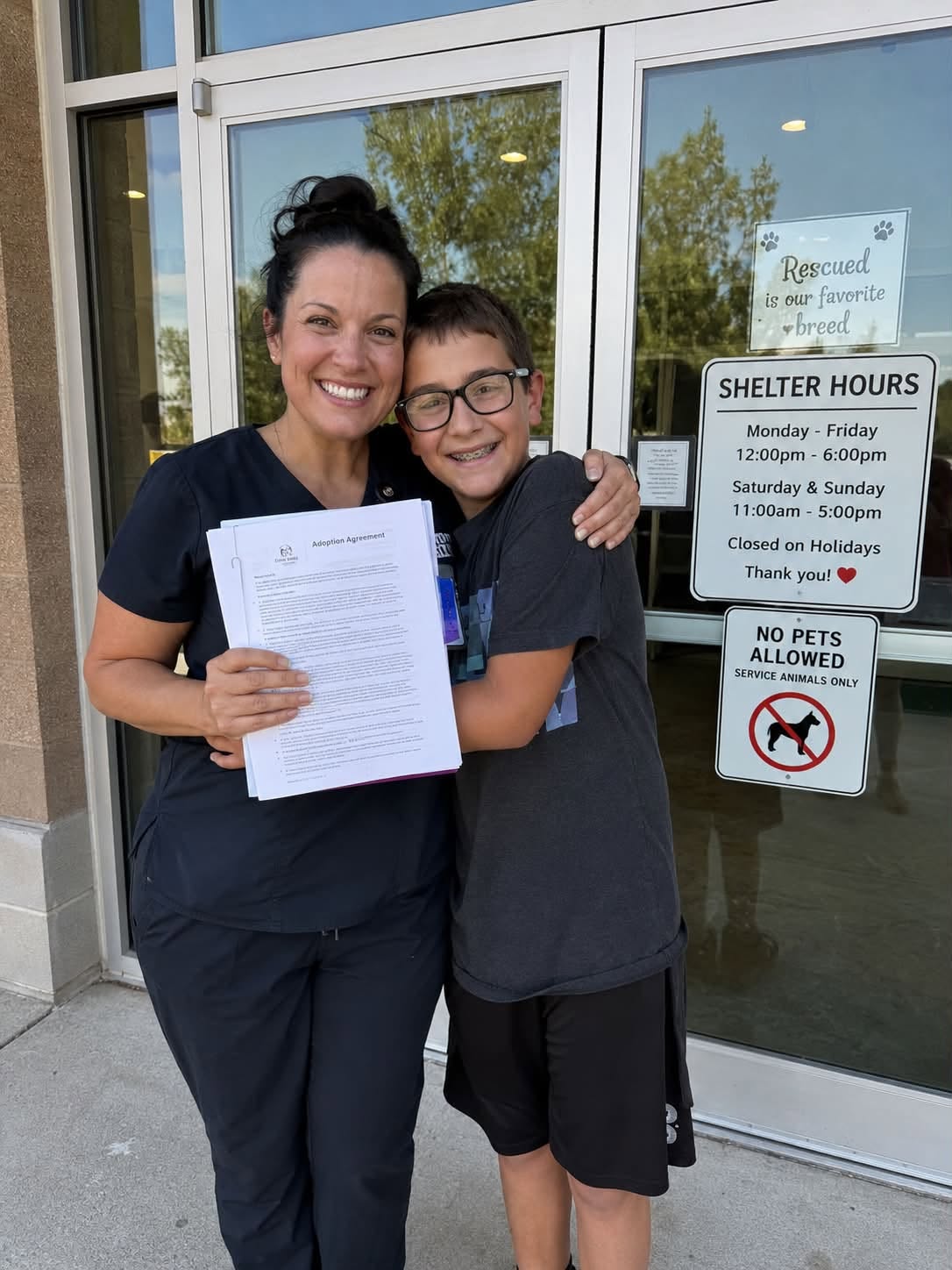
Two months later, I submitted the adoption paperwork.
The legal transition took four months. Luke visited my home on supervised day trips, walking through the hallways with the cautious reverence of an archaeologist entering an ancient ruin. When he peered into the kitchen, his eyes lingered on the six-burner stove with quiet longing. When he stood before Sophie’s preserved bedroom—her stuffed bear still resting against the floral quilt—he looked at me with an unasked question in his eyes.
“Those rooms belong to Sophie and James,” I told him gently. “Their memory will always live here. But this house has plenty of room for your future, too.”
He swallowed hard, giving me a slow, solemn nod.
The adoption was finalized on a rainy Tuesday morning in March. Luke wore a crisp white button-down shirt he had carefully ironed himself. When the judge brought down the gavel and declared us legally family, Luke sat frozen. Then, slowly, the tension that had gripped his jaw for four years began to soften, like ice thawing in spring.
I took his hand. We drove home.
From his first day under my roof, Luke treated our home like sacred ground. He washed and dried his breakfast dishes before the school bus arrived. He sprinted to carry the grocery bags from my trunk. Seeing that a wooden plank on the front porch was loose, he spent an entire Saturday afternoon measuring, sanding, and securing it with tools from my late husband’s workbench.
On his fifth evening, while standing at the stove, he casually asked, “Mom, can I use the cast-iron skillet for the eggs?” Then he froze, his face draining of color as he mentally braced for a reprimand for using that word.
“Yes,” I smiled. “To the skillet, and to the name.”
His scrambled eggs were absolute perfection.
Yet, despite his impeccable behavior, I noticed the heavy strain underneath. Luke was performing perfection. He moved through the house with the hyper-vigilance of a prisoner awaiting an inevitable execution, desperately trying to pass an invisible test so he wouldn’t be discarded again.
Two weeks after the court hearing, the truth finally tore open.
I made a traditional glazed meatloaf for dinner—a recipe from my mother that Luke had once mentioned loving. As the evening shadows lengthened across the kitchen table, Luke sat completely rigid. He pushed the food across his plate, his head lowered, his breath shallow.
I reached across the table and covered his knuckles with my hand. He was trembling violently.
When he looked up, his eyes were brimming with unshed tears. “Mom,” he whispered, his voice cracking with unbearable terror. “I have to tell you the real truth. I know you’re going to send me back once I say it, but I can’t keep lying to you.”
My fork clattered against the plate. “Luke, look at me. Talk to me.”
He took a jagged, shuddering breath. “The ten families… the caseworkers told you I was broken. That I had behavioral outbursts. But that’s not why I got sent back. The real reason… is that I kept blowing up the placements on purpose.”
I sat completely motionless, waiting.
“My fourth family,” Luke choked out, tears finally spilling down his cheeks. “There was a seven-year-old foster girl in the house. The foster father… he was touching her at night. I caught him. I reported it to our caseworker, but she called me a paranoid, manipulative liar. She threatened to lock me in juvenile hall if I made false accusations against a respected foster parent.”
He wiped his sleeve across his face. “Nobody would listen. So I took a baseball bat and smashed their dining room table and all their windows. I forced them to call the police and the state director. They dragged me away in handcuffs, but they had to open an official inquiry. They finally interviewed the little girl with a forensic specialist. She was rescued. She’s safe now with an adoptive family in Oregon.”
A chill ran down my spine.
“My sixth placement,” he continued, his chest heaving. “The foster father was running illegal narcotics out of the basement while infants were sleeping upstairs. I documented everything with a burner camera, mailed the flash drive anonymously to the district attorney, and started breaking curfews until the agency pulled me out. In my eighth placement, the parents were pocketing the state stipends and starving the younger kids in the dark. I stole food from neighborhood markets to feed the little ones, then reported the malnutrition to the school nurse until an emergency audit cleared the house.”
Luke looked at me, completely shattered, waiting for the blow to fall.
“I’m not easy,” he sobbed. “I broke things. I caused riots. I made caseworkers hate me because that was the only weapon a powerless kid had to stop monsters from hurting children who couldn’t fight back. You’ve been watching me every day, waiting to see what makes me a bad kid. That’s the truth, Mom. That’s what’s wrong with me.”
My vision blurred with tears as the magnitude of what this child had carried crashed over me. Ten failed placements. Ten times the system had branded him a delinquent, blind to the fact that he was throwing his own life onto the fire to shield helpless children from abuse and neglect.
I stood up, walked around the table, and pulled my son into a fierce, unbreakable embrace.
For a second, his body remained stiff, braced for rejection. Then, a ragged, guttural cry tore out of his chest, and he collapsed against my shoulder, clinging to my sweater with white-knuckled desperation. He wept with the raw, agonizing grief of a boy who had stood sentry in the dark for four years without a single person guarding his back.
“Luke, hear me,” I whispered through my own tears, holding his head against my chest. “You are never going back. You are my son. Your room is your room, this house is your home, and nothing you could ever do will make me throw you away.”
I pulled back and cupped his wet face in my hands. “You are the bravest human being I have ever known. But your war is over now. You don’t have to protect the world alone anymore. It’s my job to protect you.”
That night marked the true beginning of our family.
Over the months that followed, I hired an attorney to file formal investigations into his previous complaints, successfully forcing the state to review its records and clear Luke’s disciplinary files. The caseworker who had threatened him was formally investigated and stripped of her credentials.
With the heavy armor finally removed, Luke bloomed. That spring, we built two large raised garden beds in the sunlit backyard, planting heirloom tomatoes, fresh basil, and tall sunflowers along the fence. Luke took over the kitchen with joy, filling the home with the rich aromas of slow-simmered sauces, roasted meats, and fresh-baked bread.
The silence that had haunted my hallways for three years was completely broken, replaced by the clatter of pots, lively debates about history and literature, and the warmth of a shared life.
On Sophie’s windowsill, Luke placed a small clay pot with a green succulent, tending to it every Sunday morning in quiet respect. On the hallway hook beneath James’s space, Luke’s sneakers sat permanently beside the door.
Sophie and James gave me the privilege of learning how to be a mother. Luke taught me that a mother’s love isn’t just about preserving memories—it is about opening your doors, laying the truth bare in the sunlight, and building a sanctuary for someone who has forgotten what it feels like to be safe.
This narrative is an inspirational story shared online for entertainment purposes; while based on common real-world themes, individual details cannot be independently verified.