My Son Mocked a Waiter—Then I Told Him Why It Hurt
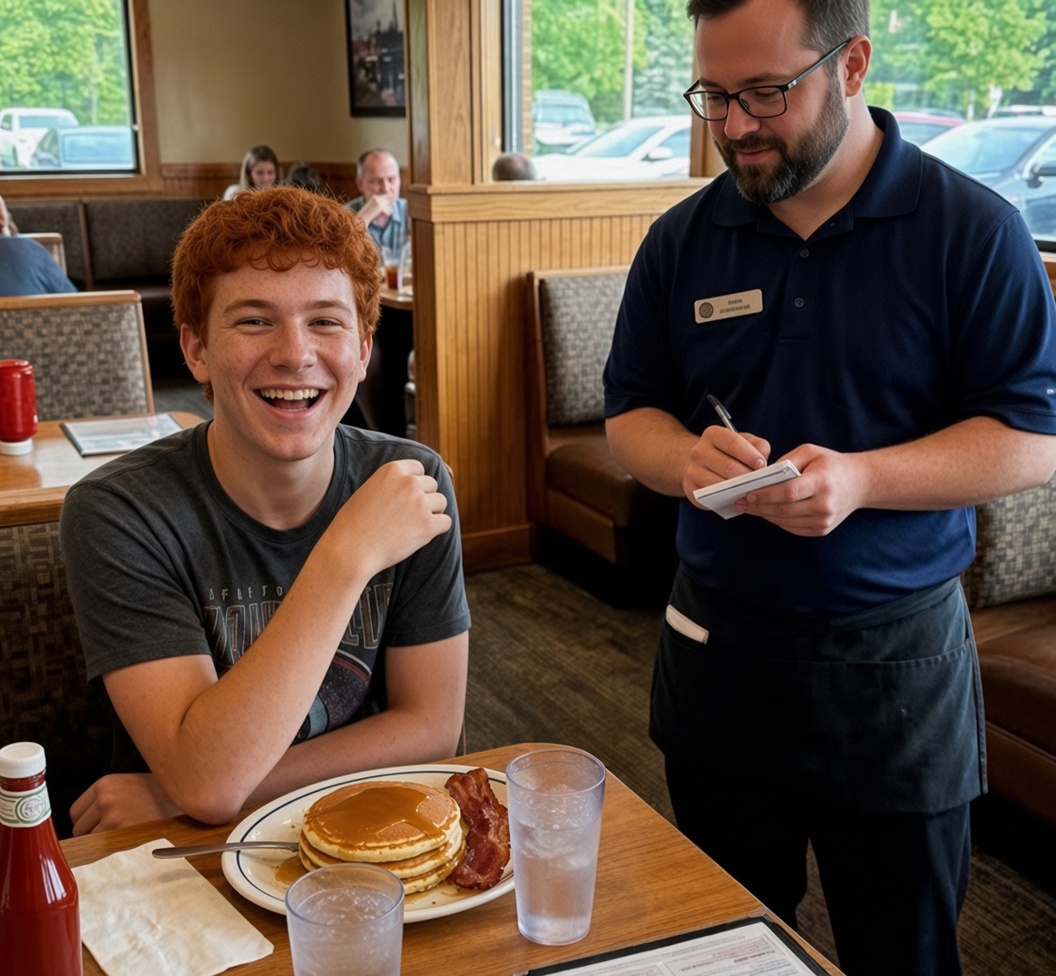
Teaching kids empathy can begin with one uncomfortable moment in a noisy restaurant. My fourteen-year-old son, Leo, rolled his eyes and laughed when our waiter, Sam, spoke with a little extra time and care. It lasted only a few seconds, but Sam’s face changed immediately. The smile slipped away. His shoulders tightened. Then he turned toward the next table.
Leo leaned toward me and whispered, “It was just a joke.” I could have snapped at him, demanded an apology, and dragged him out by the sleeve. Instead, I took one breath, because the first lesson was not going to be about making a scene. It was going to be about understanding the person he had hurt.
Teaching Kids Empathy Starts Before the Lecture
“Look at Sam’s face,” I said quietly. “What do you think happened when you laughed?”
Leo shrugged. Teenagers are remarkably talented at turning into furniture when a conversation becomes uncomfortable. He said Sam probably did not hear him and insisted that everyone at the table was being too sensitive.
I did not argue about whether Sam heard every word. The expression had already told us enough. I explained that mocking someone’s speech, movement, appearance, or disability is not harmless just because the person stays quiet.
Then I added something parents sometimes forget: Sam was not there to become a character in our family lesson. He was working. He deserved courtesy, privacy, and the same ordinary respect we would expect for Leo.
What to Say in the Moment
- “That comment was disrespectful. Stop.”
- “We do not laugh at someone because they seem different.”
- “You hurt him. We are going to repair what we can.”
- “You may feel embarrassed, but embarrassment is not an excuse to avoid responsibility.”
Short sentences work better than a ten-minute speech while someone is standing nearby. First stop the behavior. Next, help your child notice the effect. Afterward, have the longer conversation somewhere private.
The Story I Had Tried to Forget
When we got home, I opened a small wooden box from the back of my closet. Inside sat an old photograph, a faded friendship bracelet, and a letter from a boy named Daniel.
Daniel had Down syndrome, and when we were children, he was one of my closest friends. We traded snacks, invented ridiculous games, and raced down the sidewalk until our knees were dusty. Daniel laughed loudly, remembered everyone’s birthday, and greeted me as if my arrival were the best part of his day.
Then I started caring too much about what other children thought.
One afternoon, Daniel came over while a group of popular girls stood near the playground. He smiled and waved. I knew him. I liked him. Still, when the girls began making fun of him, I laughed along.
I can still remember the exact moment his expression changed. Daniel did not shout. He did not throw anything. He simply stopped looking at me like a friend.
His family moved away that weekend. A letter arrived later, filled with kind memories and good wishes. Daniel never called me cruel. Somehow, that made the letter harder to read. I had treated his friendship as something I could hide whenever approval from other people seemed more valuable.
Why Children Laugh When They Feel Pressure
Children and teenagers do not always laugh because something is funny. Sometimes they laugh because they are nervous. Sometimes they want attention, fear becoming the next target, or copy the loudest person in the group.
That explanation does not erase the harm. However, it gives parents a useful place to begin. Ask, “What were you hoping would happen when you laughed?” rather than only asking, “Why would you do that?”
Leo admitted he wanted the two teenagers at the next table to notice him. He thought acting amused would make him look confident. Instead, he had traded another person’s dignity for a few seconds of approval.
Questions That Create Reflection
- “Would you behave the same way if your closest friend were beside you?”
- “What did Sam lose in that moment?”
- “What could you do if friends invite you to mock someone?”
- “How would you want an adult to respond if people laughed at you?”
These questions move the conversation beyond “Be nice.” They help a child connect actions with consequences, which is where real behavior change begins.
An Apology Is a Repair Step, Not a Performance
The next evening, Leo returned with me to the restaurant. I told him that Sam did not owe him a conversation, a smile, or forgiveness. The purpose was not to collect praise. It was to take responsibility.
Leo approached Sam and said, “I laughed at you yesterday. It was disrespectful, and I am sorry. You did not do anything wrong. I am going to work on stopping that behavior.”
Notice what he left out: “I was only joking,” “You misunderstood,” and “I am sorry if you were offended.” Those phrases quietly place the blame on the other person.
Sam accepted the apology. He did not deliver a speech or congratulate Leo for being brave. He simply nodded and said, “Thank you.” That was enough.
Pro Tip: Never pressure the harmed person to hug, forgive, explain a disability, or make your child feel better. A sincere apology gives control back instead of demanding comfort.
Talk About Disability Without Making It Strange
At home, we talked about Down syndrome in plain language. I explained that it is a genetic condition, but it does not tell us everything about a person. It does not describe someone’s humor, goals, patience, job, favorite food, or personality.
We also discussed the difference between kindness and pity. Sam did not need Leo to treat him as fragile. He needed Leo to stop laughing at him and treat him like any other person ordering food and doing his job.
For instance, if your child asks a question about someone’s disability, answer calmly when appropriate. Teach children not to stare, imitate, whisper, or make guesses. If they need information, they can ask a trusted adult later or use a reliable educational resource at home.
Common Parenting Mistakes
- Calling the child “bad” instead of naming the behavior.
- Forcing an instant apology before the child understands the harm.
- Making the disabled person explain or defend themselves.
- Turning the incident into a public punishment designed for applause.
- Assuming one apology means the lesson is finished.
Children learn from repetition. Bring up respectful choices later, especially before situations where peer pressure may appear. Role-play a few responses, such as “That is not funny,” “Leave him alone,” or simply walking away.
The Lesson Leo Carried Home
Leo did not become a different person overnight. He still made careless comments. He still tested boundaries. The difference was that he began catching himself sooner.
A few weeks later, he told me a classmate had been mocked during lunch. Leo said he did not join in. He sat beside the student instead. It was not dramatic, and nobody clapped. Still, it showed that the restaurant conversation had followed him into another room.
I keep Daniel’s letter because regret can be useful when it leads to better choices. It cannot rewrite the past, but it can interrupt the pattern before someone else carries the memory for years.
Teaching kids empathy is not about raising children who never make mistakes. It is about raising children who notice harm, tell the truth about their part in it, and make a better choice the next time. A laugh may last two seconds. The message behind it can last much longer, so teach your child to protect another person’s dignity—even when the crowd is watching.