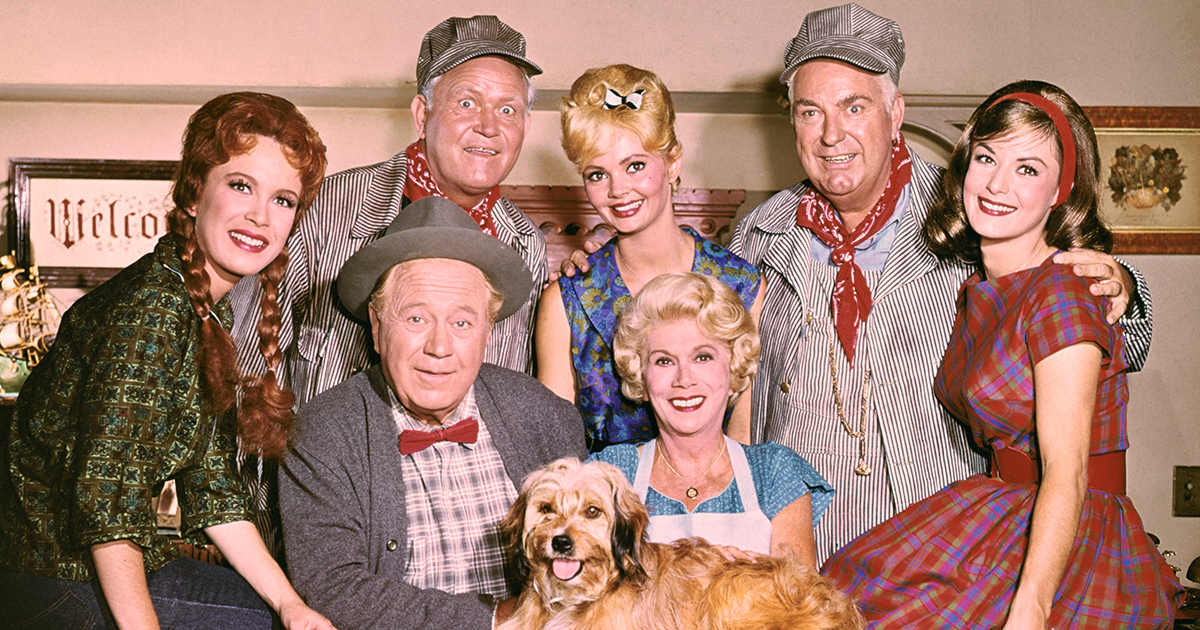
On quiet Saturday mornings when the house is still waking up, nothing beats wrapping your hands around a warm ceramic mug of fresh coffee and letting vintage television hum softly in the background. The familiar whistle of a steam train, the clatter of porcelain plates in a sunlit country kitchen, and the cheerful banter across a hotel front desk can instantly dissolve the noise of the modern week. For millions of viewers across generations, that comforting escape belonged to one place: the Shady Rest Hotel.
Debuting in the autumn of 1963, Petticoat Junction brought a slice of wholesome rural warmth straight into American living rooms. Created by Paul Henning, the show followed widowed mother Kate Bradley as she managed her eccentric country inn, kept her lazy uncle out of trouble, and raised three spirited daughters alongside an isolated railroad spur. Behind that sun-drenched facade lay a treasure trove of production quirks, fascinating continuity goofs, backstage romances, and quiet off-screen bravery. Exploring the most memorable Petticoat Junction bloopers and secrets reveals just how much ingenuity—and happy accident—went into making this country classic work.
Petticoat Junction Bloopers and Secrets: The Water Tower and Opening Credit Quirks
Long before viewers heard a single line of dialogue, the show’s title sequence set an unforgettable tone. The camera slowly panned up a wooden railroad water tank to reveal three pairs of petticoats draped casually over the rim while Kate’s daughters enjoyed an impromptu morning swim. It was playful, slightly cheeky for mid-sixties network standards, and instantly memorable. It also created one of the longest-running visual goofs in sitcom history.
When blonde sister Billie Jo was recast in 1966, Meredith MacRae stepped into the shoes previously filled by Jeannine Riley and Gunilla Hutton. The studio updated MacRae’s close-up credits right away, but the wide establishing shot told another story. In the distant footage showing the girls climbing down the exterior wooden ladder, Gunilla Hutton remained visible for years after MacRae took over the part. To eagle-eyed fans watching on modern screens, Billie Jo swapped faces the moment she touched the ground.
The credits held another subtle curiosity. During the first two seasons, the sisters appeared on screen in the order of Billie Jo, Bobbie Jo, and Betty Jo. By season three, the billing sequence quietly flipped to Betty Jo, Bobbie Jo, and Billie Jo. It was a subtle nod to the growing popularity of youngest daughter Betty Jo, whose tomboy charm and mechanical know-how had quickly won over audiences across the country.
Locomotive Illusions: The Strange Case of the Hooterville Cannonball
The heart of Hooterville was undeniably the Hooterville Cannonball, an aging steam locomotive operated by the easygoing duo of Charley Pratt and Floyd Smoot. According to the show’s storyline, this beloved train served as the only reliable lifeline connecting the Shady Rest to the outside world. If you missed the morning run, you were stranded on the porch until the next whistle blew.
In reality, the Cannonball was a masterpiece of Hollywood illusion. Exterior running shots were filmed up in Tuolumne County, California, using historic Sierra Railway No. 3—a vintage 1891 locomotive that appeared in dozens of classic western films. Whenever actors were shown riding, boarding, or talking inside the cab, they were standing on a stationary mock-up soundstage at General Service Studios in Los Angeles.
“The Hooterville Cannonball ran according to whatever schedule that week’s script required—arriving early, vanishing without warning, or rolling in right on cue.”
That split-location filming caused some delightful continuity head-scratchers. The train was scripted as a simple wood-burning locomotive, and stacks of split timber were always piled neatly in the tender. Yet the engine routinely billowed thick, dark clouds of black smoke that could only come from burning fuel oil or coal. The writers gave a quick wink to the audience by joking that Charley and Floyd were burning old wooden railroad ties. Even the locomotive’s identification number seemed to wander: during the black-and-white seasons, the engine proudly displayed No. 3, only to magically transform into No. 8 once the series transitioned to vibrant color.
The isolation of the Shady Rest was equally fluid. While the script claimed the hotel sat miles from any usable roadway, guests regularly appeared on the front porch without ever stepping off the train. Travelers would walk through the lobby doors minutes after the Cannonball had chugged away down the tracks, or sit sipping cold apple cider before the train had even arrived at the water stop.
The Revolving Bradley Sisters and a Backstage Romance
Finding the right chemistry for the three Bradley daughters took time, patience, and multiple casting shifts. Paul Henning originally auditioned countless hopefuls before assembling his first trio: Jeannine Riley as glamorous Billie Jo, Pat Woodell as bookish Bobbie Jo, and Linda Kaye Henning as tomboy Betty Jo.
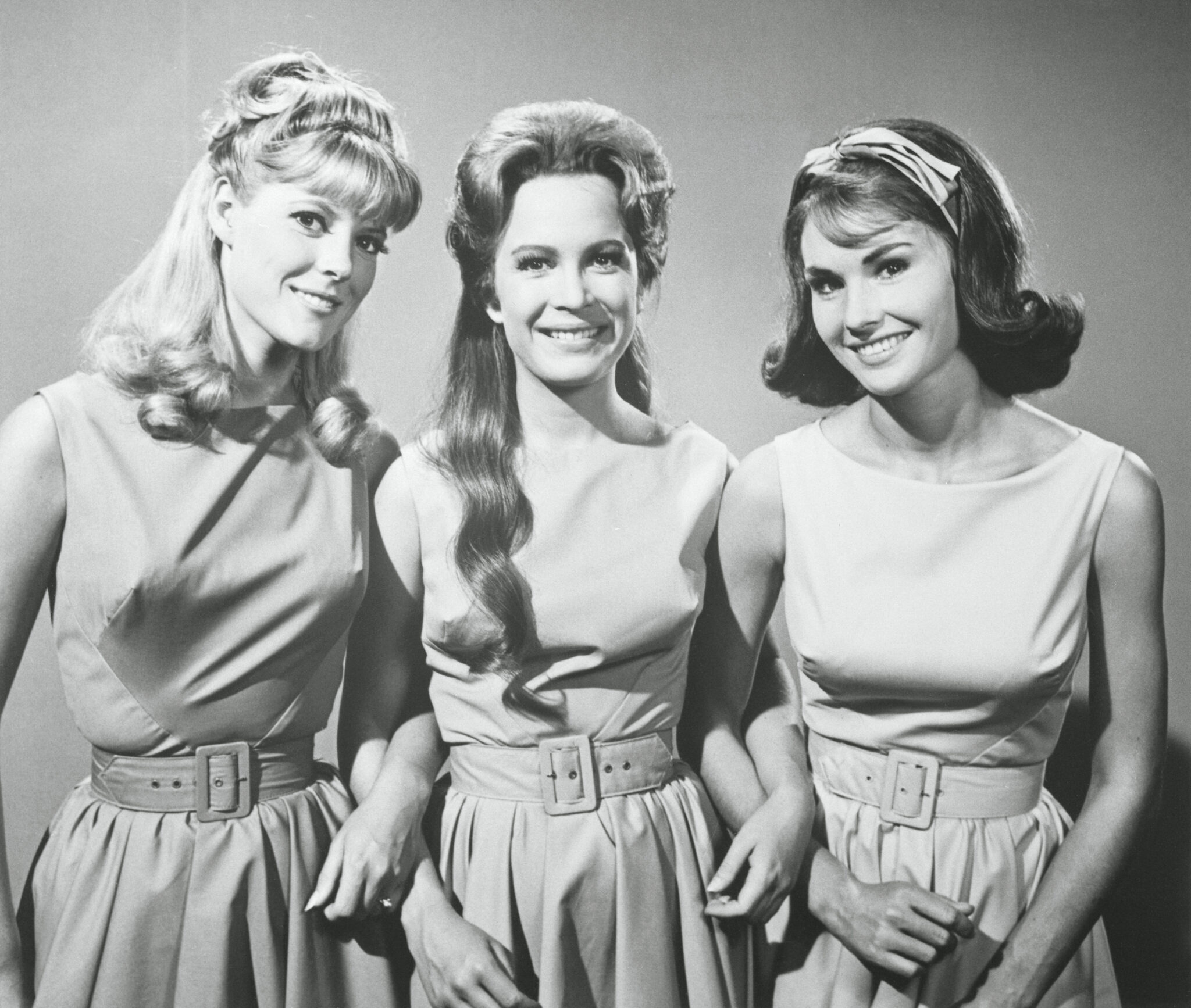
Meredith MacRae, Linda Kaye Henning, and Lori Saunders pose in matching mid-sixties belted dresses for a classic Shady Rest promotional still.
Linda Kaye Henning shared a unique connection with the production—she was Paul Henning’s real-life daughter. Encouraged by leading lady Bea Benaderet, Linda took on Betty Jo and made the character completely her own. Meanwhile, the older sisters saw several transitions. Pat Woodell left to pursue her singing ambitions and was replaced by Lori Saunders, whose warm, slightly scatterbrained comedic timing brought fresh energy to Bobbie Jo. Billie Jo changed hands from Jeannine Riley to Gunilla Hutton, before Meredith MacRae permanently took over the role for the remaining seasons.
Before any of them stepped onto the soundstage, however, another rising star was nearly part of the family. A young Sharon Tate had been heavily considered for Billie Jo and even posed for early studio promotional materials before producers decided on a different direction.
When Fiction Became Reality at the Altar
While the Bradley sisters kept viewers laughing with porch side romances and county fair misadventures, one storyline blossomed into genuine real-world love. During the fourth season, handsome pilot Steve Elliott, played by Mike Minor, crashed his crop duster near the Shady Rest and quickly became a fixture around the hotel. Betty Jo eventually won his heart, and the two characters tied the knot in a sweet 1967 wedding episode that drew massive ratings.
Behind the scenes, romance was blooming just as sweetly. Linda Kaye Henning and Mike Minor fell in love while working long days on the soundstage. Ten months after their television alter egos wed, the couple walked down the aisle in real life. In a sentimental touch that fans adored, Henning wore the exact same white lace bridal gown for her actual wedding that she had worn on the set.
Uncle Joe, Higgins the Wonder Dog, and Soundstage Shenanigans
Every great hotel needs a manager, but the Shady Rest had Uncle Joe Carson. Played with delicious dry wit by veteran actor Edgar Buchanan, Uncle Joe was renowned across the valley as the laziest man in Hooterville. He spent his days rocking on the front porch, concocting wild get-rich-quick schemes, and moving mountains of excuses to dodge honest labor.
In a lovely piece of production irony, Edgar Buchanan turned out to be the hardest-working person on the lot. Out of 222 produced episodes across seven seasons, Buchanan was the only cast member to appear in every single one.
- The Porch Rivalry: On camera, Uncle Joe engaged in a constant war of wits with the family dog, a scruffy, soulful mutt named simply “Dog.”
- The Real-Life Bond: Behind the scenes, Buchanan and the animal actor shared an extraordinary bond; the dog spent lunch hours curled comfortably asleep across Buchanan’s lap during rehearsals.
- From Hooterville to Hollywood: Trained by legendary animal handler Frank Inn, the four-legged star was a shelter rescue named Higgins. Higgins became so popular that after Hooterville closed down, he came out of retirement to star as the title hero in the 1974 film classic Benji.
Bea Benaderet: The Unshakeable Heart of Hooterville
The soul of the Shady Rest belonged completely to Bea Benaderet. Long respected in Hollywood as a premier voice talent—having voiced Betty Rubble on The Flintstones and dozens of Warner Bros. cartoon characters—Benaderet brought a grounded, maternal radiance to Kate Bradley. She was the steady compass keeping the hotel running, her daughters grounded, and Uncle Joe honest.
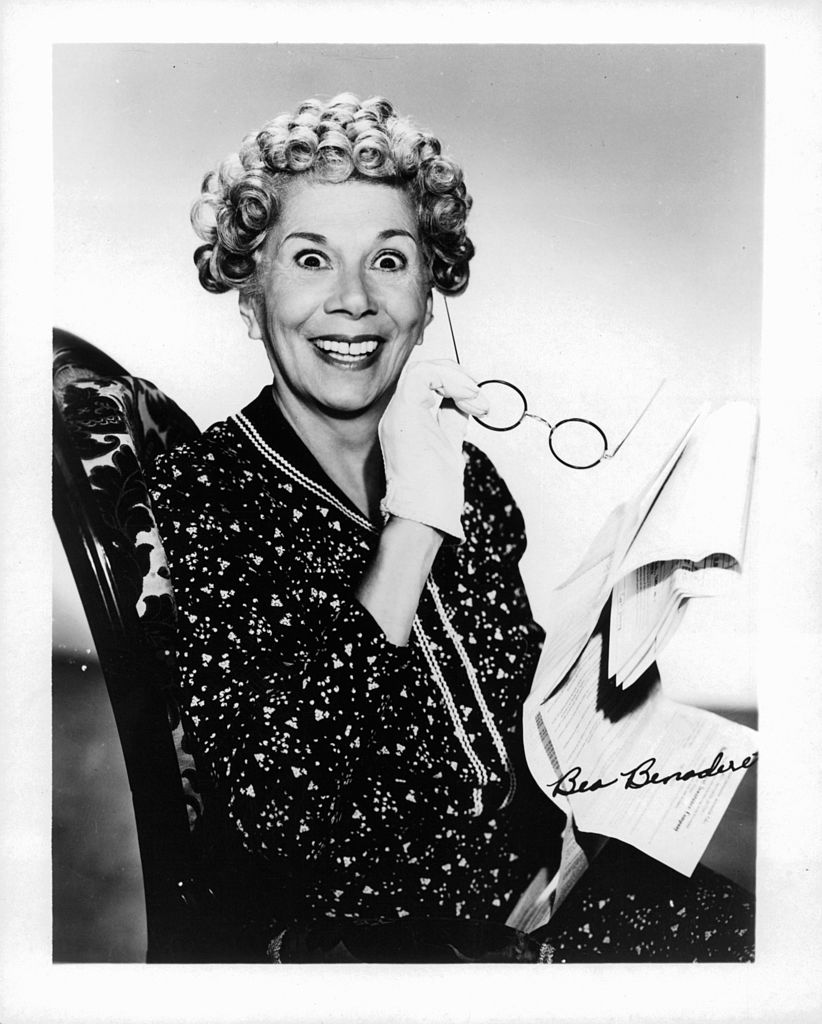
Bea Benaderet radiates warmth and quiet comedic grace as the beloved Shady Rest matriarch, Kate Bradley.
During the fifth season in late 1967, Benaderet received the heartbreaking diagnosis of inoperable lung cancer. Demonstrating remarkable courage, she underwent aggressive treatments while quietly working whenever her strength allowed. To protect her character’s presence, the writers explained Kate’s absence by having her travel out of town to care for an ailing relative. Temporary maternal figures, including Shirley Mitchell and Rosemary DeCamp, stepped in to help look after the Shady Rest.
Her brief return for the season five finale, titled “Kate’s Homecoming,” brought pure joy to audiences. Sadly, her health worsened shortly after, and her final on-screen appearance came in the season six episode “The Valley Has a Baby.” On October 13, 1968, Benaderet passed away at the age of 62, followed just four days later by her grieving husband, sound engineer Eugene Twombly. While June Lockhart joined the cast as Dr. Janet Craig to provide a steady presence, the Shady Rest was forever changed without Kate standing on the porch.
Why the Magic of the Shady Rest Endures
By 1971, television networks began shifting their programming toward younger, urban demographics, prompting the famous “rural purge” that brought an abrupt end to countryside favorites like Green Acres, The Beverly Hillbillies, and Petticoat Junction. After seven seasons, the Shady Rest shuttered its doors. Yet the longing for that simpler, hospitable way of living never truly faded.
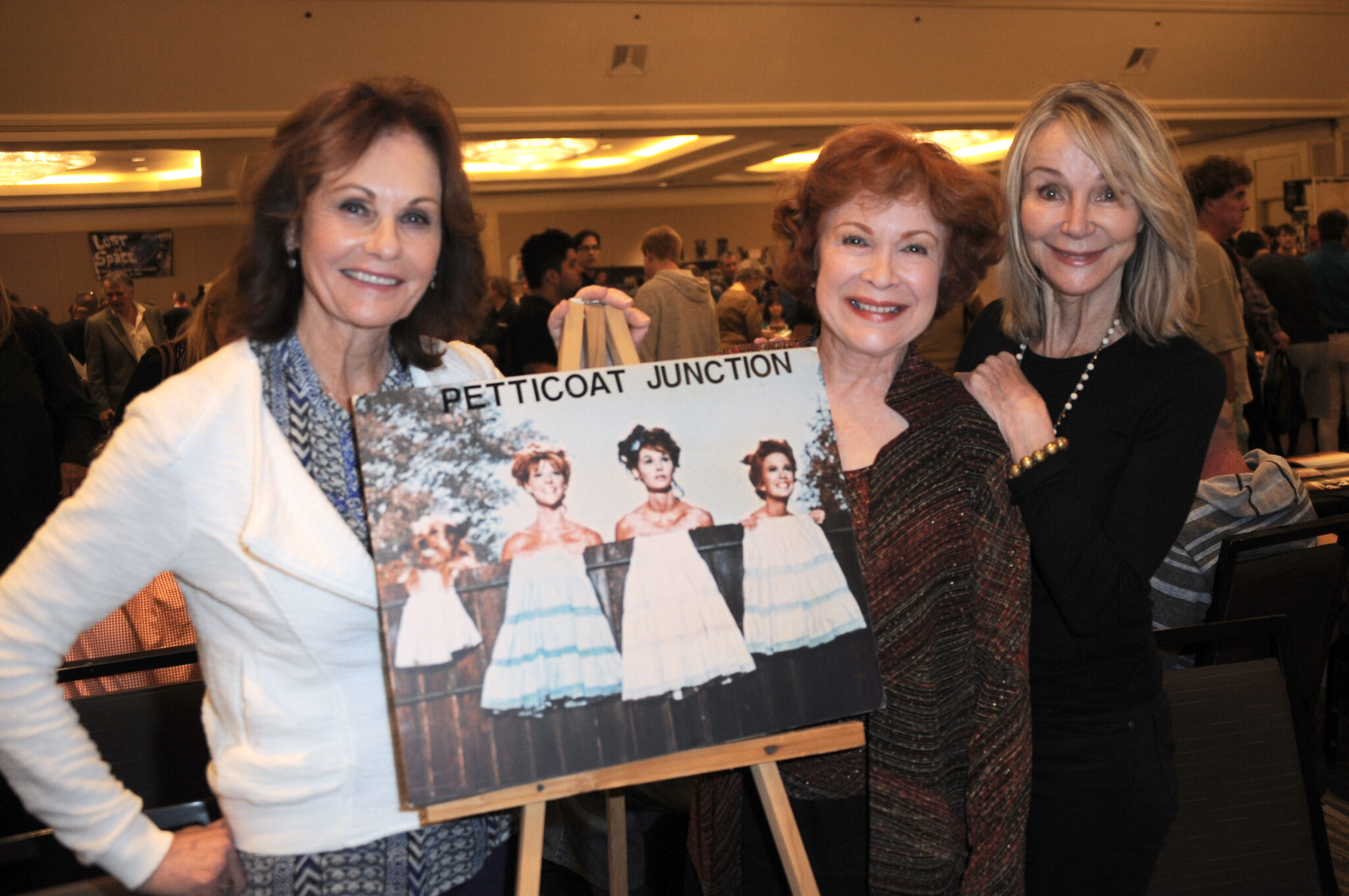
Decades after leaving Hooterville, Lori Saunders, Linda Kaye Henning, and Gunilla Hutton reunite with smiles and fond memories for longtime fans.
There is an enduring charm in watching three sisters bake fresh pies, hang laundry in the afternoon breeze, and treat weary travelers like family. That slow-paced warmth reminds us to cultivate cozy spaces in our own modern homes—whether that means brewing loose-leaf tea in an earthenware pot, arranging garden blossoms on the dining table, or setting aside quiet moments with loved ones.
Spotting odd locomotive smoke, shifted names in opening credits, and double-cast water tower shots makes revisiting the series an absolute delight. These Petticoat Junction bloopers and secrets do not take away from the show’s magic; rather, they highlight the human ingenuity and theatrical heart that built it. Fifty years later, a quiet trip down the tracks to the Shady Rest still feels just like coming home.