Picture this: you are lounging on the beach with a cold seltzer in hand. The sun feels warm, the breeze smells salty, and the water looks calm. But as you look out toward the horizon, something feels completely off. The surf is not rolling in normal, straight lines. Instead, the water forms a bizarre checkerboard grid of crisscrossing peaks.
You are looking at square waves in the ocean, also known by mariners as a cross sea. While the pattern looks like a striking digital glitch, it is actually one of nature’s most deceptively hazardous marine traps. So, what causes this ocean grid, and why should you run for dry land the second you spot it?
How Cross Seas and Square Waves Form
Normally, ocean waves travel in one clear direction dictated by the local wind. However, weather systems hundreds of miles away can generate entirely separate swell systems. When two opposing weather fronts push swells toward each other at sharp angles, their paths collide. As a result, the two wave trains cross over each other instead of merging smoothly.
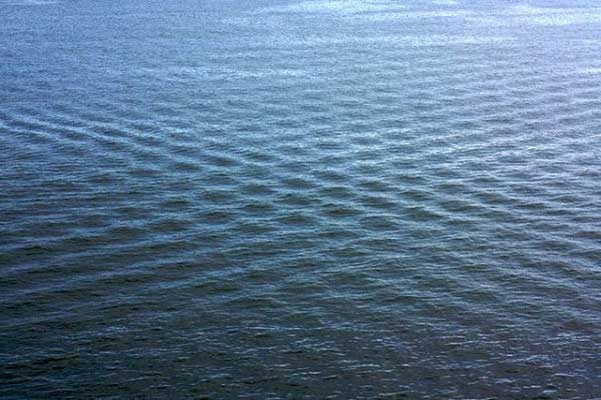
Notice how two opposing wave systems collide at right angles to form distinct diamond shapes.
Think of it like two trains meeting at a track crossing. Rather than canceling each other out, the energy from both swells stacks directly upward. This interaction forms sharp, boxy peaks that can reach several feet higher than the surrounding water. Consequently, what looks like a neat geometric art piece on top is pure physical chaos underneath.
Why Square Waves in the Ocean Are Brutally Dangerous
At first glance, a cross sea looks strangely peaceful from the safety of the boardwalk. Yet under the surface, opposing currents create intense turbulence that catches even seasoned mariners off guard. Because water pushes from two different directions at once, it breaks all standard rules of ocean safety.
The Hidden Threat to Boats and Watercraft
Vessels are engineered to cut through waves head-on using their bow. When a boat faces standard surf, the hull slices through water and maintains balance easily. But in a cross sea, waves smash into the boat from the front and the side simultaneously. This violent broadside impact is known as taking waves on the beam.
When cross waves strike the beam, they roll the vessel violently from side to side. As a result, small fishing boats, kayaks, and jet skis can lose stability in seconds. Even large commercial ships struggle with internal hull stress during severe cross sea conditions. Therefore, staying on the water when these squares appear invites disaster.
The Shocking Risk for Swimmers and Divers
For swimmers, square waves act like a giant, liquid washing machine. Traditional rip currents pull you straight out toward the open sea in one predictable channel. In contrast, cross seas generate spinning undertows that yank you from several angles at once.
Because the current shifts constantly, swimming toward the shore feels impossible. Even strong swimmers burn through their stamina in just a few minutes fighting conflicting pressures. Furthermore, scuba divers face severe disorientation as underwater surge spins them away from dive buddies and anchor lines.
Famous Hotspots Where Ocean Grids Appear
While square waves can pop up anywhere under the right weather conditions, certain coastal spots are famous for them. For instance, the western coast of France sees this phenomenon regularly due to unique underwater sandbars and Atlantic storm tracks.
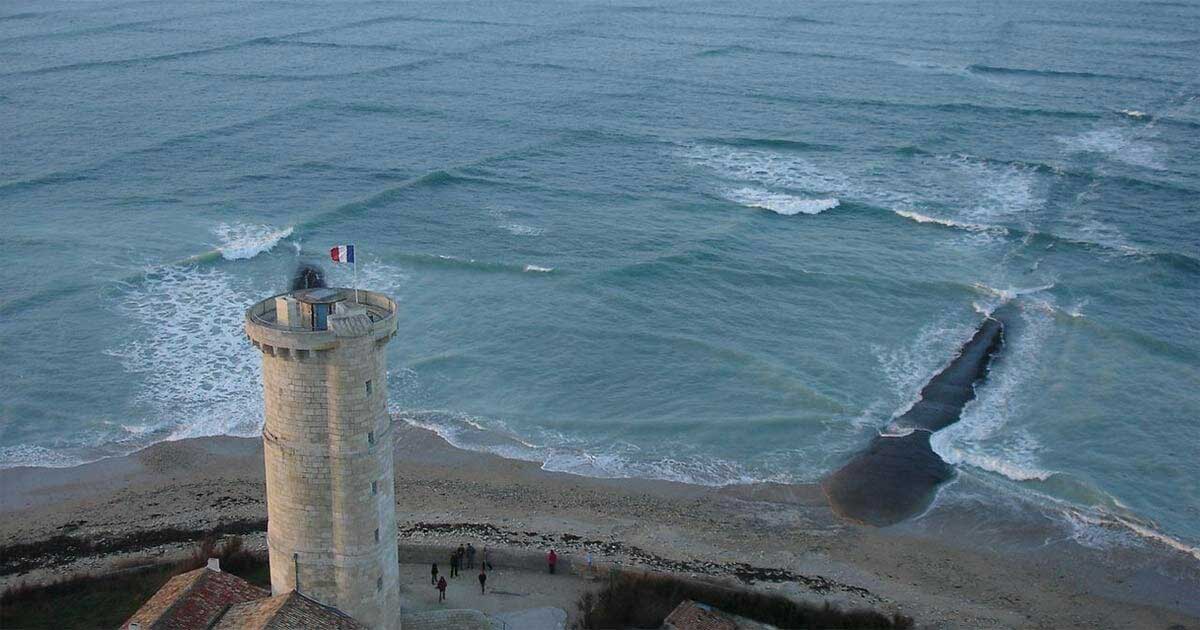
The historic lighthouse on Île de Ré provides a front-row seat to world-famous cross sea formations.
The most famous observation point is near the Phare des Baleines lighthouse on the island of Île de Ré. Here, two distinct bodies of water meet around the tip of the island, creating postcard-ready checkerboard patterns. Similarly, spots along the Mediterranean coast, parts of New Zealand, and open stretches of the Pacific also produce frequent cross swells.
What to Do the Second You Spot Square Waves
Spotting this pattern is your immediate cue to change your plans without hesitation. Fortunately, handling the situation is straightforward if you know the right steps.
If You Are Still on the Beach
Stay on dry land and resist the urge to wade in. Even ankle-deep water near a cross sea can suddenly sweep your feet out from under you with brutal force. Keep children, dogs, and gear well away from the rushing surge line. Grab your camera, snap a few photos from the dunes, and enjoy the show safely from the sand.
If You Are Currently Swimming
First, stay calm and conserve your energy immediately. Panicking causes rapid breathing, which leads to exhaustion within minutes. Do not try to swim straight against the conflicting swells toward the beach.
Instead, roll onto your back and adopt the float-to-live posture. Keep your airway clear and look for the nearest break in the grid pattern. Swim diagonally across the current toward calmer water or signal lifeguards with an arm raised high. Once you reach the sand, stay out of the water for the rest of the day.
If You Are Operating a Boat or Kayak
First, make sure everyone on board puts on a Coast Guard-approved life jacket right away. Next, throttle back to a safe, steady maneuvering speed so you do not nose-dive into steep crests. Never try to cut straight through the middle of the grid at high speed.
Instead, angle your vessel toward open, smoother water or head toward the nearest sheltered harbor. Keep your radio tuned to marine VHF channels for coastal weather updates. If you notice your bilge taking on water from crossing chop, turn on automatic pumps immediately.
Smart Marine Gear That Protects You on the Water
Being prepared is the golden rule of coastal living. Investing in reliable safety equipment gives you peace of mind whenever you hit the beach or launch a paddleboard.
- Type III USCG-Approved Life Vests: High-buoyancy vests keep your head above water automatically if you get knocked off a paddleboard.
- Pea-less Marine Safety Whistles: These ultra-loud storm whistles work even when soaked and carry sound across roaring surf to alert lifeguards.
- Polarized Oceanic Sunglasses: Quality polarized lenses cut harsh glare off the water surface, helping you spot crossing swell patterns early.
- Bright Inflatable Swim Buoys: Tethering a neon tow float to your waist gives you instant flotation and high visibility in choppy water.
- Heavy-Duty Waterproof Dry Bags: Keep your phone, car keys, and first aid supplies completely dry during sudden boat swamping.
Common Myths About Square Waves Debunked
Because cross seas look so strange, plenty of myths circulate on social media about them. Let us clear up the most common misconceptions with real facts.
Myth 1: Square Waves Only Happen in Giant Storms
Actually, square waves frequently form on bright, sunny afternoons. A distant weather front thousands of miles away can send long swells toward shore while local breezes blow in another direction. As a result, the sky might be blue while the water underneath is turning treacherous.
Myth 2: You Can Easily Paddle Through Them
Kayakers and paddleboarders often assume small watercraft can simply glide over the squares. However, the opposing chop knocks paddle blades out of position and twists hulls sideways without warning. Even skilled paddlers flip over within seconds in moderate cross seas.
Myth 3: Square Waves Are Completely Unpredictable
While they appear rapidly, marine weather apps and surf forecast tools show colliding swell directions well in advance. By checking primary and secondary swell angles before you leave home, you can easily avoid hazardous waters.
Staying Safe Around Square Waves in the Ocean
The ocean is full of wonder, and few sights match the rare geometry of a full cross sea. However, respecting the power beneath those neat lines is what keeps your coastal adventures fun and safe. Whenever you notice square waves in the ocean, admire them from the safety of the shore, keep your gear packed, and let nature run its course.