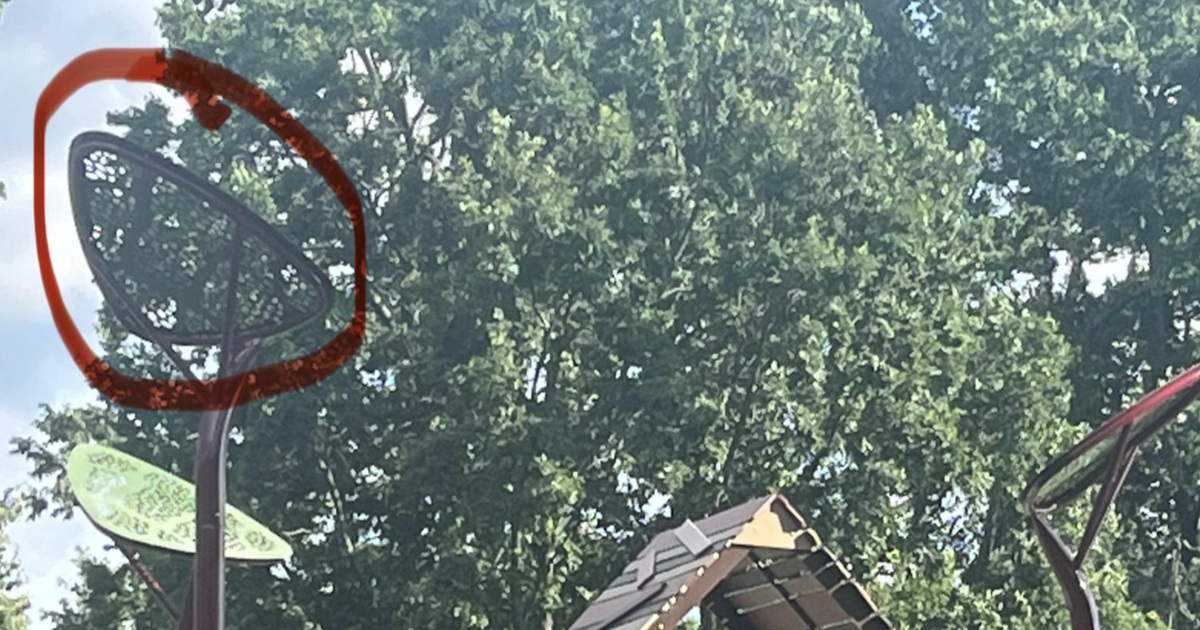
You are sitting on a park bench, sipping iced coffee from your favorite travel tumbler, while your kids run wild on the playset. You glance up, squinting into the morning glare, and notice something bizarre mounted ten feet in the air: giant, colorful plastic paddles full of holes that look like oversized tennis rackets or abstract Monstera leaves. If you have ever stared up and wondered what on earth those strange playground leaf structures actually do, you are certainly not alone.
Actually, those elevated paddles are known in the commercial recreation industry as Solis Hue Toppers. Manufactured by playground equipment leader BCI Burke, these overhead structures have quietly taken over modern schoolyards, public parks, and neighborhood recreation centers across the country. While they look like rogue modern art installations at first glance, they serve a calculated purpose that blends safety engineering, biophilic architecture, and sensory developmental play.
What Are Solis Hue Toppers, Exactly?
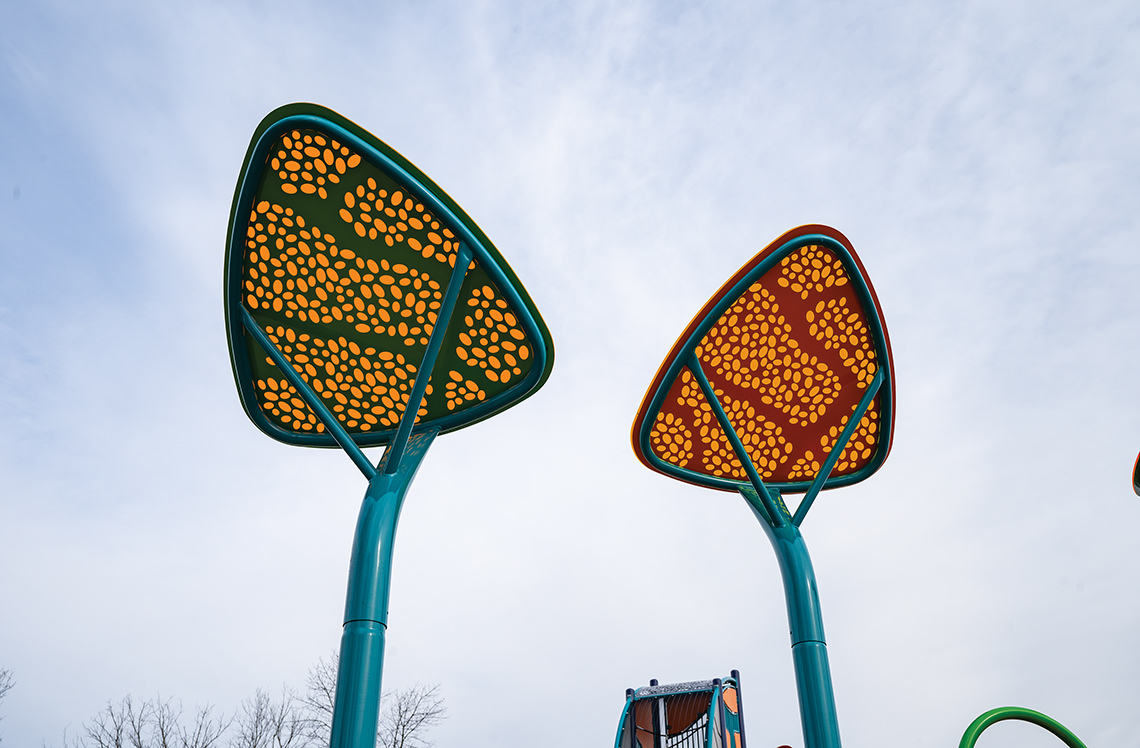
In simple terms, Solis Hue Toppers are architectural playground shade toppers engineered to mount directly atop main structural steel upright posts. Instead of using solid fabric shade sails that catch heavy crosswinds or flat plastic roofs that trap heat, these structures use heavy-duty, UV-stabilized polymer panels cut into natural leaf-like silhouettes.
Each panel features precision-molded perforations paired with translucent colored inserts. When harsh sunlight hits the top of the playground canopy, the panels filter intense UV rays and project soft, shifting pools of colored light and geometric shadows onto the ground decks below. Consequently, they turn an ordinary steel platform into an interactive sensory zone that shifts throughout the afternoon.
The Science of Biophilic Playground Design
Decades ago, playground design prioritized raw durability over sensory comfort. We all remember the blistering metal slides that burned our legs in July and the splinter-heavy wooden fortresses. Today, urban planners and landscape architects rely on biophilic design—the practice of connecting built environments with the natural world.
Real tree canopies provide what scientists call “dappled light” (or komorebi in Japanese). This gentle, shifting light pattern reduces harsh solar glare, lowers ambient thermal buildup on high-touch plastic decks, and creates a calming atmosphere for young nervous systems. In urban parks where mature shade trees are absent, these leaf toppers simulate the exact visual rhythm of sunlight filtering through an ancient forest canopy.
1. Sensory Stimulation Without Sensory Overload
Children naturally process spatial depth through shadow movement. As the sun arcs across the sky, the colored inserts throw stained-glass hues across slides and climbing steps. This visual stimulation sparks imaginative games—turning platforms into sunken pirate ships, alien planets, or enchanted treehouses—without flashing lights or batteries.
2. Glare and Heat Diffusion
Traditional solid canopies can act like umbrellas in a storm, catching severe wind gusts and tearing at the mounting brackets. The perforated design of Solis Hue Toppers allows high-velocity wind to pass harmlessly through the gaps while breaking up directional heat rays. As a result, commercial play decks stay cooler to the touch during peak midday hours.
3. Low-Maintenance Durability
Unlike fabric shade canopies that collect bird droppings, mold, and trapped leaves, rigid marine-grade polymer toppers are virtually self-cleaning. Rain washes right through the drainage holes, preventing standing water and structural rust around the post collars.
Commercial Playground Specs vs. Backyard Swingsets
Municipal recreation departments and school boards invest heavily in these commercial-grade systems because they meet rigid ASTM safety standards. However, if you are a homeowner looking to bring that same comfortable, sun-dappled vibe to your own backyard playset or patio, you do not need a five-figure commercial parks budget.
- Commercial Parks: Heavy-gauge galvanized steel posts, custom welded brackets, and thick shatterproof acrylic panels rated for 90 mph wind loads.
- Residential DIY Workarounds: Perforated high-density polyethylene (HDPE) privacy screens, laser-cut metal pergola panels, or triangular UV-blocking shade sails mounted with stainless steel turnbuckles.
How to Recreate the Filtered Leaf Canopy at Home
If your kids love the colored light patterns at the park, you can easily replicate this calming, high-end look over your residential play deck, sandbox, or patio lounge.
Step 1: Install Overhead Tension Points. Secure marine-grade 316 stainless steel eye pads to your playground corner posts or patio pergola beams using heavy structural timber screws.
Step 2: Choose Perforated or Translucent Panels. Instead of heavy, solid tarps that flap loudly in the breeze, look for decorative outdoor privacy panels made of UV-resistant composite or laser-cut aluminum. Botanical patterns with 40% to 60% open area deliver the best balance of shade and airflow.
Step 3: Add Translucent Color Accents. Fasten outdoor-rated, tinted polycarbonate sheets behind the decorative cutouts. When the midday sun beats down, your backyard play area will glow with rich emerald, amber, or cobalt shadows just like the neighborhood park.
Smart Maintenance for Overhead Play Structures
Whether managing a community park or maintaining your own backyard setup, overhead structures require seasonal safety checks. Always inspect your mounting hardware each spring before heavy playtime begins.
Check for loose post bolts caused by winter freeze-thaw cycles. Wipe down resin panels using a mild mixture of warm water and plant-based dish soap applied with a soft microfiber mop. Never use harsh abrasive scouring pads or chemical solvents, as these can strip the UV-protective clear coat and leave the panels hazy.
Next time you walk up to your local park and spot those towering paddle leaves against the clouds, you will know the truth. Those funny-looking overhead toppers are not discarded sports gear or pointless playground fluff; they are smart, sensory-friendly canopies making outdoor play cooler, safer, and a lot more imaginative for everyone below.