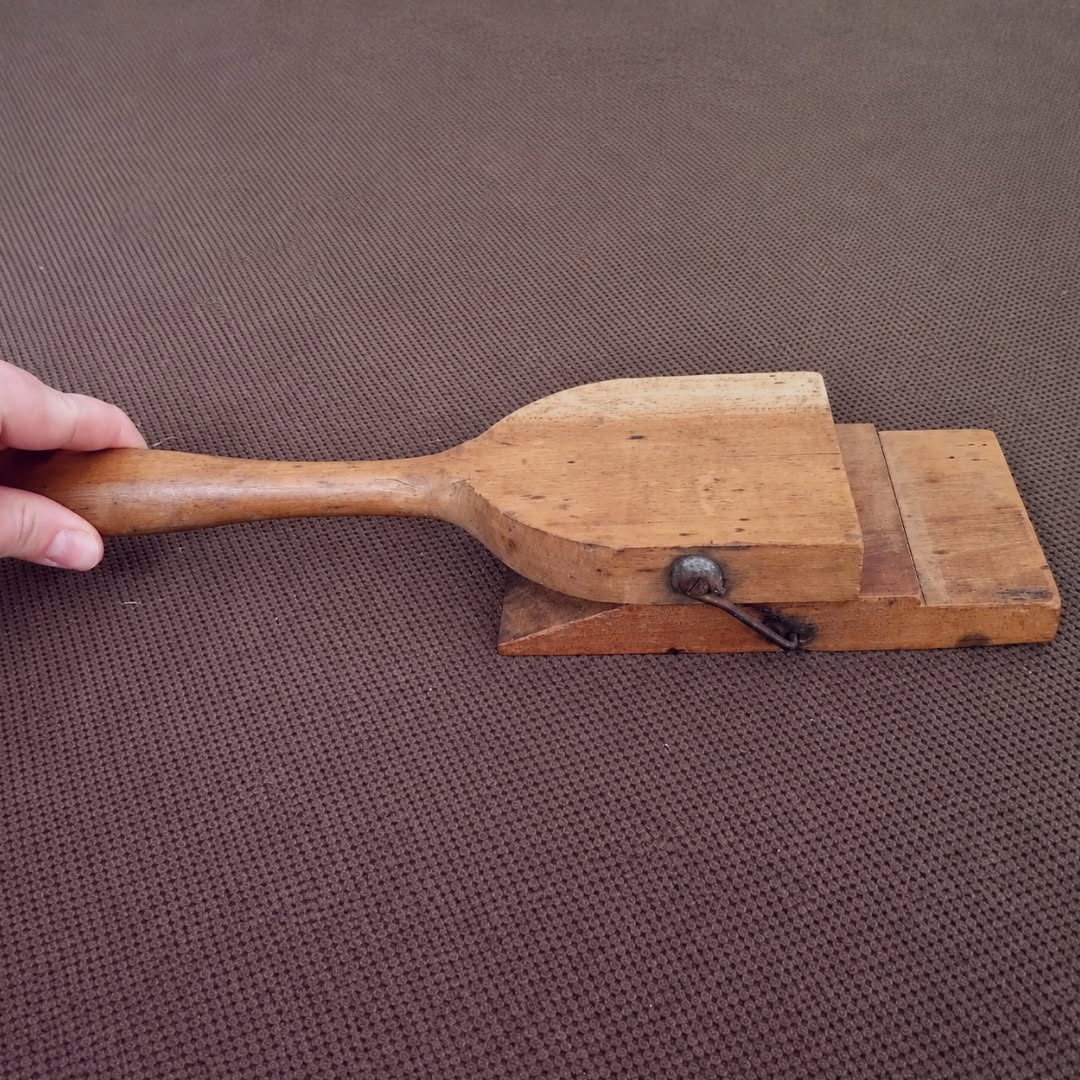
My MIL has had this strange wooden tool for years, and if it came from an old beekeeping collection, there’s a good chance it wasn’t a mystery at all. It may be Parker’s Foundation Fastener, an old-fashioned beekeeping tool made to help secure wax foundation inside wooden hive frames. Unlike modern frame-assembly gadgets, this little contraption looks almost like something from a workshop drawer—and that is exactly why it can be so easy to misidentify.
What Is Parker’s Foundation Fastener?
Parker’s Foundation Fastener was designed for a very specific beekeeping job: helping attach a sheet of wax foundation to a wooden hive frame. The foundation gave bees a starting pattern for building comb, while the wooden frame provided support for the finished structure.
That sounds simple today. In the 19th century, however, preparing hive frames was much more hands-on. A beekeeper had to keep the wood, wax, and fastening method working together without damaging the delicate foundation.
The tool’s clamp-like construction helped hold parts in position while the beekeeper secured the foundation. Depending on the particular version, the wooden body, metal spring, and pressing surface worked together to apply controlled pressure.
Why Would a Beekeeper Need One?
Wax foundation is thin, flexible, and surprisingly easy to distort. If it shifted while being installed, the bees could build comb in a way that made later hive inspections much harder.
A foundation fastener helped reduce that problem. It gave the beekeeper a repeatable way to hold the material against the frame while preparing it for the hive.
For instance, imagine preparing several frames on a kitchen table or small workshop bench. Instead of wrestling with a loose sheet of wax and a wooden frame at the same time, the tool could help keep the pieces where they belonged.
Pro Tip: If you find one today, don’t squeeze or force the spring just to see how it works. Old wood can be dry and brittle, while aged metal may be weaker than it looks.
How the Tool Was Used
Although surviving examples can differ, the basic process was fairly practical.
- Prepare the wooden frame: The frame was assembled and checked for a clean groove or fastening area.
- Position the wax foundation: The sheet was placed where it could be secured inside the frame.
- Hold the pieces steady: The fastener helped maintain pressure while the foundation was attached.
- Secure the foundation: The beekeeper used the appropriate fastening method for that frame design.
- Inspect the finished frame: The foundation needed to sit straight, without unnecessary bends or loose sections.
The important part was consistency. A frame that looked fine on the bench could become a problem once it was moved, warmed, or filled with growing comb.
Why Straight Foundation Mattered
Beekeeping depends heavily on orderly frames. When bees build comb where the beekeeper expects it, inspections, maintenance, and honey removal become much easier.
Crooked comb can interfere with neighboring frames. It can also make it harder to lift a frame without disturbing the rest of the hive.
That is why a small workshop tool like this mattered more than its size suggests. It was not simply a clamp. It was part of a larger system for producing uniform, manageable hive frames.
How to Identify an Old Foundation Fastener
If you have one sitting in a drawer, shed, attic, or old beekeeping box, start with the physical clues rather than the name.
Look for a combination of:
- A wooden handle or wooden body
- A clamp-like shape
- A metal spring, latch, or tension piece
- A flat pressing area or jaw
- A size that makes sense for working around a hive frame
- Wear marks consistent with repeated workshop use
The construction is often more informative than a single feature. Plenty of old tools have wooden handles and metal hardware, so one clue alone does not prove that you have a Parker’s Foundation Fastener.
If yours has a maker’s mark, patent information, initials, or an old hardware-store label, photograph those details before cleaning anything.
Don’t Clean It Until You Check These Details
This is where many old-tool owners accidentally erase the most interesting evidence.
A heavy sanding job may remove faint lettering. Aggressive polishing can also change the appearance of aged metal and wood.
Instead, begin with a soft dry brush. Remove loose dust, then inspect the tool under good light.
Pro Tip: Take clear photos of both sides, the spring mechanism, joints, markings, and any unusual hardware. Those details can be much more useful for identification than a photo of the whole tool from across the room.
Parker’s Foundation Fastener vs. Modern Beekeeping Tools
Modern beekeepers have access to purpose-built frame assembly equipment, wax foundation tools, electric embedding devices, frame wire systems, and other specialized supplies. These products can make repetitive work quicker and more predictable.
The old fastener belongs to a different era. It represents a time when many beekeeping jobs depended on simple mechanical tools and careful handwork.
That does not necessarily make every surviving example rare or highly valuable. Antique tool value depends on condition, maker, age, markings, scarcity, and collector demand.
If you are considering selling one, avoid assuming that age alone sets the price. Comparable auction results, specialist beekeeping collections, antique tool dealers, and documented maker information are much better clues.
Common Identification Mistakes
Mistake #1: Calling every wooden clamp a foundation fastener. Old workshops contain countless clamps, holders, jigs, and specialty tools. Shape matters, but intended use matters more.
Mistake #2: Cleaning it too aggressively. Original surfaces and markings may help establish age and provenance.
Mistake #3: Assuming the tool is modern because it looks simple. Simple mechanical designs were common long before plastic and powered workshop tools.
Mistake #4: Assuming it must be from the 1800s. A tool style can remain in use or be reproduced for years. A claimed date should be supported by construction details, catalogs, patents, or markings whenever possible.
Could Your Family’s “Mystery Tool” Be One?
If the mystery object has a wooden body, a pressing jaw, and a spring or latch arrangement that looks suited to holding hive-frame material, Parker’s Foundation Fastener is a strong possibility.
However, identification from shape alone should be treated as a starting point, not a final verdict. Look for maker marks, compare the mechanism with documented examples, and preserve the tool in its current condition while you investigate.
That little object may have spent decades in a toolbox without anyone knowing what it did. Now you have a much better clue: it may be a piece of old beekeeping equipment created to make one fussy job—securing wax foundation to hive frames—a whole lot easier.
Final Takeaway
Parker’s Foundation Fastener is a fascinating example of practical beekeeping equipment from the era when hive-frame preparation relied heavily on simple hand tools. Its purpose was straightforward: help keep wax foundation properly positioned and secured in a wooden hive frame.
So, if you discover one in an old family workshop or beekeeping box, resist the urge to toss it into the “random antique stuff” pile. Check the wood, spring, pressing surface, markings, and construction first. You may be holding a useful piece of beekeeping history—and at the very least, you have finally solved the mystery of that odd little wooden clamp.