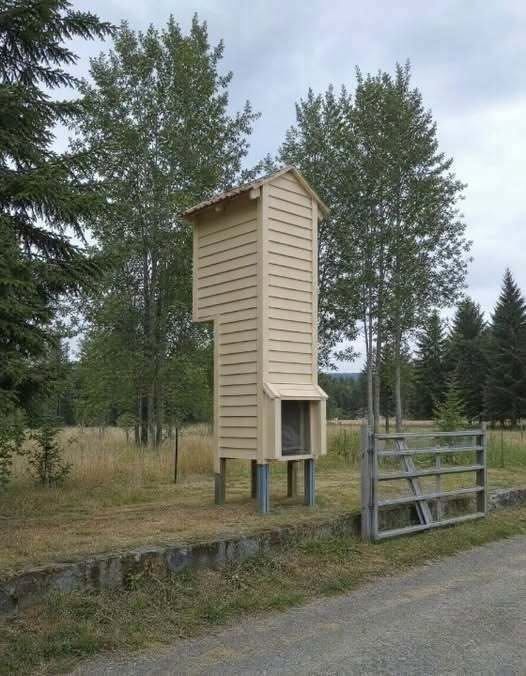
The Strange Wooden Tower That Helps Drivers See Around a Blind Curve
A blind driveway or sharp road curve can turn a routine trip into a tense guessing game. That is why this homemade wooden tower has attracted attention: instead of relying on batteries, apps, or expensive roadside electronics, it uses angled mirrors to give drivers a better look at approaching traffic. The driveway periscope sounds almost comical, but the idea behind it is surprisingly practical.
At first, the structure looks like an oversized wooden box beside a driveway. Then you notice the mirrors. They are positioned to reflect a section of road that would normally be hidden by a bend, hedge, wall, or nearby terrain.
Why a Blind Curve Creates Such a Big Problem
Visibility is easy to ignore until it disappears. When a driveway meets a bend, drivers may have only a narrow window to spot a car, cyclist, or other road user coming from the hidden side.
That creates a simple problem: you need to see the road before your vehicle reaches the point where you can actually see it. Naturally, people inch forward, stop, check again, and hope the road is clear.
A mirror system changes that sequence by moving the viewing point and redirecting the road scene toward the driver. In other words, it can provide information before the vehicle enters the blind area.
How the Driveway Periscope Works
The basic principle is simpler than the unusual shape suggests. A mirror redirects light, allowing someone to see an area not directly in front of them.
Inside a homemade tower, angled mirrors can be arranged so the road is reflected toward a lower viewing point. The result resembles a simple periscope: the person looks into one section while the reflected image shows another part of the scene.
The important word is alignment. A mirror does not magically create a wider view. If the angle is wrong, you may see the sky, a fence, or nothing useful.
For a practical installation, the viewing height, mirror angle, road position, and driveway entrance all need to be considered. Even a small change in angle can shift the visible section of roadway.
Simple Materials, Smarter Planning
The appeal is that the basic concept can use ordinary materials. A typical build might involve exterior-grade lumber or plywood, outdoor-rated fasteners, sturdy brackets, weather-resistant mirrors, and a protective viewing panel.
Homeowners might consider exterior wood stain, weatherproof sealant, stainless-steel hardware, and outdoor acrylic or polycarbonate panels. Costs vary, so measure the driveway first instead of buying materials on impulse.
Start by identifying exactly where the road disappears from view. That one measurement can prevent a common DIY mistake: building a tall structure without knowing what it actually needs to show.
How to Plan One Without Guessing
Stand at the driveway entrance during a quiet period and identify the blind zone. Have another person remain at a safe distance along the road while you observe which positions become visible.
Next, mark the approximate viewing direction. You are trying to determine where a mirror would need to point to reflect the hidden road toward the driveway.
Then consider height. Taller does not automatically mean better. An unnecessarily tall tower can be harder to maintain, more exposed to wind, and more difficult to secure.
Pro Tip: Make the viewing area easy to reach. If cleaning the mirror requires a ladder every time, routine maintenance will probably get skipped.
DIY Mistakes That Can Ruin the View
The first mistake is assuming the mirror angle can be set once and forgotten. Wood can shift, brackets can loosen, and seasonal movement can change alignment slightly.
The second is choosing a mirror because it is large. Bigger is not automatically better. Distortion, glare, mounting stability, and viewing angle matter more than size alone.
Another mistake is creating a new obstruction. The structure should not block pedestrians, cyclists, drainage, signs, utilities, or other sightlines.
Most importantly, treat the system as a visibility aid, not a guarantee. Drivers still need to stop where appropriate, check directly, and follow local traffic rules.
Keeping the Tower Useful Year After Year
Maintenance is straightforward when the design is accessible. Wipe the viewing surface with a soft microfiber cloth and a cleaner suitable for the mirror or plastic panel. Avoid abrasive pads that can scratch it.
Inspect the frame for cracks, rot, loose joints, swelling, or water damage. Exterior wood sealer can help protect exposed timber, but it does not eliminate the need for inspections.
Check alignment after severe weather as well. Strong wind or repeated temperature changes can move brackets enough to affect the viewing area.
If condensation keeps appearing, examine ventilation and moisture entry. A small design adjustment may solve the problem better than repeatedly cleaning a fogged surface.
Could a Camera Do the Same Job?
Yes. A weatherproof driveway camera or outdoor security camera can provide a live view on a screen or compatible device. For some properties, that may be more practical.
However, technology adds power, connectivity, weatherproofing, screen placement, and software to the setup. A mirror-based system has fewer components because the image is created through optics rather than electronics.
That does not make one option universally better. It simply shows that the right solution depends on the property, budget, maintenance needs, and local rules.
The Bigger Lesson Behind This Odd-Looking Structure
What makes the driveway periscope interesting is not that it is made from wood. It is the way it focuses on one specific problem: can a driver see approaching traffic sooner?
That same thinking works around the home. A hedge can block a driveway. A tall fence can hide pedestrians. A shed can interfere with a turning area. Sometimes the first step is simply identifying exactly what you cannot see.
From there, the answer might be trimming vegetation, changing a viewing position, adding a properly placed convex traffic mirror, or improving lighting.
The homemade tower is a reminder that useful design does not always require complicated machinery. Sometimes, a carefully measured angle and a clear line of sight can do a lot of work.
Check Local Rules Before Building
There is one part many DIY stories skip: permissions and safety. A roadside structure may be subject to property, visibility, setback, building, or road-access rules.
Before buying lumber or mounting mirrors, check with the relevant local authority or property manager. Make sure the structure does not interfere with traffic signs, sidewalks, drainage, utilities, or emergency access.
If the curve is genuinely dangerous, report the visibility problem to the responsible road authority rather than relying on a homemade device alone.
Final Takeaway: The Driveway Periscope Is About Visibility
The driveway periscope is a fascinating example of low-tech problem-solving. By using mirrors, height, and careful positioning, a homemade structure can help reveal part of a road hidden from a normal driveway viewpoint.
It is not a substitute for safe driving, professional engineering advice, or official road improvements. However, it shows how a small change in perspective can inspire a useful solution.
If you are dealing with a blind driveway or awkward curve, start with measurements, visibility, and local rules. Then choose the simplest safe option that genuinely improves what you can see.