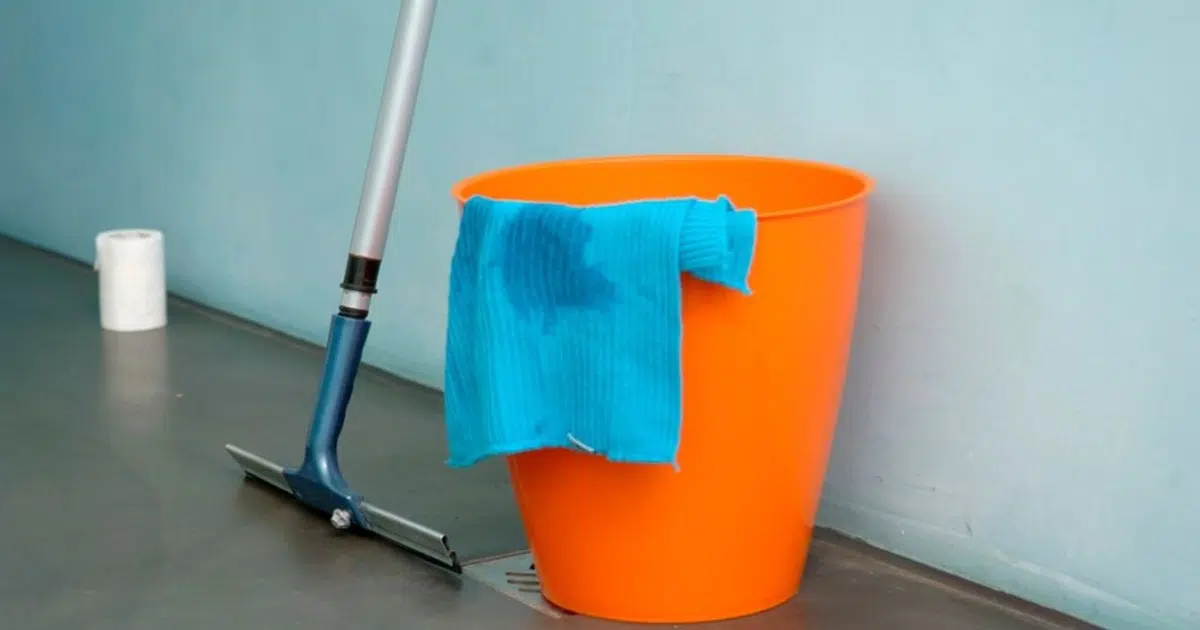
Where to Dispose of Dirty Mop Water Without Making a Worse Mess
You finish the last pass across the kitchen. The floor looks decent. The bucket does not. It smells like wet dust and lemon cleaner, and there is a film of hair floating on top like it planned this. Now you are standing in the hallway doing that tiny freeze: toilet, tub, or kitchen sink?
Most homes should dump dirty mop water in the toilet, or better yet a laundry or utility sink, as long as you strain out the solids first. The bathtub is a backup, not a habit. Kitchen sinks and storm drains are the wrong kind of convenient.
I have carried that bucket like it was a casserole I did not want to drop. Here is the method I actually use, including the parts nobody puts in a caption.
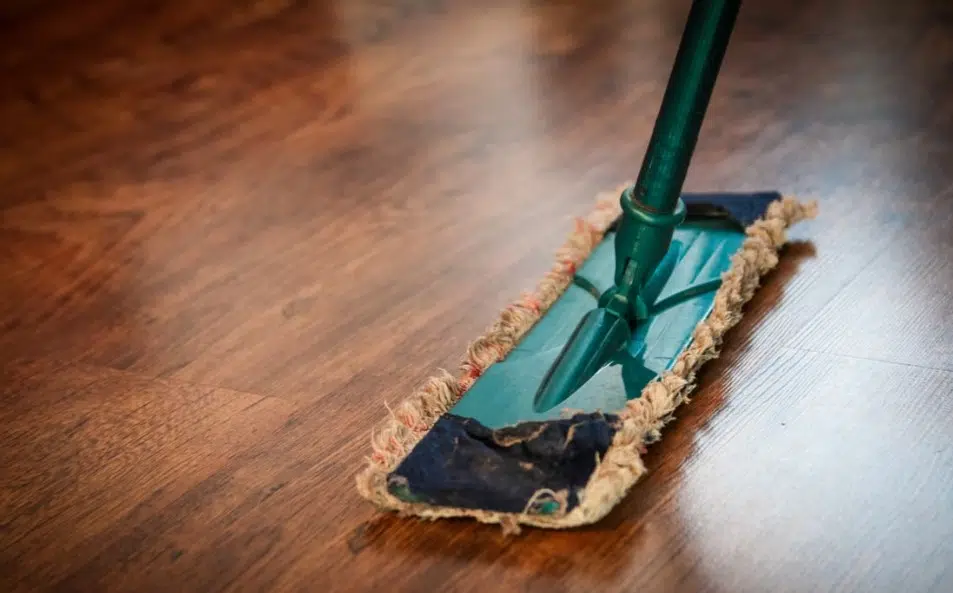
A well-used flat mop picks up more than dust—hair, grit, and leftover cleaner all ride in that bucket.
What Is Actually Floating in That Bucket
Dirty mop water is not gray for decoration. It is floor soil, pet hair, crumbs, bathroom dust, detergent, and whatever lived under the stove. A microfiber pad holds a surprising amount of grit. A string mop sheds fibers into the mix.
That load is why the drain you choose matters. Toilets and utility sinks are built for wastewater. A tub drain already deals with soap scum. A kitchen sink is where you rinse lettuce. Those jobs should not share a pipe if you can help it.
Give the bucket a look before you walk anywhere. Clumps of hair, leaves, paper, or mud do not belong in any fixture. Scoop them into the trash with an old paper towel. I keep one folded on the bucket rim while I mop bathrooms because hair treats mop water like a timeshare.
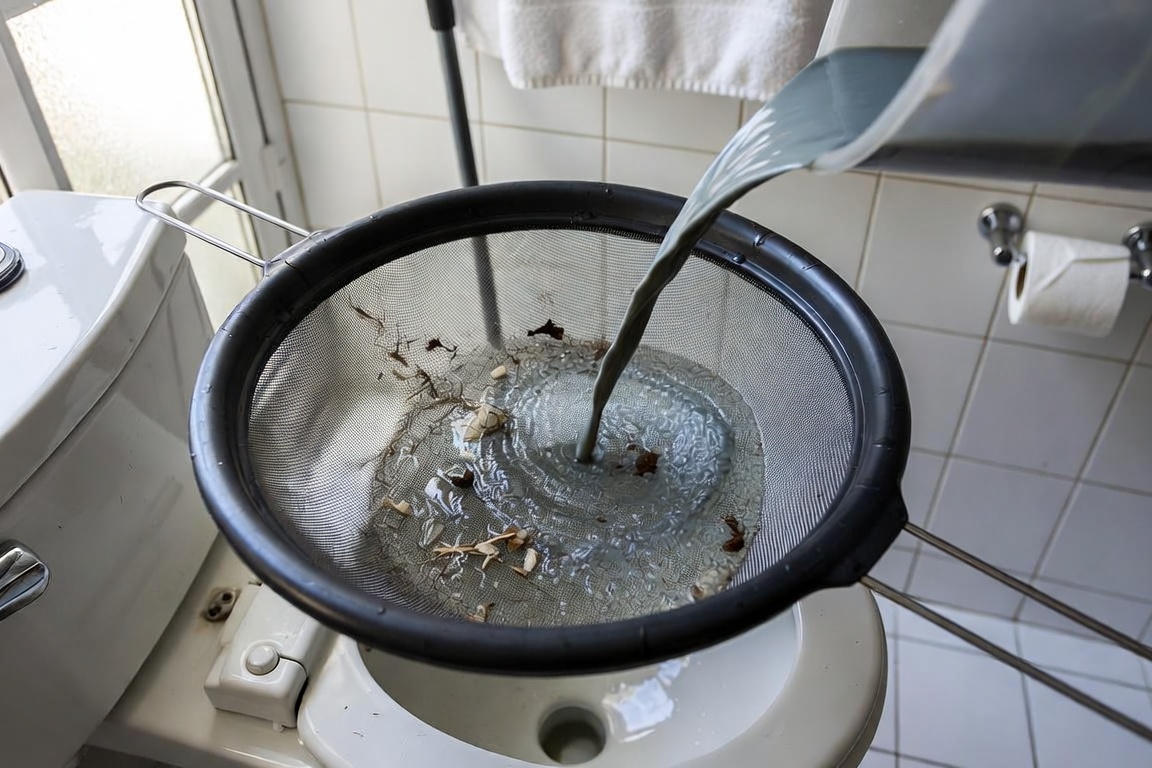
Strain first. Hair and crumbs belong in the trash, not in the trap.
The Best Place to Dump Dirty Mop Water
Rank the options in this order: utility or laundry sink, toilet, then bathtub only if the water is light and you will scrub the tub right away.
A utility sink sits low. You are not hoisting a sloshing bucket to counter height. The basin is ugly on purpose. It expects grit. A floor drain in a laundry room or mudroom works the same way if it ties into the sanitary sewer and not the storm line. If you are not sure where a floor drain goes, treat it as off-limits until you know.
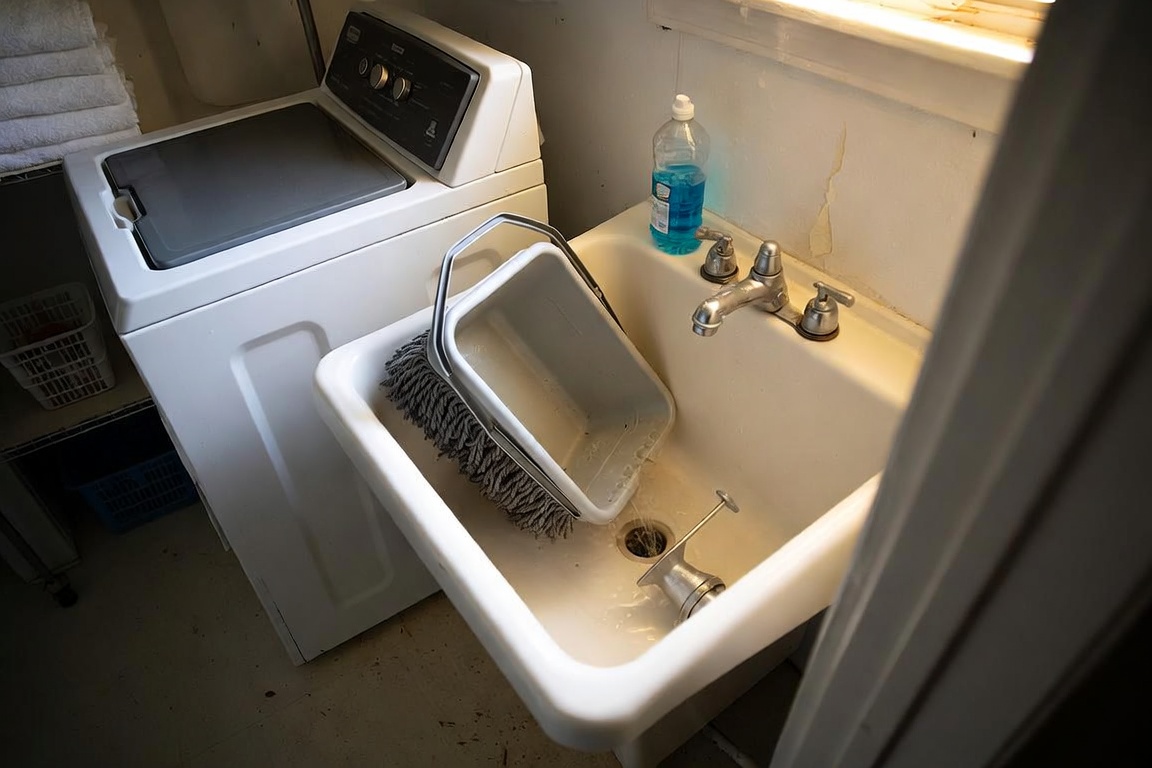
If you have a laundry or utility sink, this is the easiest place to empty a heavy bucket.
How to pour mop water down the toilet
Yes, you can pour mop water down the toilet in most homes. The bowl connects to the sanitary sewer or septic tank and can move suspended waste better than a narrow sink trap.
- Lift the seat. Pour from just above the water, not from shoulder height.
- If the bowl starts to rise oddly, stop. Let it settle. Flush a partial load, then finish.
- Flush when the bucket is empty, or in batches if the bucket is huge.
- Rinse the bucket with clean water and pour that rinse into the toilet too.
- Wipe the rim, seat underside, base, and nearby floor. Mop water dries into a dusty ring that looks like you skipped the job.
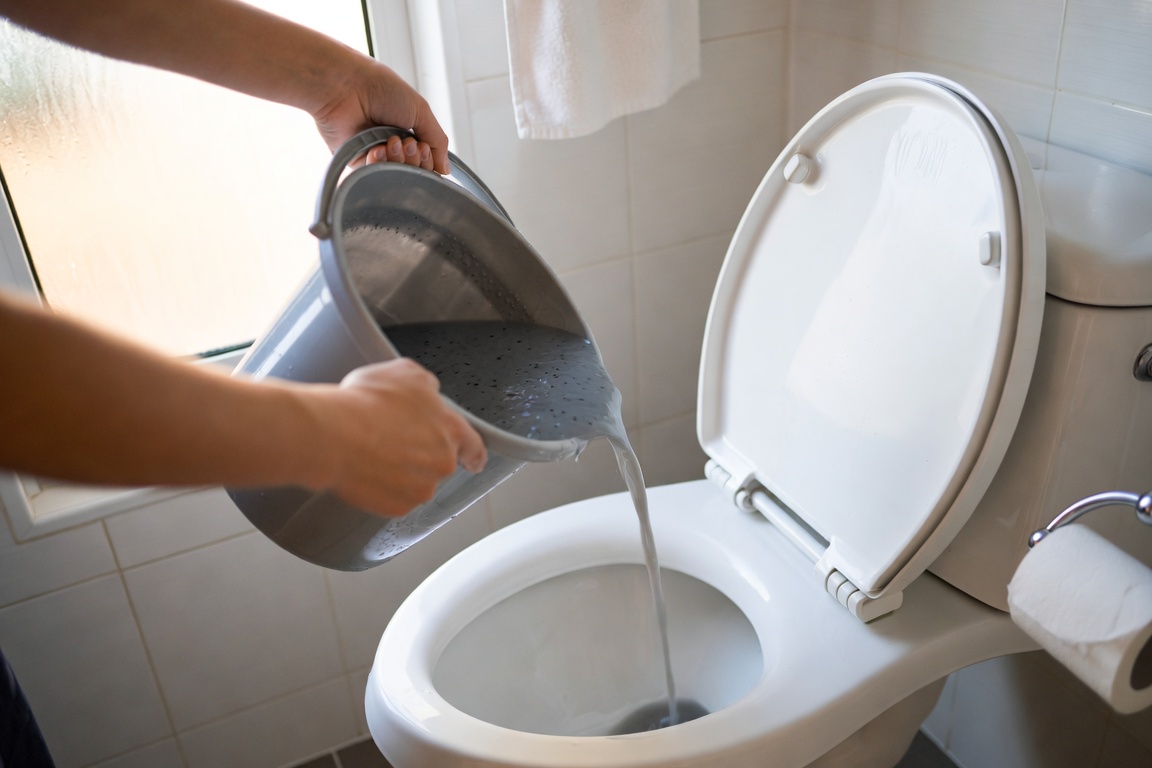
Pour low and slow into the bowl so the water does not splash the seat or the floor.
Do not treat the toilet like a trash chute. Solids first, water second. If you use a septic system, stick to diluted everyday floor cleaner. A bucket of heavy bleach, ammonia, or solvent concentrate is a different errand. Never mix bleach and ammonia. The floor is not worth that air.
When the bathtub is acceptable
You can pour mop water in the bathtub if the water is only lightly dirty, the drain is clear, and you rinse and wash the tub before anyone steps in it. I still do not love it. People stand barefoot there. Kids sit there. A dog may get a bath there later tonight.
Tub drains clog with hair and grit more easily than toilets. If your mop water has sand from the entry, pet fur, or kitchen crumbs, skip the tub. If you must use it, set a strainer over the drain, pour near the grate, run hot water after, and wipe the basin with a cleaner you already trust on that surface.
The extra work is the tell. If you are too tired to rinse the tub, you were too tired to use the tub.
Where You Should Never Empty a Mop Bucket
- Kitchen sink. Food lives here. Grease from a kitchen floor plus dirt makes a paste inside pipes.
- Bathroom sink. Small drain, lots of hair already, splashy porcelain.
- Storm drain, gutter, or street. That water often skips treatment and heads toward creeks. Cleaner-laced mop water counts as pollution in many places.
- Garden beds and lawns if there is detergent or disinfectant in the bucket. Even “gentle” floor soap is not plant food.
- A clean mop bucket you planned to reuse immediately. Rinse it. Gray film becomes smell by tomorrow.
Outdoor dumping of chemical mop water is not a folk tradition. It is a shortcut that can violate local rules and leave a sticky film on concrete. If the water is only plain water from a rinse with no soap, some people use it on a driveway they plan to scrub anyway. That is the outer edge of okay, not the default.
Apartments, Rentals, and Shared Bathrooms
In a small apartment the toilet is usually the only honest option. Ask a roommate once: toilet or tub, and who wipes after. That conversation is shorter than the argument after someone finds grit in the shower.
If you hire a cleaner, say it on day one. Old plumbing, a septic tank, a tub that drains like it is thinking it over—those are not obvious from the front door. A good cleaner would rather hear “use the laundry sink in the basement” than guess and mark the guest tub.
In a rental, treat the tub as last resort. You do not want a gray tide line as your security-deposit souvenir.
Septic Homes Need a Softer Pour
A septic tank is a living system. Diluted dish soap or a mild floor cleaner in normal mop volume is usually fine. What wears it down is volume plus chemistry: big buckets of strong disinfectant, week after week, plus a washing machine running at the same time.
Spread the work. Mop one floor, empty, then do laundry later. Choose biodegradable or septic-safe floor soap when you can. Vinegar and a drop of dish soap handle many sealed floors without turning the tank into a science experiment. Follow the product label. If the bottle reads like a hazard sign, that water may belong at a household hazardous-waste drop-off, not in your guest bath.
A Two-Minute Finish That Stops the Gray Ring
Emptying the bucket is half the job. The other half is not tracking the same dirt back across the floor you just washed.
Rinse the mop head in clean water and wring it over the same toilet or utility sink. Hang the pad or strings so they dry. A damp mop in a closet smells like a forgotten gym bag by Thursday.
Wipe the fixture. Then wipe your own path if you dripped. I have learned this the loud way, usually when a guest’s sock found the one splash I missed near the toilet base.
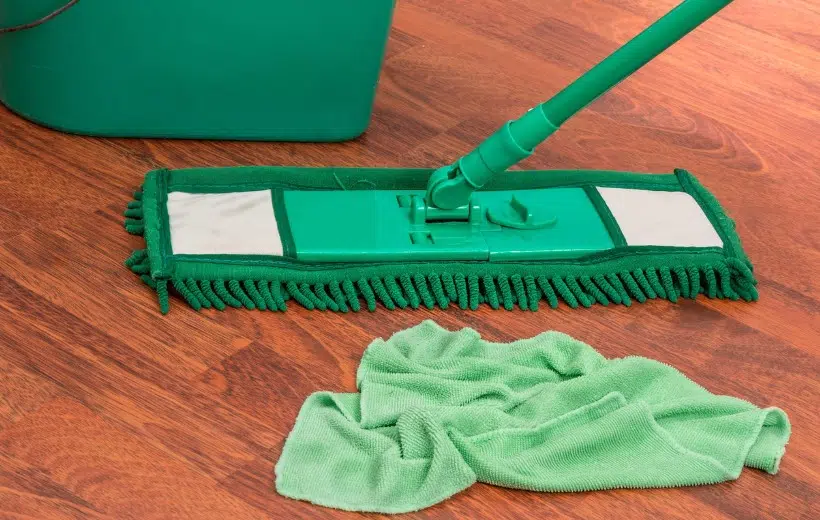
Once the water is gone, rinse the mop head and wring it over the same drain so you are not carrying grit back through the house.
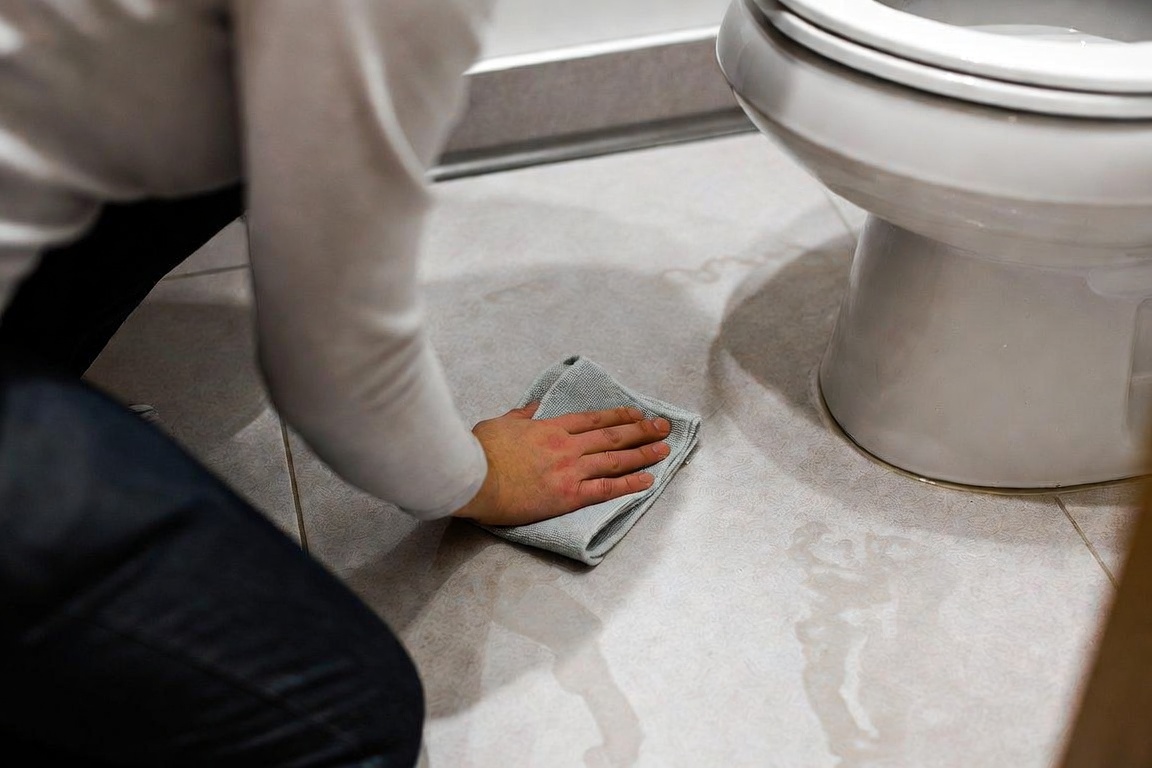
The last minute is the one that matters: wipe the base, the floor, and the rim so nothing dries into a gray ring.
Change the water before it turns soup
If the bucket goes opaque halfway through the house, dump it and mix a fresh one. You are not saving time by pushing dirty water into the next room. You are painting with grit.
A two-bucket setup helps: one for cleaning solution, one for rinse water. The rinse bucket gets emptied more often. That is the point.
The Rule I Use When I Am Holding the Bucket
Utility sink if I have one. Toilet if I do not. Bathtub only for light water when I will clean the tub immediately. Never the kitchen sink. Never outside if there is cleaner in it. Strain the solids. Rinse the bucket. Wipe the splash.
Where to dispose of dirty mop water is a small question with a specific answer. Send it to the sanitary sewer the tidy way, keep grit out of bathing spaces, and leave the fixture looking ordinary. The floor will thank you. So will whoever showers next.