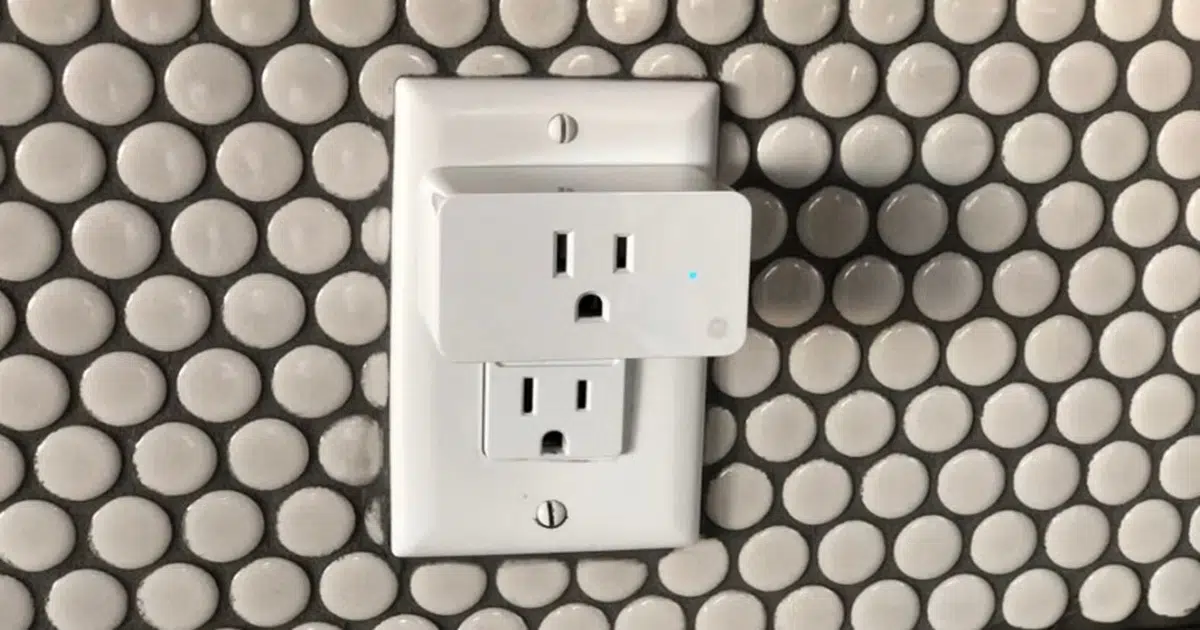
You walk into a new home, plug in the vacuum, and stop dead in your tracks. The outlet looks like an upside-down face—two vertical eyes staring up at you with the round ground hole perched on top. Your first thought is probably that the previous owner had a DIY misadventure on a Sunday afternoon. But before you grab a screwdriver to flip it right-side up, know this: that inverted plug is usually there on purpose.
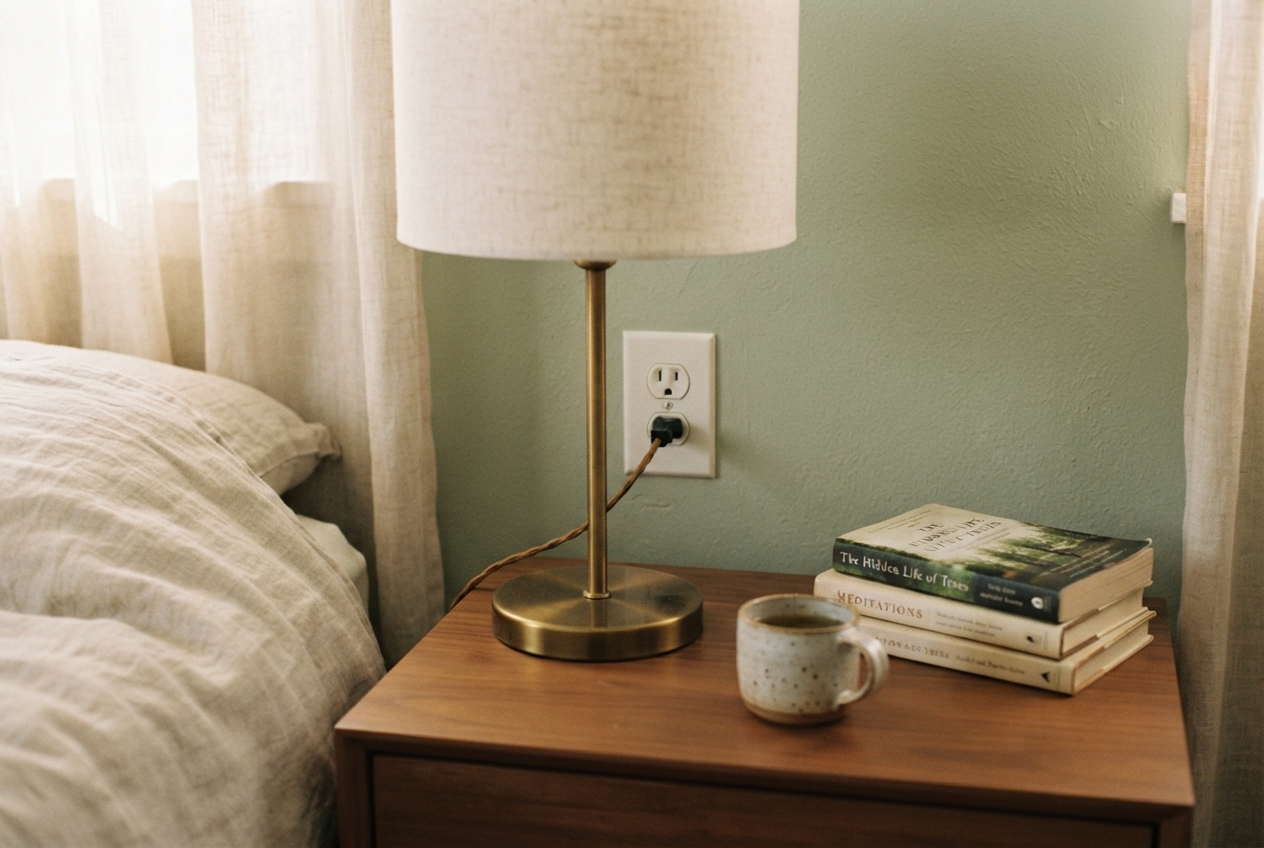
A bedside lamp plugged into a switched lower receptacle allows quick lighting control from the bedroom door.
Why Are Some Wall Outlets Installed Upside Down?
The short answer comes down to two trade practices: visual cues for wall switches and commercial safety standards. In residential construction, electricians often install a duplex receptacle upside down to signal that a wall switch controls all or part of that outlet.
Think about older houses built in the 1960s, 70s, or 80s. Builders frequently skipped ceiling light fixtures in bedrooms and living rooms to save money on copper wiring, labor, and drywall finishing. Instead, they installed a “half-hot” switched outlet. When you walk into the dark room, you flip the switch by the door, and the floor lamp plugged into that inverted socket lights the room instantly.
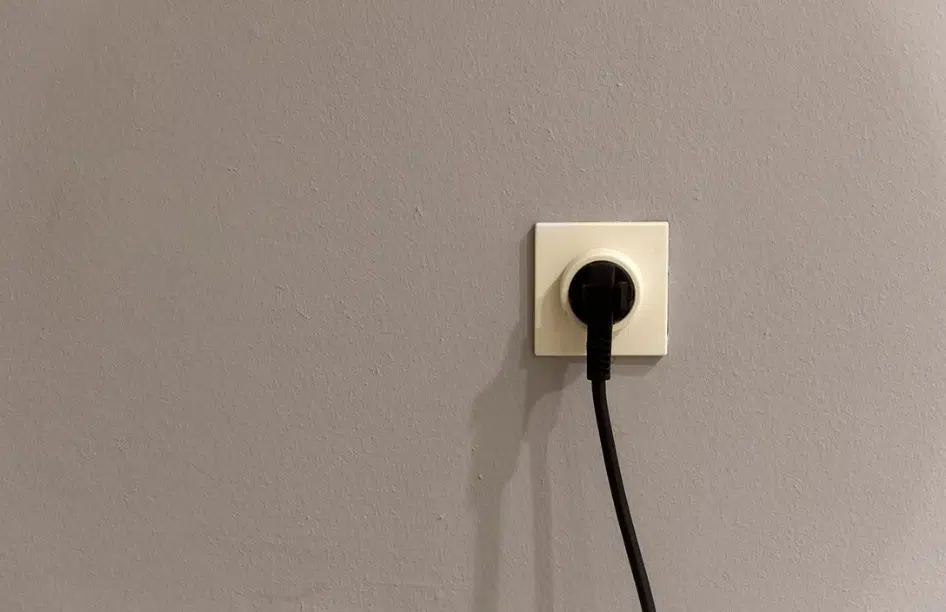
A single wall plug oriented with the cord draping downward.
Flipping the receptacle upside down gave homeowners a clean, unmistakable marker. Without it, you would have to plug a floor lamp into every single outlet in the room just to find the one connected to the wall toggle.
The Anatomy of a “Half-Hot” Switched Receptacle
Have you ever wondered how one plug can stay live while the other plug on the same wall plate turns off with a switch? It all comes down to a tiny piece of metal called the break-off tab.
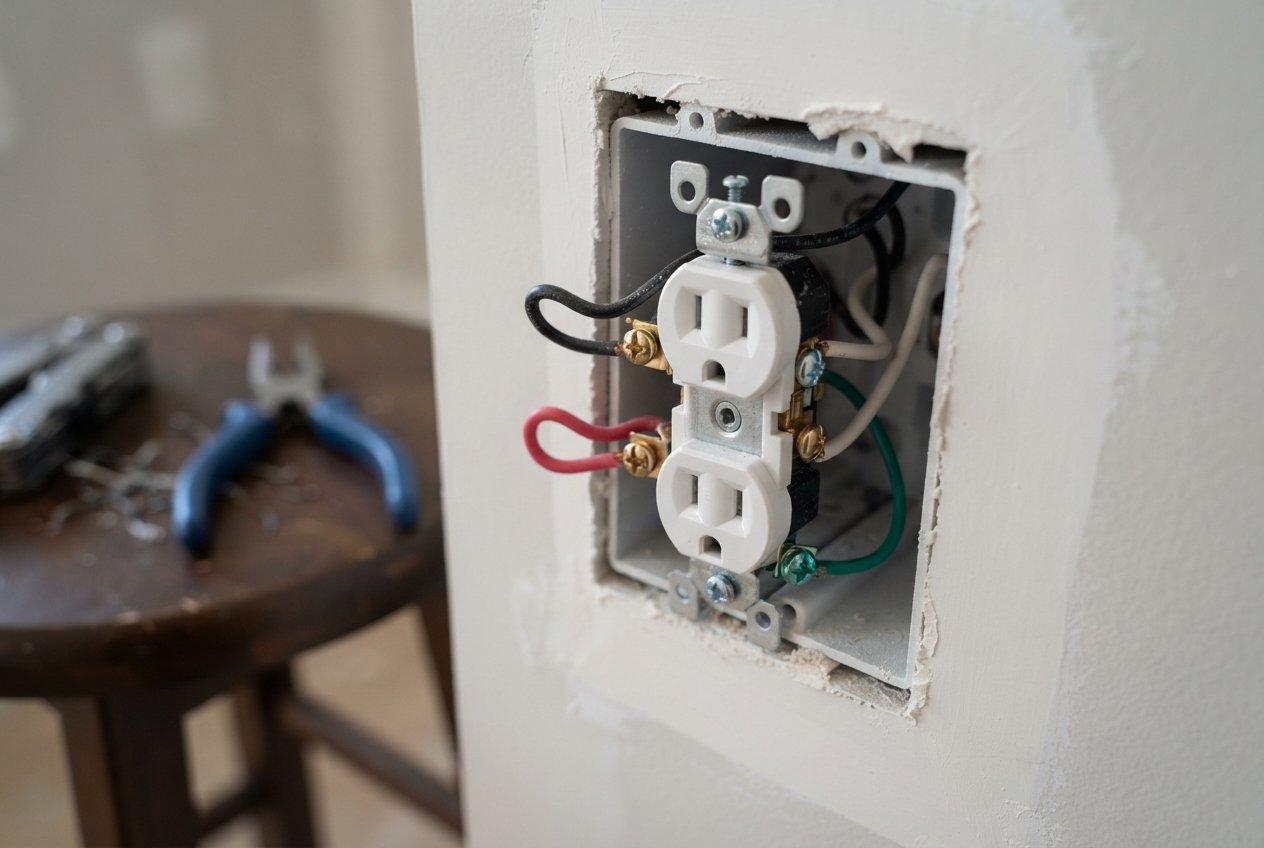
Breaking the brass connecting tab on the brass terminal side creates a half-hot outlet controlled by a wall switch.
On a standard duplex outlet, two small brass metal tabs connect the top and bottom screws on both sides. In a standard setup, power enters one terminal and shares juice with the adjacent plug. When an electrician wires a half-hot outlet, they use pliers to snap off the brass tab on the “hot” (brass screw) side while leaving the neutral tab intact.
- The Switched Half: Wired directly to the switch leg wire (usually a red or tagged black conductor) so power cuts when the wall toggle is off.
- The Constant-Hot Half: Wired directly to the constant circuit feed, keeping power running around the clock.
This split layout gives you the best of both worlds. You can plug your bedside table lamp into the switched half and keep your phone charger or alarm clock running uninterrupted in the constant half.
The Ground-Up Debate: Safety Physics vs. Everyday Habit
While switched lighting is the most common reason for inverted plugs in residential homes, commercial buildings flip their outlets for an entirely different reason: physics and fire safety.
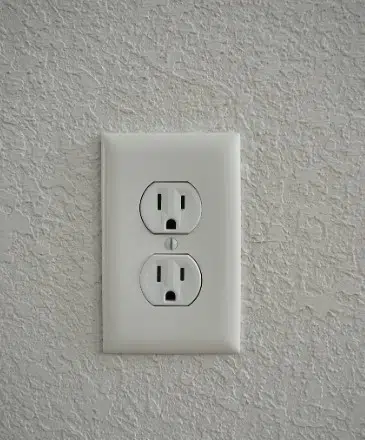
Standard duplex outlet installed ground-pin down on a textured wall.
Picture a plug that has wiggled slightly loose from the wall, leaving the prongs exposed a fraction of an inch. If a metal picture frame wire slips off its nail, or someone drops a metal ruler or butter knife against the baseboard, what happens?
When the ground pin is at the bottom, falling metal bridges the hot and neutral prongs, creating a loud spark, popped breaker, or potential fire hazard. When the ground pin sits on top, the metal object bounces safely off the solid ground pin without ever touching an energized blade.
This is why you will see upside-down outlets in hospitals, commercial office towers, and school science labs. In health care facilities, oxygen-rich environments make minimizing arc flash risks an absolute priority.
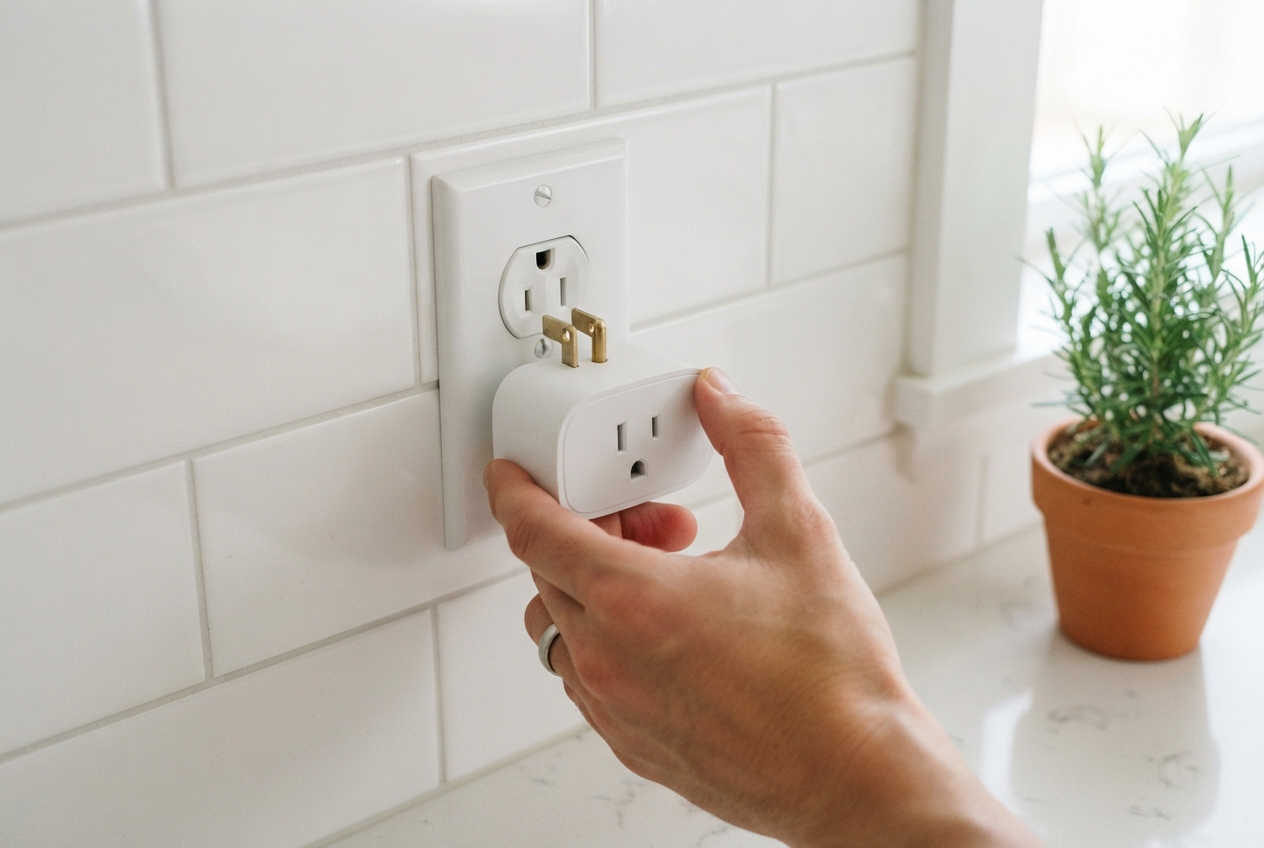
Outlets with the ground hole facing up provide extra physical protection against falling metal items touching live prongs.
What Does the National Electrical Code (NEC) Actually Say?
Here is the truth: the National Electrical Code (NEC) does not mandate which way a standard wall outlet must face in your house. Up, down, or sideways—the NEC considers all orientations compliant as long as the box is grounded properly, wired to code, and installed with correct polarity.
Orientation comes down to local municipal building codes, architectural specs, or the personal habit of the electrician who pulled the wire. Some regional trades unions teach apprentices to install ground-up as a mark of safety craftsmanship. Others stick with the traditional ground-down orientation simply because people find the “smiling face” shape familiar and intuitive.
How to Test a Flipped Outlet in 3 Simple Steps
If you suspect an inverted outlet in your living room or guest bedroom is tied to a switch, you do not need special tools or electrical expertise to test it. Grab an ordinary table lamp and follow this quick routine:
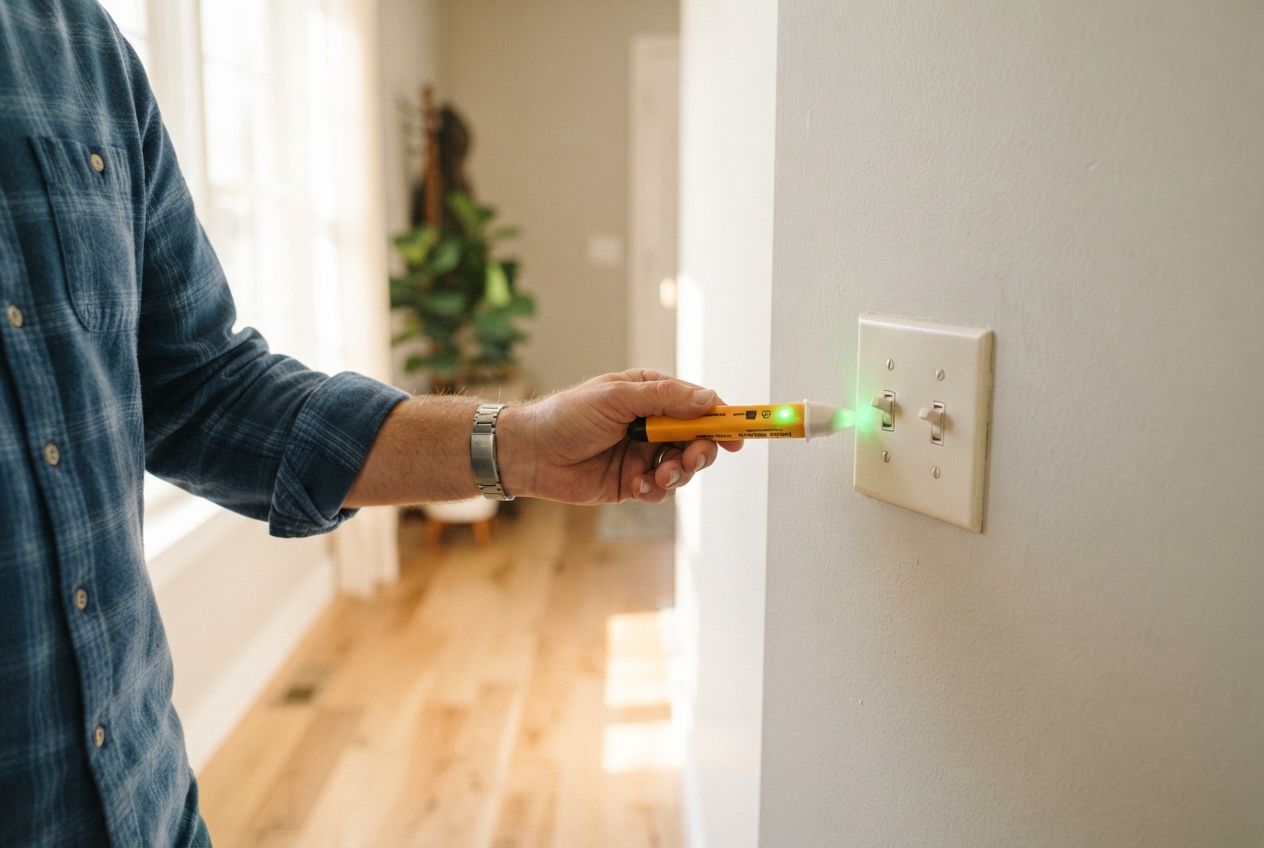
Testing for voltage at the switch and outlet confirms whether power is live before troubleshooting switched receptacles.
- Check the Upper Plug: Plug the lamp into the top socket and turn the lamp’s switch to “ON”. Walk to the wall switch near the door and toggle it up and down. If the lamp turns on and off, you have found your switched socket.
- Check the Lower Plug: Move the lamp cord down to the second socket. Flip the wall switch again. If the lamp stays illuminated no matter the switch position, the outlet is a split-wired half-hot.
- Look for Phantom Wall Switches: If neither socket responds, look around the room. Some rooms have two wall switches by the doorway—one for a hallway fixture and one wired to a distant corner outlet.
Modern Layouts: Multi-Gang Plates and Smart Plugs
In modern homes, building practices have shifted toward recessed can lighting, ceiling fans, and smart home hubs. However, split receptacles are still common around home offices and media consoles.
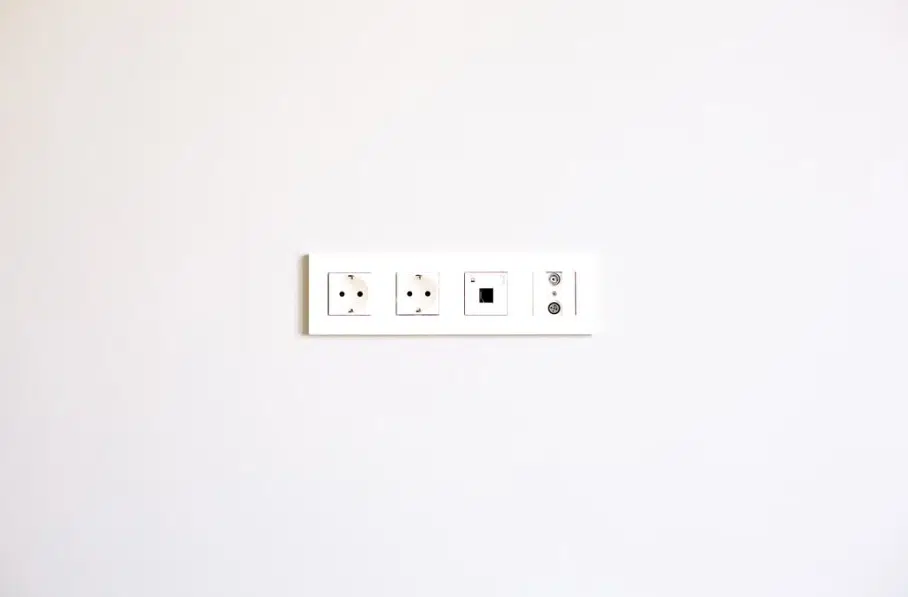
Multi-gang outlet and communication plate showing horizontal wall integration.
If you use a smart plug, Wi-Fi timer, or power strip, take a second look at your outlet orientation before plugging it in. Heavy charging bricks and bulky power adapters can place downward torque on wall contacts. When an outlet is installed ground-up, heavy cords pull against the sturdy round grounding pin rather than loosening the live power blades.
Should You Flip It Right-Side Up?
If you dislike the cosmetic look of an inverted plug, you can rotate it, but proceed with caution. Flipping a receptacle requires turning off power at the main breaker box, testing with a reliable voltage meter, and carefully maneuvering older, stiff wires inside a crowded junction box.
If the receptacle is a split-wire half-hot, reversing the orientation without tracking the switch-leg wire can easily short a circuit or render the wall switch useless. In most cases, leaving the inverted outlet in place keeps the home’s original wiring logic clear for future owners and home inspectors.