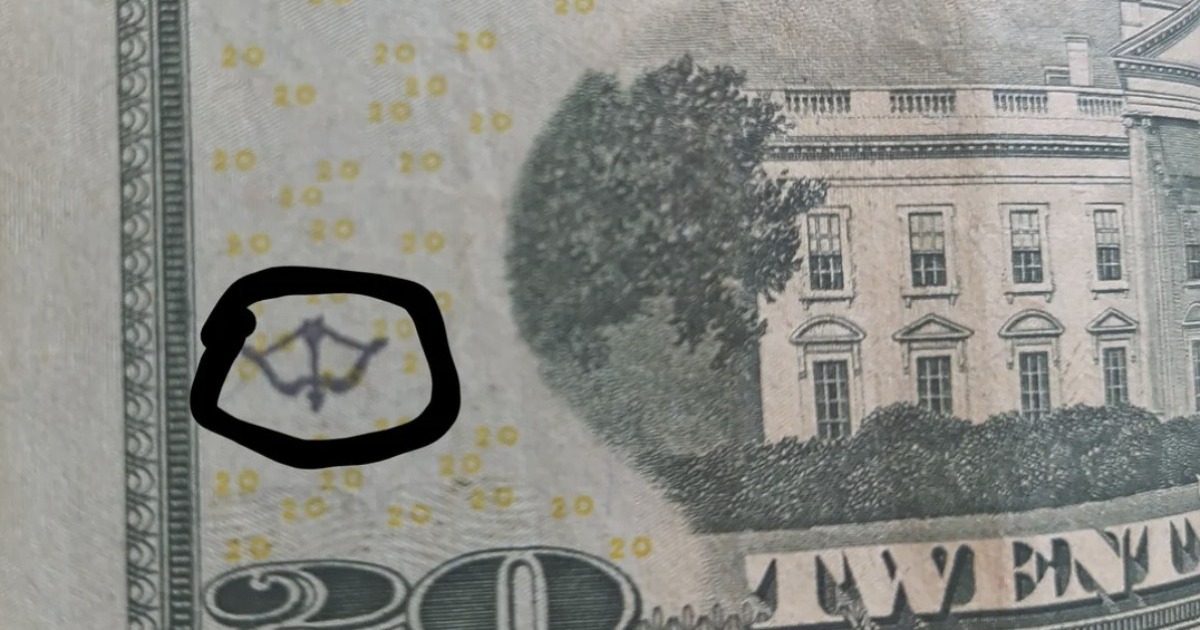
You pull a crumpled twenty-dollar bill out of your pocket to pay for an iced matcha at the farmers market, and something strange catches your eye. Right beside the White House portico or tucked into the margin near Andrew Jackson’s shoulder sits a tiny, sharp stamp in faded purple or bright red ink. Maybe it looks like a miniature bow and arrow, a pair of sharp initials, or a tiny bird in mid-flight.
Your first instinct might be slight panic. Is this counterfeit? Did someone’s toddler get into the craft drawer with an ink pad? Will the grocery self-checkout spit it back out in protest?
Take a breath. That little stamp is known in currency circles as a chop mark. Far from ruining your cash, it tells an incredible travel tale about where that green piece of cotton-linen paper has wandered across the globe.
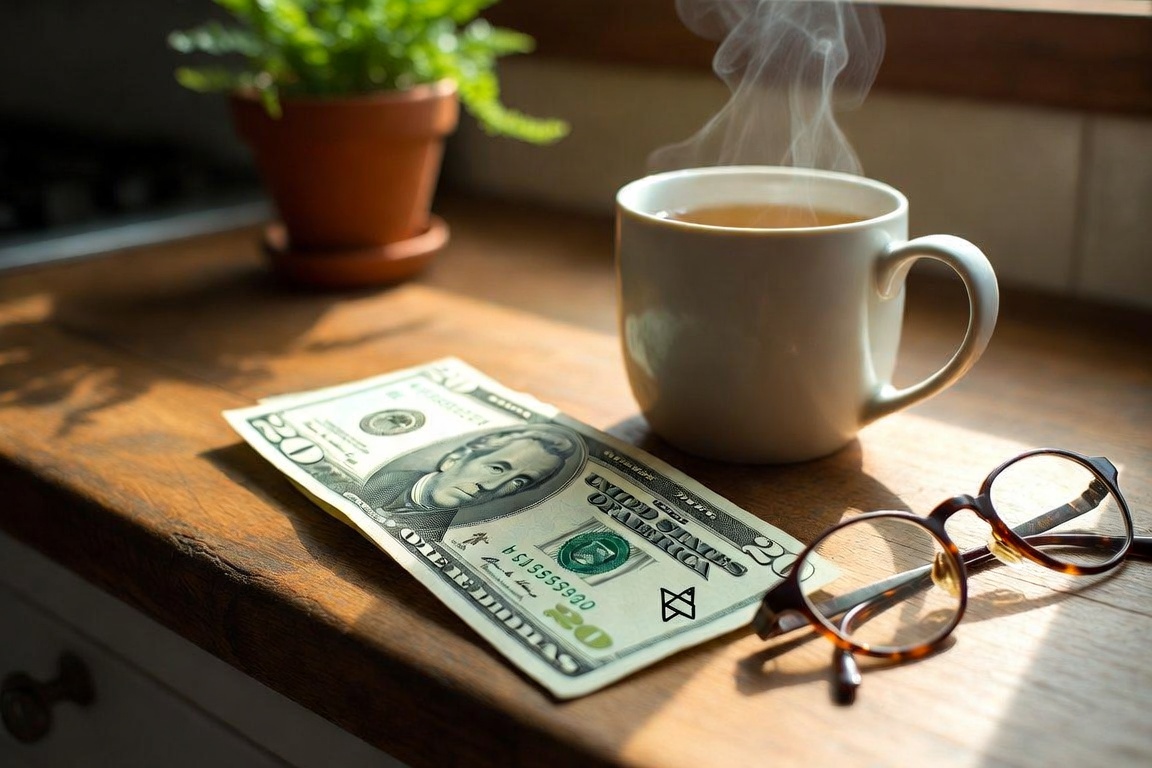
Finding a tiny symbol stamped in your morning grocery change turns an ordinary coffee break into a quiet mystery.
What Are Chop Marks on US Dollar Bills?
A chop mark is a small ink stamp applied to paper money by foreign currency exchanges, private merchants, or regional money changers. These marks appear most frequently on larger denominations like $20, $50, and $100 bills that circulate outside the United States.
In many regions across Latin America, Southeast Asia, East Asia, and parts of Africa, the American greenback serves as the unofficial anchor for daily commerce, real estate deals, and local savings. Because counterfeit bills remain a lingering concern in cash-heavy economies lacking instant electronic scanners, currency handlers inspect incoming cash with rigorous care.
When an exchange teller, street broker, or gold merchant runs a bill through chemical pens, ultraviolet light, and water-drop tests, they want to remember they already verified it. Out comes a miniature rubber stamp. They press their personal mark onto the white margin, and the bill steps back out into the open market.
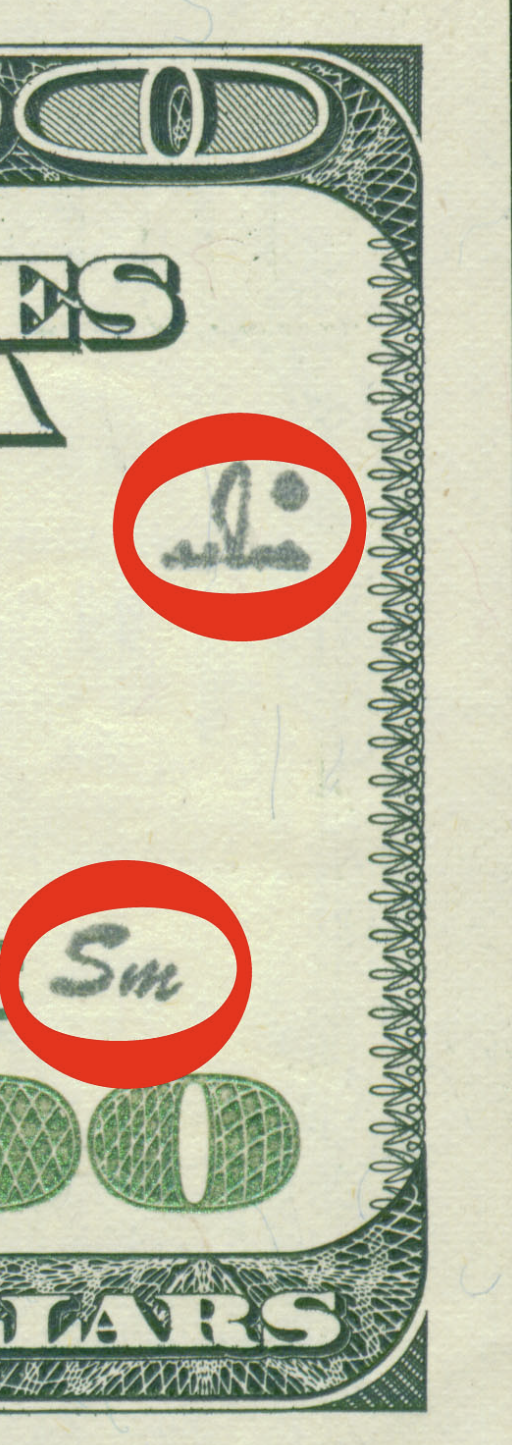
Small circled geometric stamps and cursive initials running along the decorative border of a bill tell a quiet travel story.
The Fascinating History: From Silver Spanish Dollars to Paper Bills
This habit is far older than modern paper currency. The word “chop” traces back to the Cantonese word chap or Hindi word chapa, referring to an official stamp, seal, or brand.
Centuries ago, international trade ran on heavy silver coins, especially Spanish 8-Reales and American silver trade dollars. Chinese merchants and assayers tested the purity of every silver piece that arrived on merchant ships. Once satisfied that a coin contained genuine silver rather than cheap lead alloy, the merchant punched a tiny, sharp character into the metal with a hammer and steel die.
Some historic coins gathered dozens of these punch cuts, leaving them saucer-shaped and deeply dimpled. When modern trade shifted toward paper notes, exchange houses kept the centuries-old instinct alive. They simply swapped the steel punches for felt ink pads and rubber stamps.
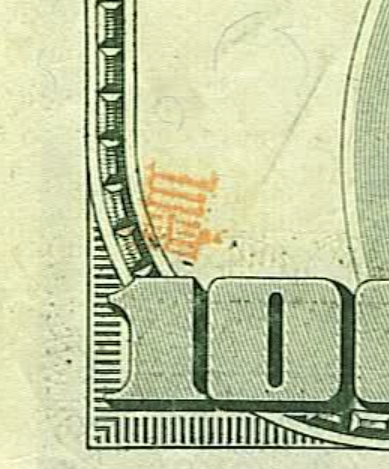
A crisp red Asian character chop mark nestled right against the corner numeral of currency.
Deciphering the Ink: Common Symbols and Strange Letters
If you inspect a stamped bill under a bright table lamp, you will notice these impressions fall into a few distinctive visual styles. Currency handlers keep their stamps tiny so they avoid obscuring the bill’s serial numbers, Federal Reserve seals, or portrait watermarks.
- Weapons and Everyday Tools: Miniatures of bows and arrows, anchors, daggers, or scales frequently turn up on twenty-dollar bills.
- Animals and Nature: Tiny stylized birds, flying eagles, palm fronds, four-leaf clovers, and stars are common among private trading houses.
- Initials and Monograms: Simple cursive initials, such as “Sm” or sharp Latin monograms, represent individual brokers or specific teller desks within an exchange office.
- Asian Characters: Chinese characters, Japanese kanji, or Arabic script stamped in red or vermilion ink, acting as a personal signature stamp (similar to a traditional hanko or name seal).
- Geometric Shapes: Diamonds, nested circles, and triangles with internal numbers designating branch offices.
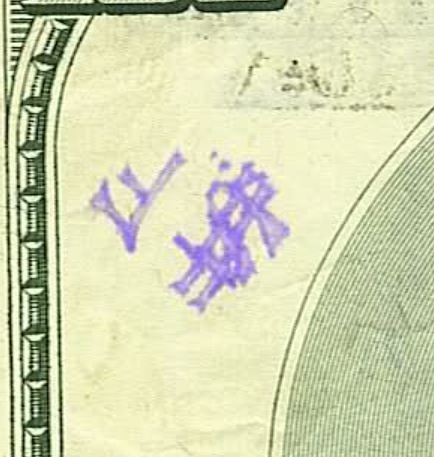
A purple ink monogram stamped cleanly onto the margin of a hundred-dollar bill, left behind by an overseas exchange booth.
Chop Marks vs. Bank Teller Stamps: How to Spot the Difference
Not every stray ink smudge on an American bill crossed an ocean. Domestic cash registers and bank vaults produce their own everyday ink marks, and telling them apart is quite straightforward once you know what to spot.
Domestic bank tellers and armored transport staff often use rolling number stamps or bold rectangular stamps in black or bright red ink to count bundles of cash. These domestic marks usually read with bold dates, teller window numbers, or batch abbreviations. They tend to look industrial and utilitarian.
In contrast, a true foreign chop mark feels personal and compact. It measures only a fraction of an inch across, frequently uses vivid royal purple, magenta, or turquoise ink, and features decorative emblems or foreign text. If your bill carries a symbol that looks like a miniature coat of arms or a calligraphic character, it earned that stamp abroad.
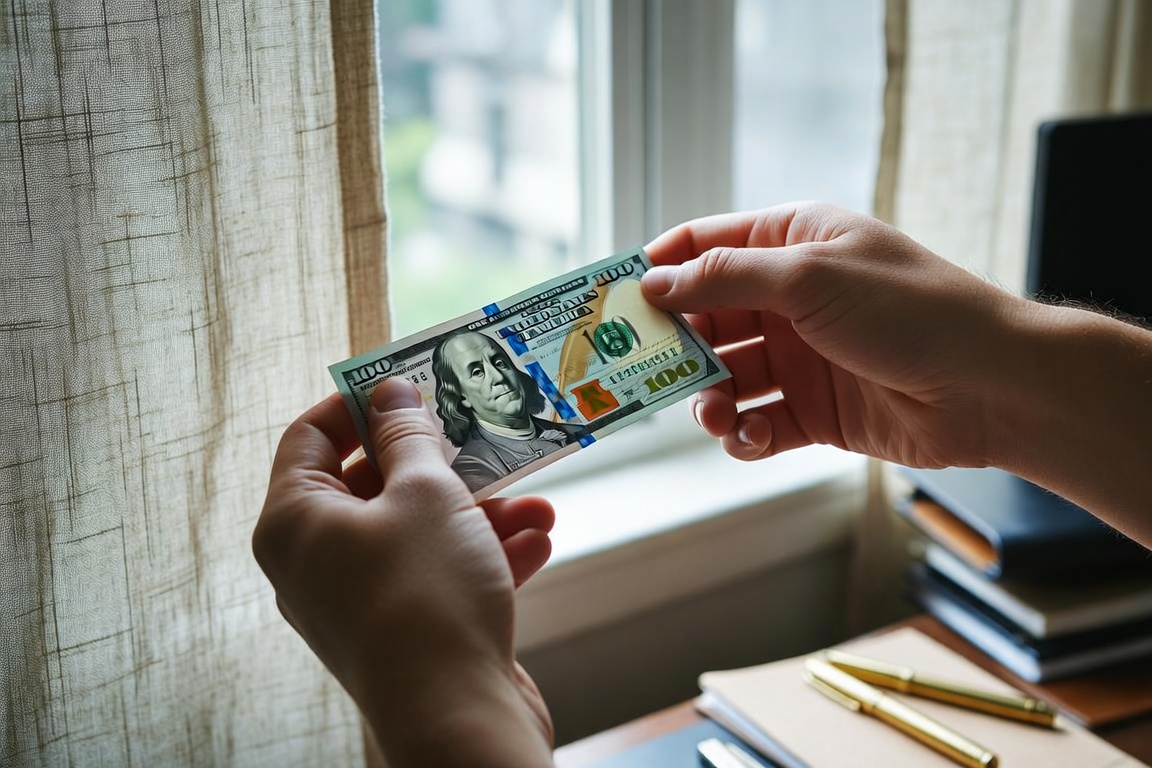
Holding a stamped note up to the light reveals layers of security features underneath the wandering traveler’s stamp.
Are Chop-Marked Bills Legal to Spend in the United States?
The short answer is yes. Your stamped bill remains legal tender.
Under United States law—specifically Title 18, Section 333 of the United States Code—it is illegal to deface, cut, disfigure, or perforate currency if the intent is to render the bill unfit to be reissued. Private merchants overseas have no intention of destroying money; their stamp is meant to keep the money moving smoothly through local commerce.
Because chop marks are small and keep the bill’s critical security attributes intact, the Federal Reserve still recognizes the note as valid legal currency. You can legally spend it at any cash register across the country.
“A small overseas inspection stamp does not void a bill’s purchasing power, provided the note retains its security threads, portraits, and serial numbers.”
That said, practical life can present tiny bumps. Highly sensitive automated machines—like older gas pump bill acceptors, snack vending machines, or finicky self-checkout slots—occasionally reject stamped bills. The optical scanner reads the sudden blotch of ink as a scanning error or dirt. If that happens, simply slide the bill across the counter to a human cashier or deposit it through your local bank branch teller window without worry.
Marked bills hide quietly in wallets for weeks until an accidental glance catches an unfamiliar stamp.
Are Chop-Marked Bills Worth Anything to Collectors?
Whenever people discover unusual currency, their thoughts jump to accidental wealth. Is that bow-and-arrow $20 worth hundreds of dollars on auction sites?
In the vast majority of cases, a modern Federal Reserve note bearing a chop mark is worth face value. A twenty-dollar bill with a purple bird remains worth exactly twenty dollars. Serious paper money collectors often prioritize uncirculated, pristine notes straight from mint straps, and ink marks are technically considered minor post-mint damage.
However, there is a dedicated and growing pocket of paper money hobbyists who actively collect chop-marked modern notes. For these enthusiasts, the appeal lies in human geography. They seek out unusual stamp designs, crisp Asian character impressions, and notes with multiple overlapping stamps from different countries.
If you hold a truly historic note—such as an 1800s silver certificate, an old National Bank Note, or a 19th-century trade dollar covered in genuine period chop marks—that piece can command a significant premium among historical numismatists.
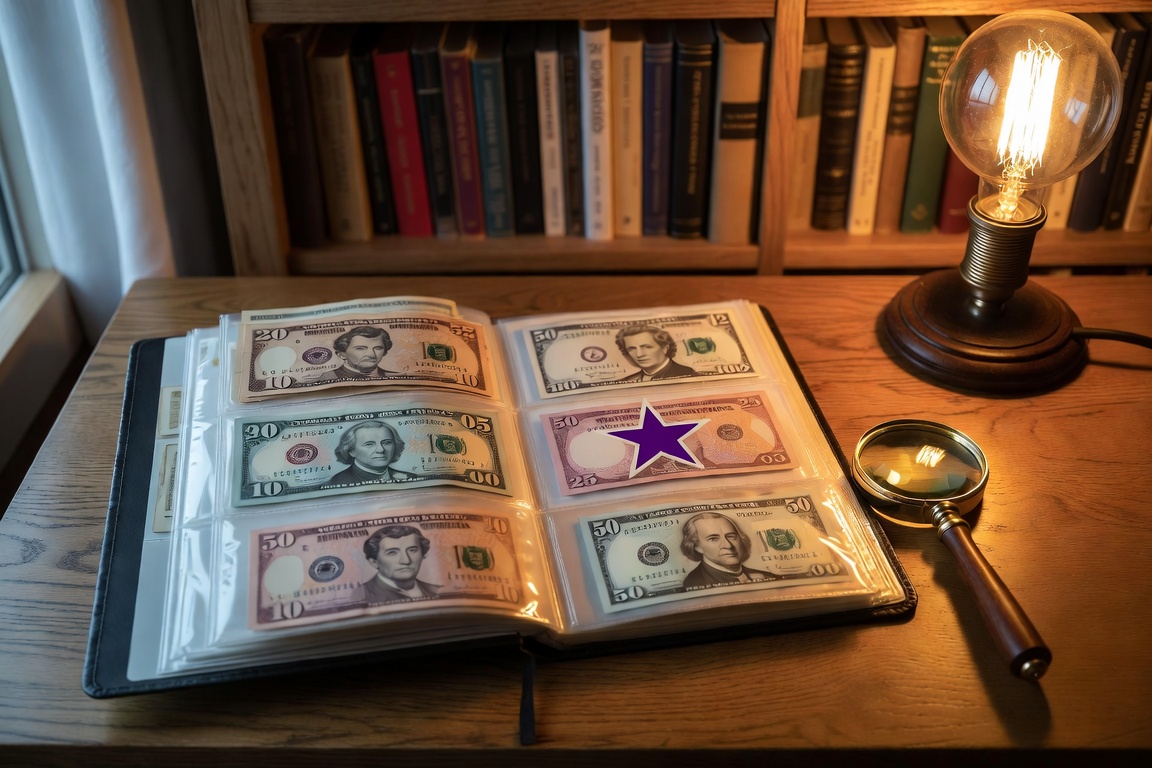
Many paper money enthusiasts preserve chop-marked notes as miniature passport stamps from distant trading hubs.
What to Do When You Find One in Your Change
The next time you settle into an armchair with a warm mug of spiced cider and empty your pocket change onto the tray, take thirty seconds to look over the bills. If you spot a tiny purple anchor, a bow and arrow, or an intricate monogram resting near the edge, consider pausing before sliding it back into circulation.
That little piece of linen paper likely traveled through a street market in Bangkok, a currency desk in Nairobi, or a trade stall in Lima before winding up in your suburban grocery till. You can spend it on your next carton of farm eggs, slip it into an envelope as a quirky conversation starter for a curious niece or nephew, or tuck it into your desk drawer as a pocket-sized reminder of how connected our everyday world really is.