A person on Reddit recently posted a photo that stopped thousands of scrollers in their tracks. Sitting across from another booth at a local diner, the original poster noticed something unusual: a table of older gentlemen, chatting over breakfast, all wearing the exact same wide, patterned metal band on their wrists.
The post asked a simple question: “A group of men were all wearing this same bracelet. What is it, and what does it mean? It doesn’t clasp/connect on the anterior side. Thanks for the help!”
A group of men were all wearing this same bracelet. What is it, and what does it mean?
by
u/Stri-Daddy in
whatisit
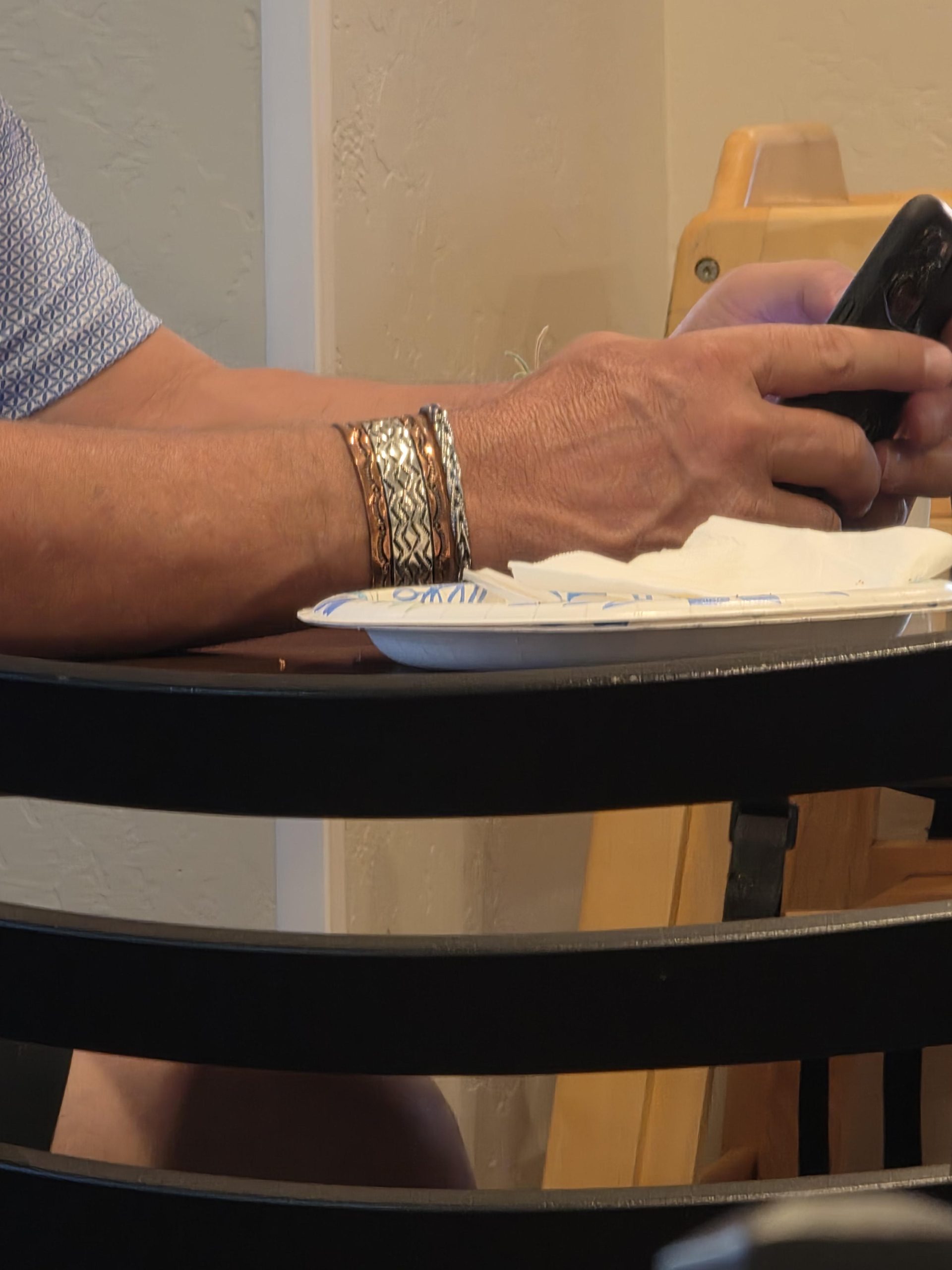
The viral snapshot shared on Reddit showing the distinct open-cuff metallic band worn at a morning breakfast table.
Within a few hours, the thread accumulated thousands of upvotes and sparked a lively guessing game across the platform. Was it an insignia for an underground society? A badge of honor from an old fraternity? Or an heirloom passed down through generations?
The comment section quickly split into wild theories and witty banter. Yet behind all the speculation lies a fascinating mix of classic metallurgy, sports lore, and everyday friendship that explains why this exact piece of jewelry keeps showing up in everyday gatherings.
The Wildest Internet Theories: Secret Lodges, Rites, and Codes
Whenever an entire group of friends wears matching jewelry, human curiosity immediately leans toward mystery. The online community was quick to toss around imaginative explanations.
One commenter jokingly suggested the group belonged to the “ROMEO Club”—a lighthearted acronym for Retired Old Men Eating Out. Others wondered if the band signaled membership in a quiet fraternal lodge, pointing out how certain historic organizations use rings and pins to identify fellow members.
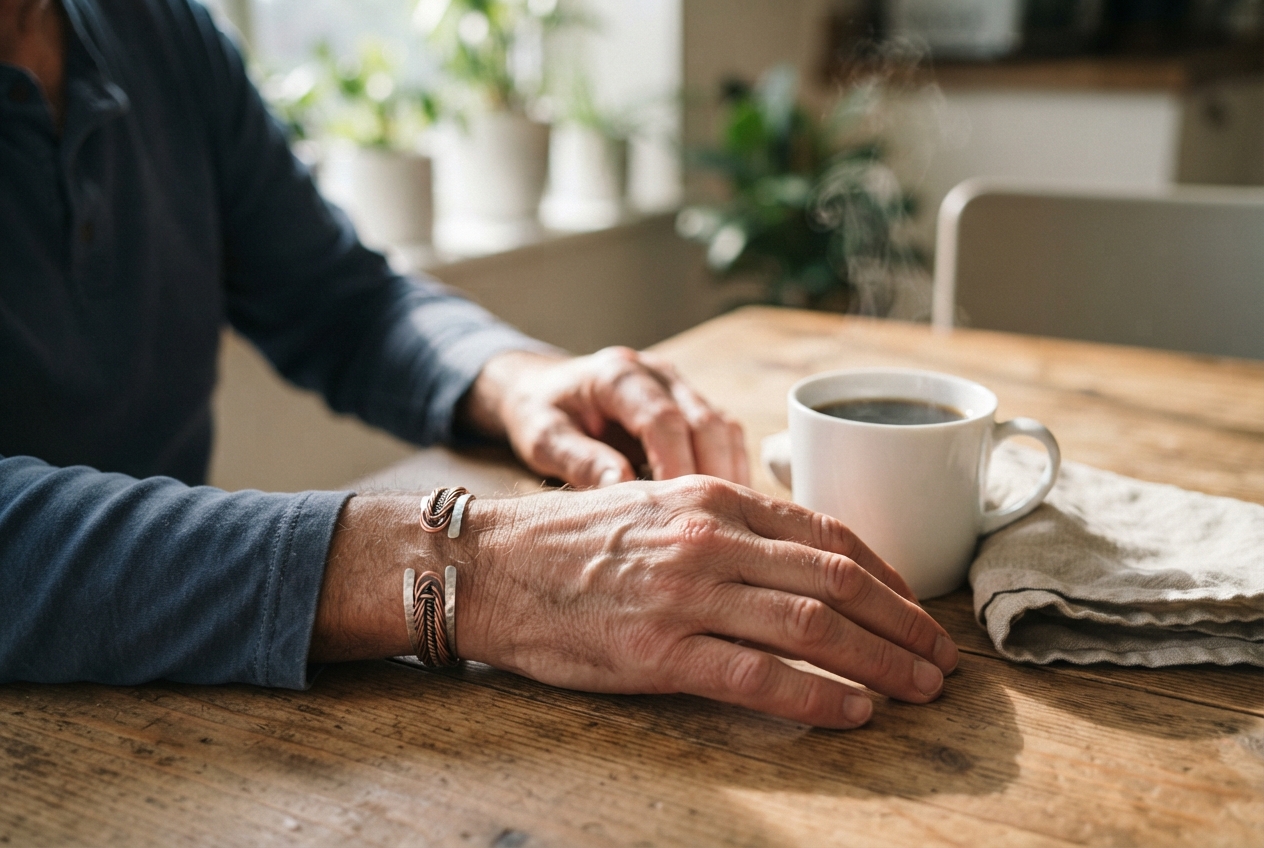
A closer look at the traditional woven metal cuff resting on a sunny kitchen table during morning coffee.
Another popular guess pointed toward faith traditions, specifically the Kara worn in Sikh heritage. However, readers familiar with the practice stepped in to clarify the differences. A traditional Sikh Kara is a solid, continuous ring of iron or steel without an open gap, created as an unbroken circle of faith.
Other users suggested the band was a custom memorial piece sold for a charity drive, or perhaps a souvenir from a shared overseas journey. The theories were intriguing, but the physical design of the bracelet told a completely different story.
Reading the Clues: Open Gaps and Braided Metal
To identify the piece, you have to look closely at its physical construction. Notice how the band wraps around the wrist without a hinge, buckle, or clasp.
The bracelet features an open gap on the inside of the wrist, allowing the wearer to slide it on sideways and squeeze it gently for a snug fit. Across the face runs a decorative insert of braided silver-toned wire framed by warm, reddish-orange metal edges.
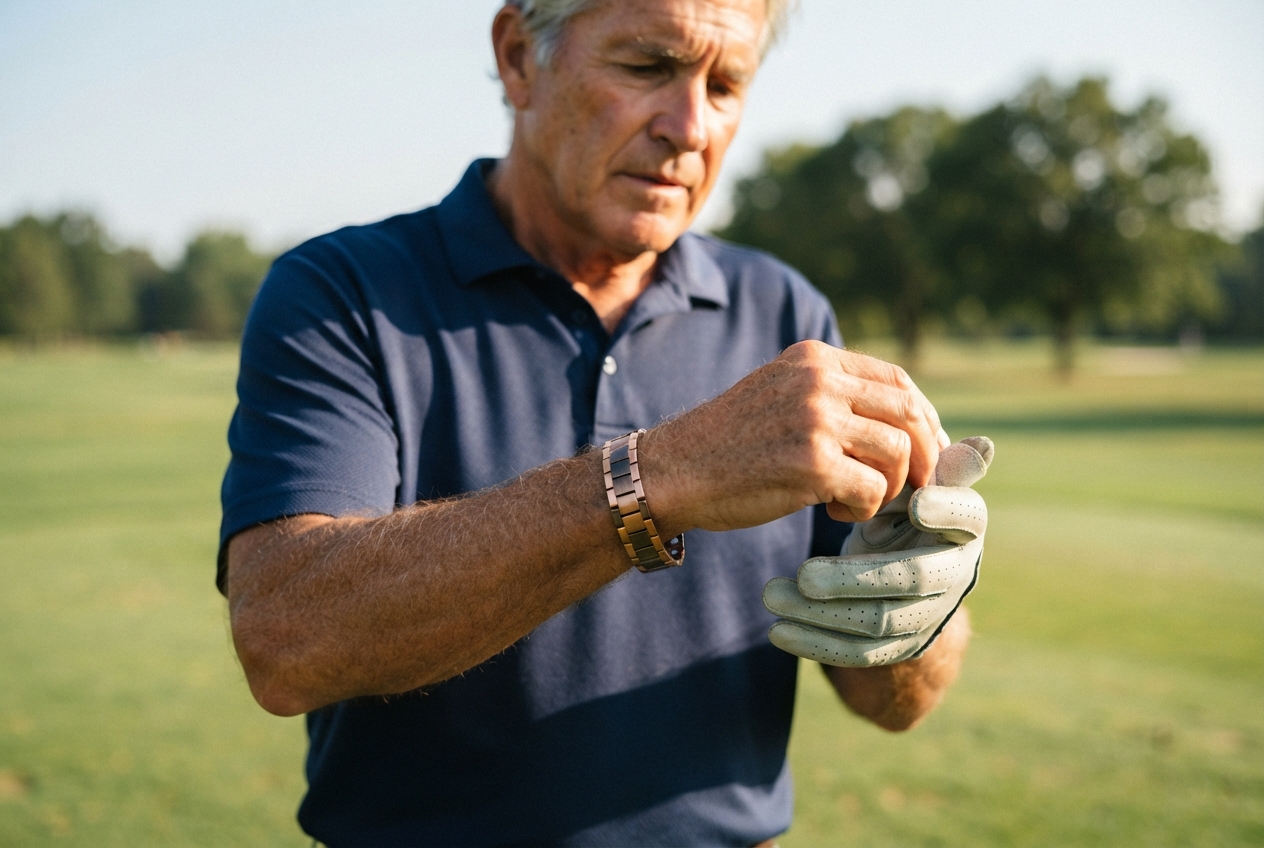
Athletic and outdoor hobbyists frequently wear open-cuff metallic bands during morning sports and activities.
Another giveaway was the setting itself. The gentlemen in the photo were dressed in casual collared shirts, typical for an early morning golf foursome, a weekend walking group, or a community gardening meetup. This specific style of open-ended, dual-toned band has been a staple in pro shops, sporting catalogs, and country club pro desks for decades.
The Reveal: The Story Behind the Copper Cuff
The mystery piece in the photograph is a classic copper cuff bracelet, often crafted with embedded rare-earth magnets along the inner rim and finished with decorative stainless steel or sterling silver inlay.
These pieces are widely worn by active adults, tradespeople, athletes, and seniors. But why was the entire table wearing the exact same design?
Handcrafted multi-metal cuffs blend traditional metallurgy with modern open-cuff styling.
The answer comes down to peer recommendations and generous gifting. When someone in a sports group or morning coffee circle finds something that brings them comfort or simply looks handsome on the wrist, they share it with their closest friends.
“My dad bought three of these exact cuffs online after his morning walking buddy mentioned it eased his grip stiffness. Within a month, every guy at their Saturday table had one on their wrist.”
Brands like Willis-Judd and Sabona popularized these wider, braided styles specifically to offer a bold, masculine design. Many buyers pick up multi-packs as holiday gifts or tournament favors, creating an accidental “uniform” among close-knit friend groups.
Folklore, Science, and the Famous Green Skin Mark
The practice of wearing copper next to the skin dates back thousands of years. Civilizations in ancient Greece, Egypt, and Rome utilized copper bands, believing that the metal helped soothe stiffness in hard-working joints.
Modern versions often pair raw copper with small neodymium magnets placed directly against pulse points. Supporters suggest that the combination supports blood flow and eases discomfort in the wrists and fingers after a long day of yard work or swinging a golf club.
Modern clinical research generally attributes the pain relief to a strong placebo effect rather than transdermal mineral absorption. However, for those who wear them daily, that psychological boost and tangible ritual can provide genuine daily comfort. When dealing with morning joint stiffness, anything that helps you feel ready for the day is welcome.
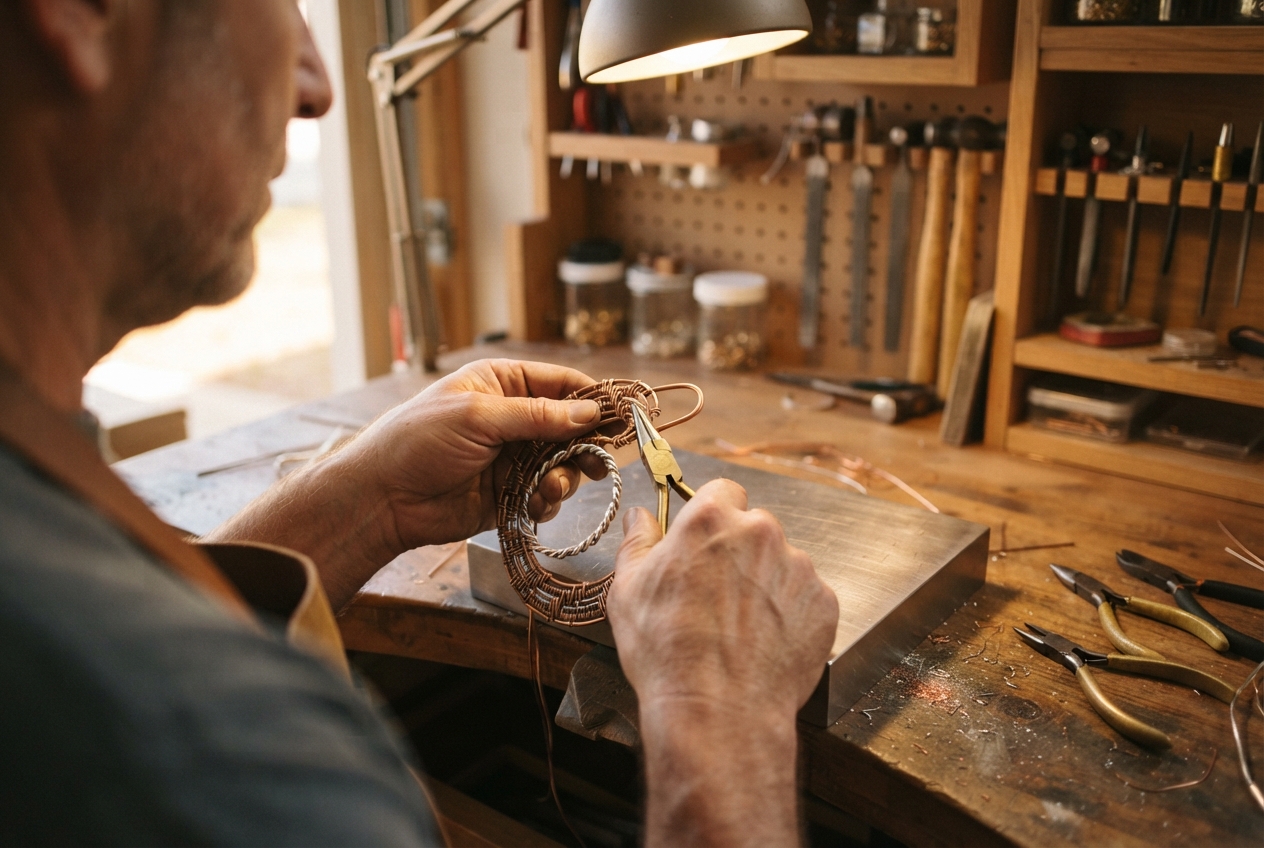
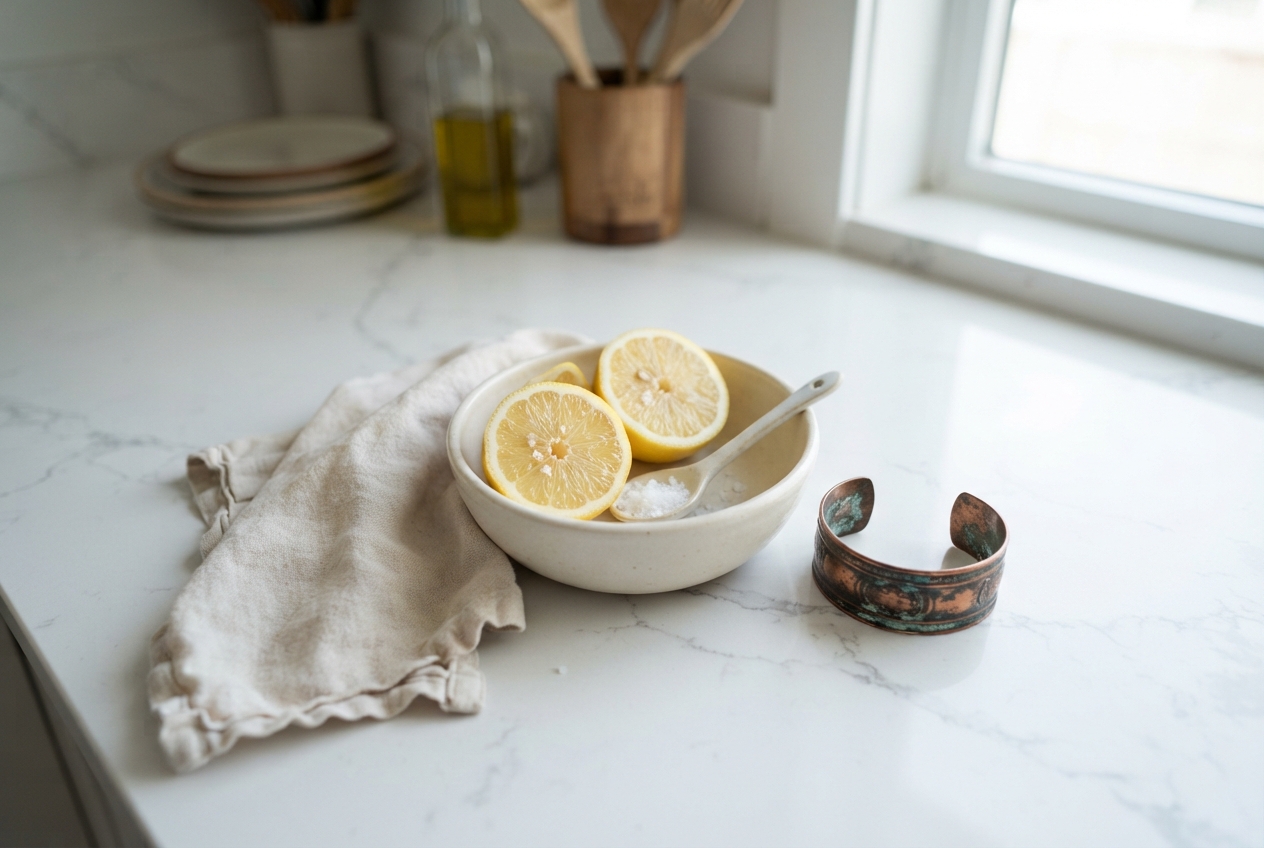
A simple paste of lemon juice and salt quickly restores the warm shine of raw copper without harsh chemicals.
There is also the matter of the green mark left behind on the wrist. Raw copper reacts naturally with sweat and body oils, producing a harmless green copper carbonate residue on the skin. While folk wisdom often claims this means the copper is “working,” it is simply a natural chemical reaction that washes off easily with soap and warm water.
Simple Kitchen Care for Raw Copper Jewelry
Because authentic copper reacts with air and moisture, it naturally develops a dark patina over time. Restoring its original luster requires only a couple of common pantry staples.
- Lemon Juice and Salt: Sprinkle a small pinch of fine table salt over half a freshly cut lemon. Rub it gently over the metal surface to dissolve oxidation within seconds, then rinse with warm water.
- Baking Soda Polish: Mix baking soda with a splash of fresh lemon juice or warm water to create a soft paste. Gently brush it across the braided wire using an old soft toothbrush, then dry thoroughly with a cotton towel.
- Smart Sizing Technique: Always put on a cuff by sliding the open gap over the narrowest side of your wrist rather than pulling the ends apart. Constantly bending the metal back and forth will eventually weaken the copper and cause it to snap.
The Lasting Appeal of the Copper Cuff Bracelet
What started as a viral internet mystery ended up highlighting something remarkably warm. That table of friends was not bound by secret oaths or underground societies—just good company, shared stories, and a shared appreciation for an old-school accessory.
Whether worn for traditional wellness, joint support, or simply as a thoughtful gift from an old friend, the humble copper cuff bracelet continues to be a timeless companion on wrists around the world.