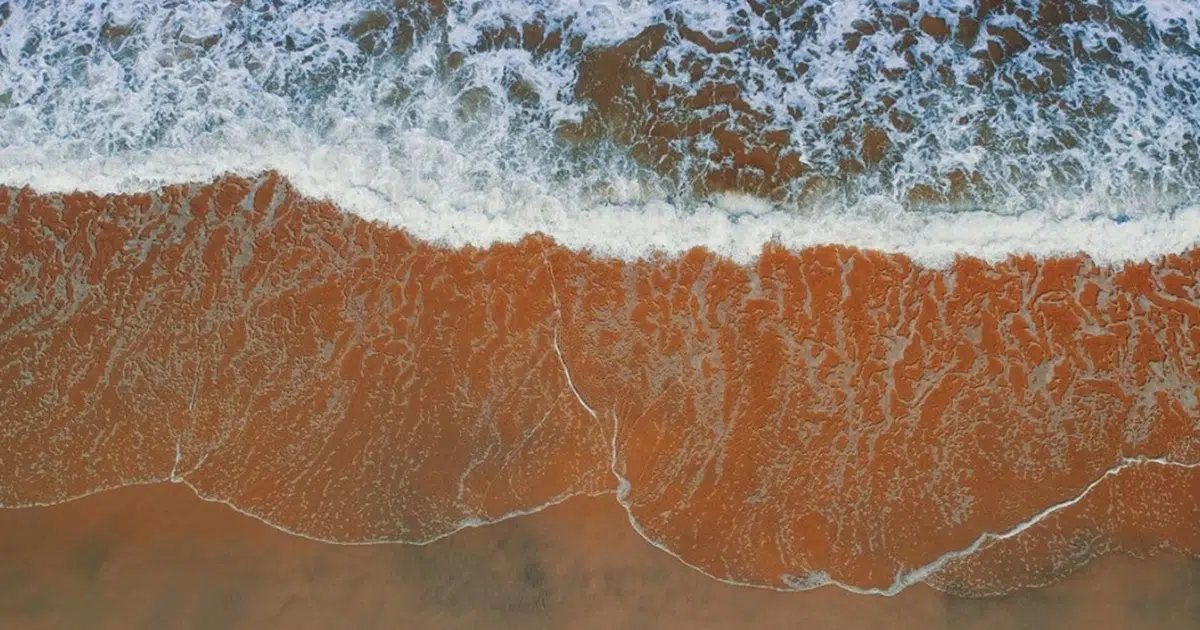
Why the ocean turns red—and what that means for a family beach day
You pack the cooler, load the dog, drive toward that first salt-air smell, and then the water looks like someone poured iced tea into the surf. Dead baitfish along the wrack line. A tickle in the back of your throat that wasn’t there in the parking lot.
That rusty stain is often red tide, a bloom of microscopic algae that can turn a long-planned weekend into a coughing, itchy, “should we even get out of the car” problem. The phrase sounds dramatic. The day-to-day version is simpler: a few checks before anyone’s toes hit wet sand, a rinse plan for pets, and a hard rule about shellfish you didn’t buy from a store.
This guide is for the homemaker who plans the trip, packs the snacks, and still wants the ocean to feel like a treat instead of a gamble.
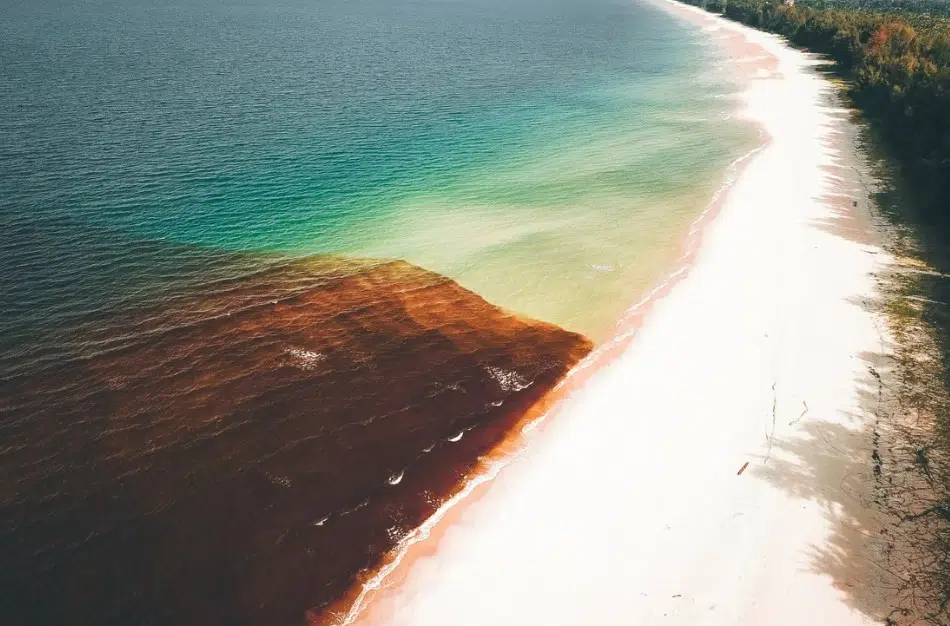
From the air the line is sharp: rusty bloom water meeting clearer turquoise just a few yards offshore.
What red tide actually is
Red tide is a harmful algal bloom. In the Gulf of Mexico the usual culprit is Karenia brevis, a single-celled dinoflagellate that lives in those waters year-round at low levels. When warmth, nutrients, and slack currents line up, the cells multiply until the water itself changes color.
The pigment in those cells can look rust, mahogany, olive, or even stay almost clear while the air still carries toxin. Color is a clue, not a verdict. Some blooms never look red. Some red-looking water is just sediment or decaying plants with no brevetoxin in it.
Blooms have been written down in the Gulf since the 1700s. What has shifted is how long they linger and how often they sit right against the sand. Warmer water and extra nitrogen from rivers and lawns help a bloom last weeks instead of days.
Not every brown patch is red tide
Sargassum mats smell like rotten eggs and pile in ropes on the sand. River plumes after a storm look chocolate-milk brown and usually lack the dead-fish line. Iron-rich runoff can stain a tidal creek without making anyone cough.
The combination that should stop you: off-color water plus fish kills plus that attic-dust tickle in your throat when the wind is onshore. If you only have one of those signs, still check the official map before you swim.
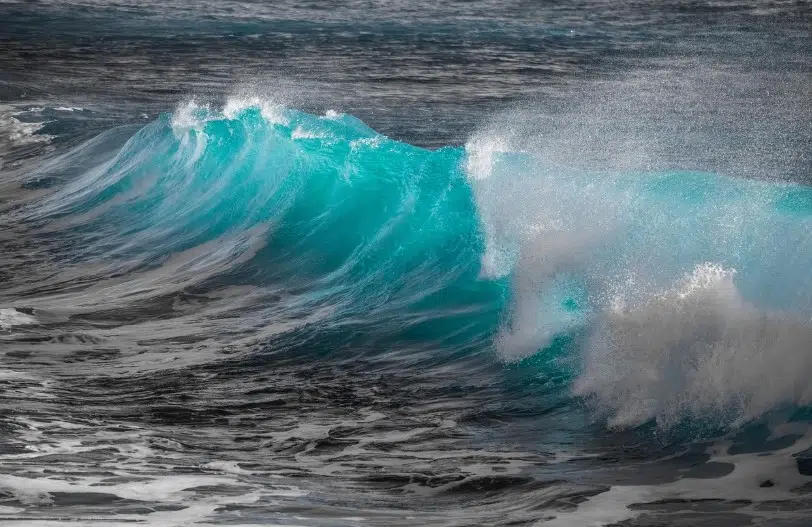
A clean turquoise curl still looks inviting. Color alone never tells you whether toxins are in the spray.
How red tide reaches people, kids, and pets
Waves smash the cells open. Brevetoxins hitch a ride on sea spray. That is why you can feel it standing on dry sand. Eyes burn. The throat scratch starts. People with asthma or chronic lung trouble feel it first and hardest. Air conditioning usually knocks the cough back down within minutes.
Skin contact can sting or raise a rash. Kids who splash and then rub their faces get a double dose. Dogs do worse: they drink seawater, roll in foam, and lick their coats. Foam can hold far more toxin than the water under it. Birds on a screened porch a mile inland can still get a dose when the wind is wrong.
Filter-feeding shellfish—clams, oysters, mussels—pack the toxin into their tissue. Cooking does not break it. Fish, shrimp, crab, and lobster meat from animals that were alive and acting normal is generally considered safe because the toxin does not load into that muscle the same way. Never eat anything that washed up dead.
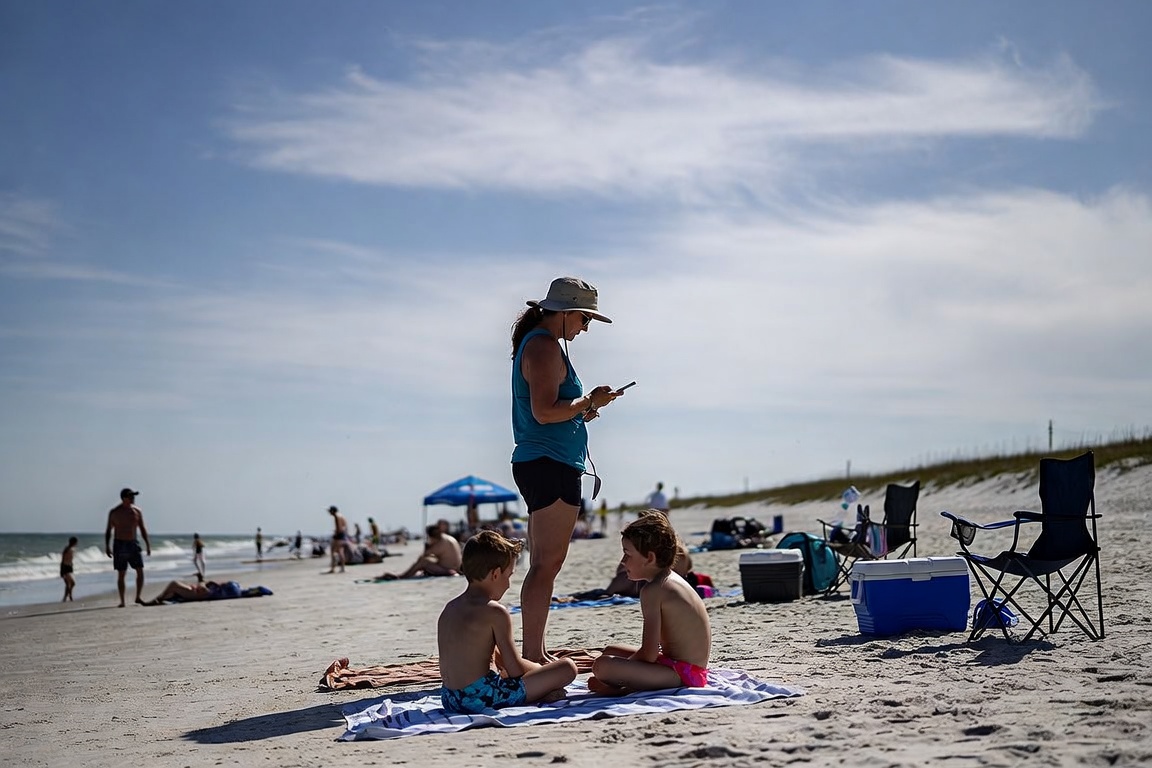
Two minutes on a state HAB page or NOAA forecast beats six hours of “maybe it’s fine.”
The two-minute check before you leave home
Blooms move. Yesterday’s clear beach can be brown by lunch. Pull up your state’s harmful algal bloom page and NOAA’s Gulf red-tide and respiratory forecasts. Florida posts cell-count maps and a recorded hotline. Texas and other Gulf states do the same under slightly different names. Look for “health caution” versus “health alert.” Those words track cell counts, not Instagram color.
When you park, do the analog version. Scan the tideline for fish. Notice the water color in the first twenty yards. Check the flag and any printed advisory at the ramp. If the wind is blowing spray into your face and your throat tightens, that is your answer. Drive ten miles. The bloom is often patchy.
If you already got wet
Rinse with soap and fresh water as soon as you can. Change clothes. Get into air conditioning if anyone is coughing. Over-the-counter antihistamines help some people who do not have chronic lung disease. If breathing gets worse, treat it like any other respiratory flare and call a doctor or poison center.
Keep windows up in the car on the ride home. The spray follows you farther than it looks.
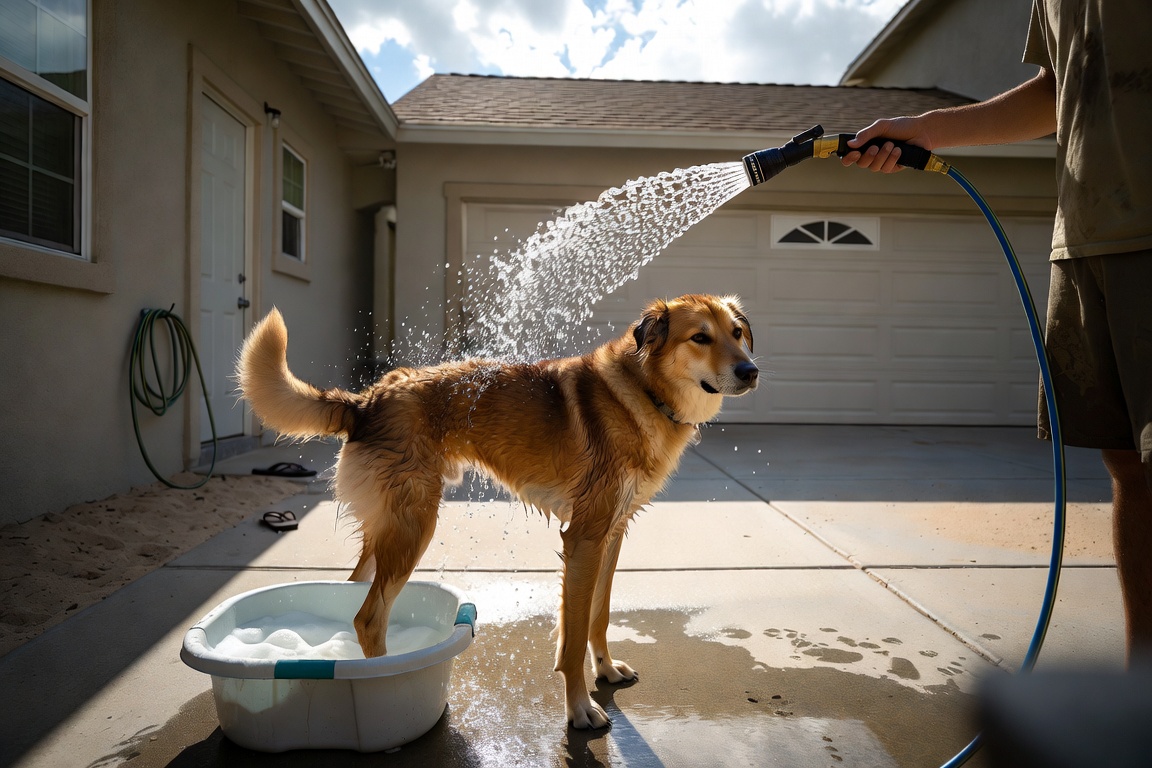
Foam and wet fur hold more toxin than the water itself. Rinse before anyone licks anything.
Pets, kids, and the foam rule
Keep dogs off the wet sand and out of the water when an advisory is up. Carry a jug of fresh water in the trunk. If they get wet anyway, hose them in the parking lot or driveway before they start grooming. Watch for drooling, wobbling, vomiting, or seizures and go straight to a vet. Do not wait to “see if it passes.”
Kids need the same rinse. Sandy hands go in mouths. Teach them not to collect “pretty foam.” If anyone in the family uses an inhaler, pack extras and have an indoor backup plan—museum, pool at the rental, a movie—so the trip does not collapse into resentment.
Cats rarely swim, but they will investigate a dead fish on the deck. Birds that live outside should come in when the wind is onshore during a heavy bloom.

Store-bought, inspected shellfish stay on the menu. Anything you raked yourself during a closure does not.
What you can still cook
Commercial shellfish from open, monitored waters is the safe path. Closures exist because brevetoxin stays in the animal for weeks after the water clears. If you harvest yourself, obey every posted ban. Two to six weeks of clean water is a common purge window, and even that is not a home test you can run in a kitchen.
A whole fish you caught while it was swimming hard is a different story. Gut it, cook it, eat the meat. Skip anything floating or already on the beach. That is the kitchen rule that keeps dinner from becoming a medical story.
If you live near the water year-round
You cannot stop a bloom that starts miles offshore. You can stop feeding it. Use slow-release fertilizer, sweep granules off the driveway, and keep a planted buffer so stormwater does not sheet straight into a ditch. Pick up pet waste. Those small habits are the homemaker version of “don’t make it worse.”
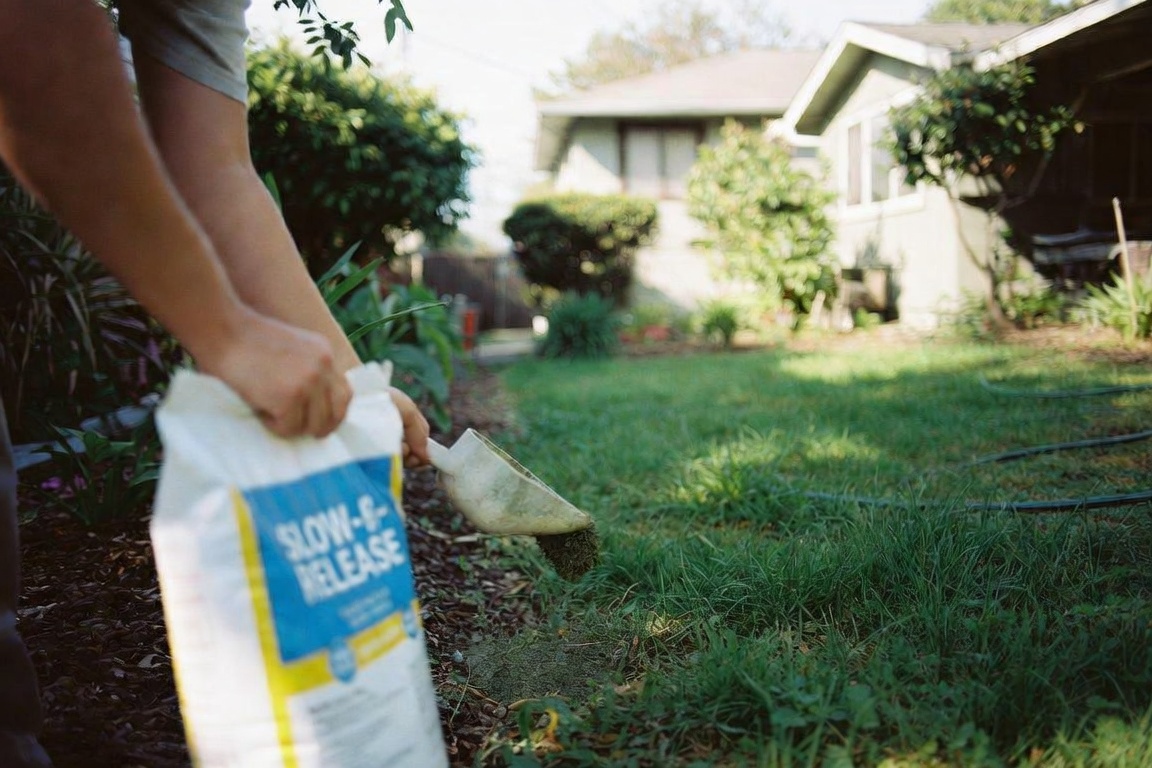
What leaves your yard in a rainstorm can feed the next bloom. Measure twice.
How long it lasts—and when to go back
Some patches fade in a few days. Others sit for months. Because the cells ride currents, a beach that smelled wrong at 9 a.m. can feel fine after the wind shifts. That is why the forecast is daily, not weekly.
When cell counts drop and the respiratory forecast goes green, the water is usually swimmable again for healthy people. Sensitive lungs may still want a short test visit: ten minutes on the sand, then decide.
Trust the combination of official maps, dead fish, and your own throat. Any one of those can lie. All three together almost never do.
A simple weekend script
Night before: check the HAB page and pack a hose-friendly towel for the dog. Morning of: look at the water and the wrack line. If it fails, drive. If it passes, swim, then rinse. Dinner: buy shellfish from a counter that can name the harvest area, or cook the fish you watched come over the rail alive.
The ocean turning red is not a personal failure and it is not a reason to cancel every coastal plan. It is a weather-like event with better maps than we used to have. Use them, rinse the dog, and keep the trip.