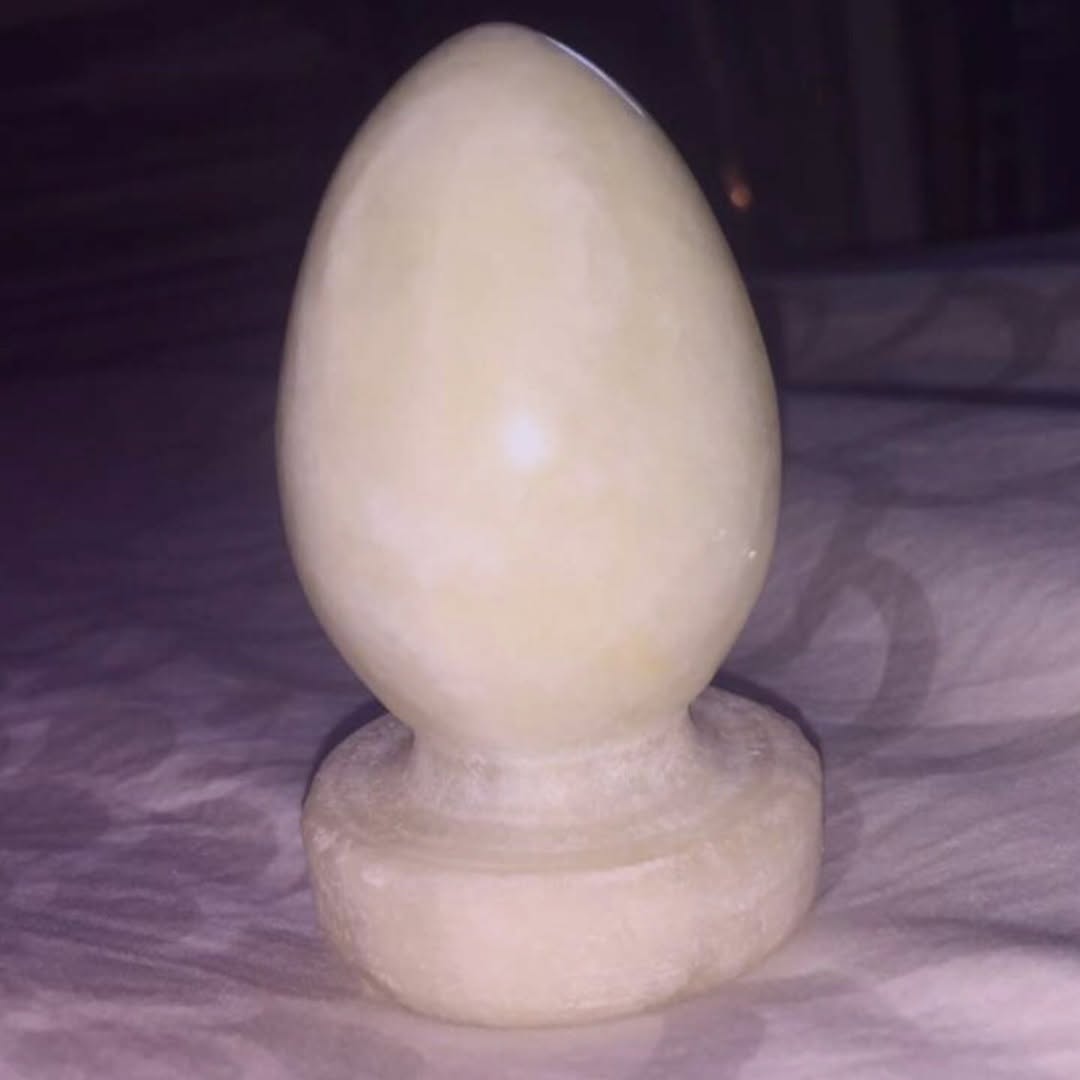
That Little Stone Egg on Grandma’s Desk Has a Job
You know the kind of object I mean: small enough to sit in one hand, smooth as a river stone, oddly heavy, and completely impossible to identify at first glance. If you found an egg-shaped paperweight at Grandma’s house, there is a good chance it was not a fancy decoration at all. It was made to sit quietly on a desk and stop loose papers from taking off.
And honestly, that makes the mystery more fun. Before sticky notes, cloud storage, and desktop organizers, a solid little stone could solve a very ordinary problem: keeping letters, receipts, photographs, and important documents from sliding around.
So, What Was That Marble Egg Used For?
The simplest answer is a stone paperweight. These objects were often shaped as eggs, ovals, spheres, animals, or other compact forms because the shape looked attractive while still putting useful weight in a small package.
If yours has a flat or slightly raised circular base, that detail is especially interesting. The base lets the object stand upright instead of rolling across the desk, while the broad lower section keeps it stable when someone moves a stack of papers nearby.
In other words, it may look like a miniature sculpture, but its original job was wonderfully practical.
Why It Feels Heavier Than It Looks
Pick up a polished stone paperweight and the first surprise is usually the weight. Marble, onyx, granite, alabaster, and other decorative stones can pack plenty of mass into a surprisingly small object.
That heft is the whole trick. Place it on a few sheets of paper and the weight creates enough downward pressure to keep them from shifting when a fan blows, a window is open, or somebody walks past the desk.
Pro Tip: If you are trying to identify an old desk object, do not judge it only by appearance. Weight, balance, the underside, and signs of wear can tell you more than a polished top surface.
How to Tell a Real Paperweight From a Simple Decoration
Not every stone egg sitting on an old shelf was sold as a paperweight. Some were made purely for decoration, while others could serve several purposes around the house. Still, a few clues can help.
- It has a stable base: A deliberately flattened bottom suggests the maker expected it to sit on a desk or shelf.
- It is compact and dense: A heavy object that fits comfortably in one hand is well suited to holding paper.
- The surface is polished: Smooth stone was pleasant to handle and gave the piece a finished, gift-worthy appearance.
- There is no obvious mechanical function: No handle, blade, opening, or moving part often points toward a decorative desk accessory.
- The underside may show a clue: Look for felt, cork, a sticker, a stamped mark, or an old price label.
However, these clues are not proof by themselves. A decorative stone object can look almost identical to a functional paperweight, so avoid treating one visual feature as a final identification.
Check the Bottom Before You Call It Antique
This is where the investigation gets interesting. Turn the object over carefully and inspect the base under good lighting.
A small manufacturer sticker may reveal a store, country of origin, or approximate era. Felt that has become dusty or compressed can also suggest years of use on a desk. Meanwhile, a completely unmarked underside is common and does not automatically mean the object is homemade or rare.
If you see a signature, stamp, engraved initials, or a printed label, photograph it before cleaning anything. Old marks can be surprisingly useful when comparing the piece with vintage desk accessories or stone paperweights sold by particular makers.
Do Not Scrub the Mystery Away
One common mistake is reaching for a strong household cleaner immediately. That can damage a polished stone surface or remove a fragile old label.
Instead, start with a soft, dry cloth. If the material clearly tolerates moisture, use a barely damp microfiber cloth and dry it afterward. For an unknown stone, avoid experimenting with acidic cleaners such as lemon juice or vinegar, because some stones can react badly to acids.
When Did Paperweights Become Popular?
The basic idea is much older than the classic desk paperweight. People have always needed ways to keep loose sheets from moving, so almost any small heavy object could do the job.
Purpose-made paperweights became more recognizable as desk accessories during the 18th and 19th centuries, when paper use expanded and writing desks became common in homes and offices. By the 19th century, decorative paperweights had become popular objects in their own right.
Some were simple stone pieces. Others were made from glass and could contain colorful designs, flowers, or intricate patterns. The important point is that there was never one universal inventor of the paperweight.
Who Made the Stone Egg?
Without a maker’s mark, exact identification is difficult. Similar stone paperweights were produced by many manufacturers, workshops, souvenir companies, and home décor sellers over the years.
That means the object could be an inexpensive desk accessory, a travel souvenir, a gift, or a decorative piece that happened to double as a paperweight. Its appearance alone cannot establish its age, origin, or monetary value.
If you are researching an inherited piece, record its dimensions, weight, material, markings, and condition. Those details are much more useful than simply searching for “old marble egg.”
Could It Be Marble, Onyx, or Something Else?
It might be marble, but polished decorative stone comes in many varieties. Onyx can show striking bands or translucent areas, while marble often displays irregular veining. Alabaster can have a softer, almost creamy appearance and may feel less dense than some other stones.
There is also a catch: photographs can make different stones look remarkably similar. Therefore, do not assume the material based only on color. A stone specialist or experienced antiques dealer can sometimes identify the material more reliably.
Why the Egg Shape Makes Sense
The egg shape is not just about looks. Rounded forms are comfortable to hold, have no sharp corners, and can make a simple desk object feel more decorative.
With a flat base, the shape also combines stability with a smooth silhouette. It is the sort of object that can sit beside a writing pad for decades without demanding attention.
Smart Ways to Use One Today
You do not need a desk covered in paperwork to give a vintage paperweight a job. Use it to keep recipe cards from curling near the stove, hold a small stack of notes on a home office desk, or keep photographs from sliding around on a shelf.
For a modern setup, pair it with a desktop organizer, document tray, or cable-management box. The stone adds weight without needing batteries, plastic parts, or another gadget to remember to charge.
If the underside is rough, add a thin felt pad before placing it on delicate wood. That small step can prevent scratches while preserving the piece’s usefulness.
Common Mistakes When Identifying Old Household Objects
- Assuming old means valuable: Age and rarity are different things.
- Trusting one photo: Shape alone rarely proves an object’s original purpose.
- Cleaning before documenting: Labels and markings may be the best clues you have.
- Calling every polished stone marble: Several natural stones can look similar.
- Ignoring the underside: The least attractive part may contain the most useful information.
Actually, the most useful mindset is to treat the object like a tiny investigation. Start with what you can observe, write down the details, and only then compare it with known examples.
The Little Desk Object That Outlived Its Job
So, if you found that smooth stone egg at Grandma’s house, the mystery probably has a wonderfully simple answer: it was likely a paperweight, or at least a decorative stone object designed to work as one.
That may sound ordinary, but ordinary household objects often tell the best stories. Before digital files replaced piles of paper, someone needed to keep an important letter from sliding away. A polished stone did the job quietly, year after year.
And if the piece has a maker’s mark, unusual stone, original label, or family story attached to it, there may be more to investigate. Until then, give the little egg a place on a desk, stack a few papers beneath it, and let it do what it was probably made to do.