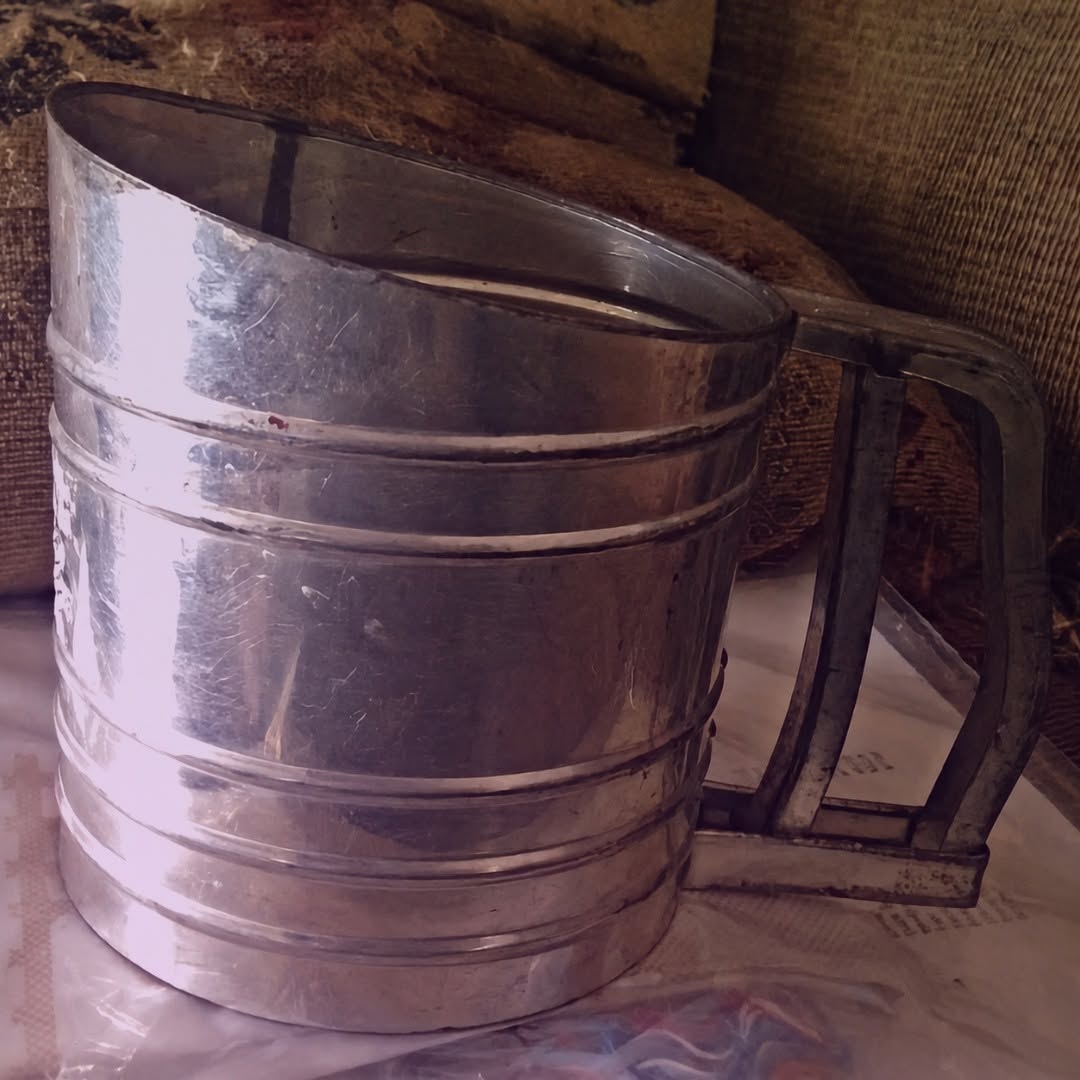
That little metal cup with a crank may look like a strange relic today, but if you grew up around an older kitchen, you may remember exactly what it did. A vintage flour sifter was once a regular part of baking day, sitting beside the mixing bowl and getting plenty of use whenever a cake, biscuit, pie, or loaf was on the menu.
Why Old Kitchens Needed a Flour Sifter
Before modern packaging made flour easier to store and handle, flour could arrive in heavier paper bags, bins, or large household containers. It could settle, compress, and develop stubborn little lumps before it ever reached the mixing bowl.
That is where the hand flour sifter earned its place. Turn the crank, squeeze the handle, or shake the screen, and the compacted flour was broken apart. At the same time, the flour became more evenly distributed and easier to measure.
There was also a practical reason for checking flour before baking. Sifting could help remove bits of unwanted material that might have found their way into stored flour. Today, commercially processed flour is generally much more consistent, so that particular job is far less important.
What Actually Happens When You Sift Flour?
The process sounds simple because it is. Flour passes through a fine mesh while a mechanical screen breaks up clumps and spreads the particles apart.
For certain recipes, especially delicate cakes and pastries, that change can affect the texture. Sifting can also make it easier to combine dry ingredients such as flour, cocoa powder, baking powder, and spices without leaving dense pockets behind.
However, here is the part many people miss: sifting is not automatically required for every recipe. If a recipe says “1 cup sifted flour,” the wording matters because the measuring method can change the amount of flour you use.
How to Use a Vintage Flour Sifter Today
Want to put that old kitchen tool back to work? Start with a clean, dry sifter and place a bowl underneath it.
Add a modest amount of flour rather than filling the chamber to the rim. Then turn the crank slowly or operate the squeezing mechanism, depending on the design.
As the flour falls, watch for hard clumps. If the screen becomes clogged, stop and gently tap or shake the sifter instead of forcing the mechanism.
Pro Tip: If you are using an antique sifter for food, inspect it carefully first. Look for peeling coatings, flaking metal, heavy rust, damaged mesh, or loose parts. A vintage tool can be charming without necessarily being suitable for modern food preparation.
The Measuring Trick That Can Change a Recipe
This is one of the most useful details to remember. “1 cup flour, sifted” generally means measure the flour first and then sift it. “1 cup sifted flour” means sift the flour before measuring it.
Those two methods can produce different amounts in the measuring cup because sifting changes how densely the flour sits.
For older family recipes, this little distinction can explain why a handwritten recipe sometimes behaves differently from a modern version. If your cookies suddenly seem dry or your cake batter feels unusually thick, the measuring instruction may be worth checking.
Why This Simple Tool Still Has Fans
Modern kitchens have no shortage of electric appliances, silicone gadgets, and specialty baking equipment. Yet a hand flour sifter has a quality many newer tools struggle to imitate: it is simple.
There is no motor to maintain. No charging cable. No settings menu. You add flour, work the handle, and you are done.
For home bakers who enjoy traditional recipes, a stainless steel flour sifter can still be useful. A fine-mesh kitchen sieve is another inexpensive option, especially when you need to sift a small amount of flour or combine several dry ingredients.
Naturally, the best choice depends on the recipe. A crank-style sifter is convenient for larger batches, while a small fine-mesh sieve gives you more control when dusting flour or powdered sugar.
Vintage Sifter, Modern Sieve, or Electric Tool?
If you are deciding what belongs in your kitchen drawer, think about how you bake.
A vintage-style hand sifter is fun for traditional baking and works without electricity. A stainless steel sieve is lightweight, easy to rinse, and useful for everything from flour to sauces. An electric flour sifter can make sense for someone who regularly prepares large quantities of dry ingredients.
For most everyday home baking, however, you do not need an expensive machine. A sturdy sieve or well-made hand sifter can handle the job without taking over your countertop.
Common Flour-Sifting Mistakes to Avoid
One mistake is assuming every flour must be sifted. Many modern recipes are written with unsifted flour in mind, so adding an extra sifting step can be unnecessary.
Another is packing flour tightly into a measuring cup. Instead, spoon flour into the cup and level the top when the recipe calls for measuring by volume.
Also, do not crank an old sifter aggressively when the mechanism starts sticking. The internal screen or rotating parts may be fragile, particularly on decades-old kitchen tools.
Pro Tip: For a stubborn clump, use a spoon to break it apart after the flour reaches the bowl. Forcing an antique mechanism can turn a useful collectible into a broken kitchen decoration.
How to Clean and Store One
If your sifter is modern stainless steel, check the manufacturer’s cleaning instructions first. Many can be washed with warm water and mild dish soap, followed by thorough drying.
Vintage pieces require more caution. Avoid soaking an old tool if water could remain trapped inside the mechanism, because hidden moisture can encourage corrosion.
Instead, brush away dry flour, wipe the exterior with a slightly damp cloth, and dry every accessible surface. If the tool shows significant corrosion or damaged food-contact surfaces, keep it as a display or conversation piece rather than using it for cooking.
The Nostalgia Behind the Flour Sifter
Part of the appeal is not really about flour at all. It is about the rhythm of an older kitchen.
There is something wonderfully ordinary about the sound of a hand crank turning over a mixing bowl, flour whispering through a metal screen, and a recipe card sitting nearby with smudges from years of use.
These tools also remind us that many kitchen routines once depended on hands rather than buttons. A single utensil could be used for years, repaired when necessary, and passed from one household to another.
That is why an old flour sifter can trigger such strong memories. It may have belonged to a grandmother, sat in a pantry for decades, or appeared every Saturday morning when someone started baking.
Could You Still Use an Old Flour Sifter?
Maybe. But condition matters more than age.
If the mesh is intact, the surfaces are clean and food-safe, and the mechanism works without shedding flakes or debris, it may still be useful. When there is rust, peeling finish, cracked material, or questionable internal buildup, replacing it with a new stainless steel flour sifter is the safer practical choice.
And honestly, there is no shame in buying a modern version that simply looks vintage. You get the old-fashioned hand-crank experience without wondering what has been hiding inside the mechanism since 1968.
That “Mystery” Kitchen Tool Was More Useful Than It Looks
So, if you spotted this little hand-crank gadget in an old kitchen drawer and wondered what it was, now you know. The vintage flour sifter was a practical baking tool designed to break up clumps, aerate flour, and help bakers work with dry ingredients more consistently.
Today, you may not need to sift every bag of flour. Still, the tool has earned its place in kitchen history—and for anyone who enjoys classic baking, a good flour sifter can still be a surprisingly handy piece of equipment.
The next time you see one at a flea market, in a family kitchen, or tucked into an old recipe box, you might look at it a little differently. It is not just an antique gadget. It is a small reminder of how much work used to happen by hand.