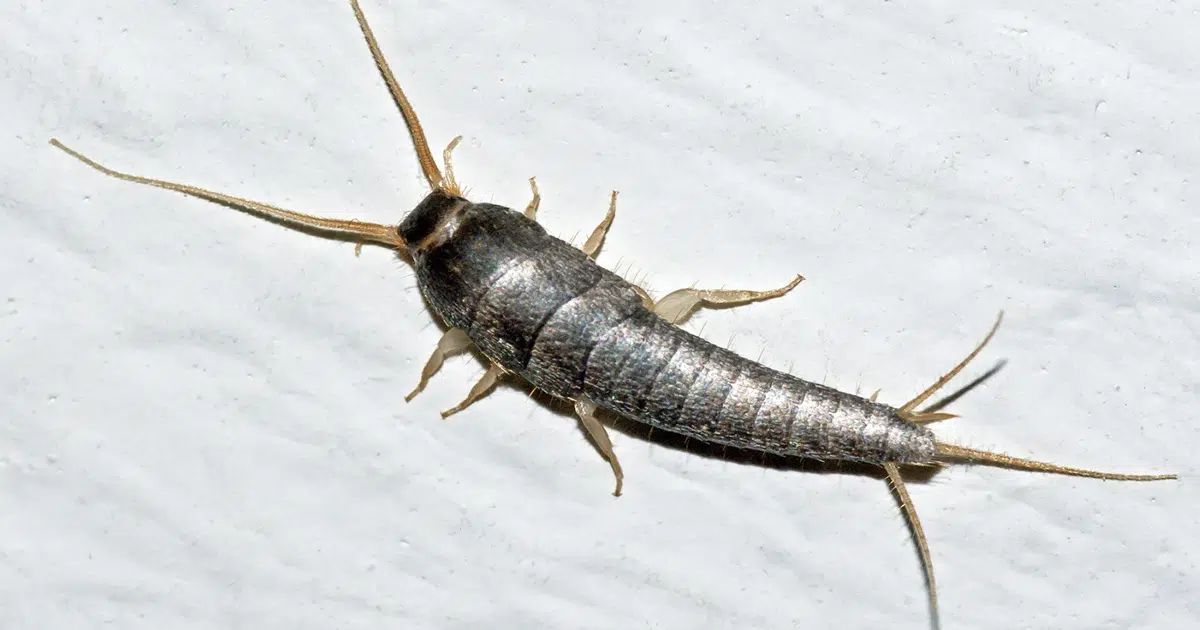
You turn on the bathroom light half-awake at 6:00 AM. Suddenly, a quick metallic streak darts across your clean tile floor. Seeing a silverfish scurry into hiding is enough to ruin your morning instantly.
Fortunately, these prehistoric pests are completely harmless to humans. However, they can chew through your wallpaper, books, and dry pantry goods in record time. Let’s look at why these sneaky pests showed up and how to eliminate them permanently.
What Are Silverfish and Why Are They in Your Home?
Silverfish are ancient, wingless insects that have survived for hundreds of millions of years. Actually, they thrive in indoor spaces because our modern homes provide endless shelter, high humidity, and steady moisture.
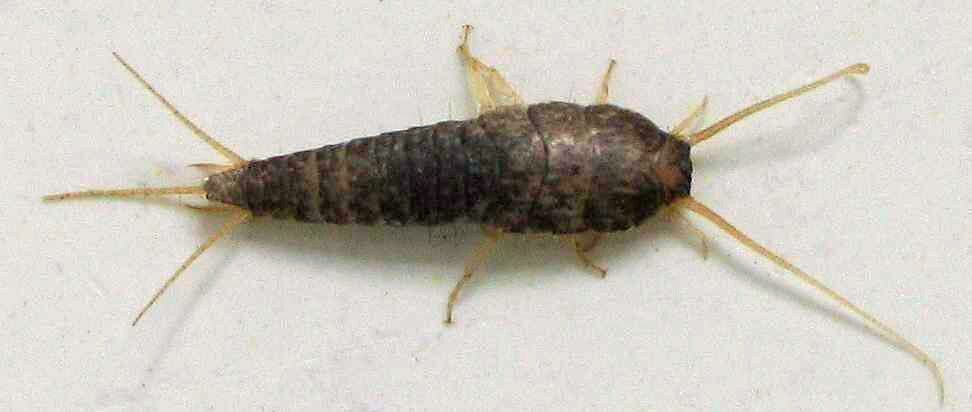
Notice the distinct three-pronged bristle tail and tapered shape that make silverfish instantly recognizable.
These bugs measure about half an inch to an inch long. In addition, their tapered, carrot-shaped bodies move in a distinctive, fish-like swimming motion. They are nocturnal, so you rarely spot them during bright daylight hours.
Above all, silverfish enter your home chasing two essentials: excess humidity and starchy carbohydrates. If your bathroom holds steam or your basement feels damp, they will gladly move straight in.
Moreover, they feed on polysaccharides found in everyday household items. Consequently, they love feasting on wallpaper paste, book bindings, old cardboard, pantry cereal, and cotton fabrics.
Early Warning Signs of a Silverfish Infestation
Because silverfish hide inside dark wall voids and subfloors, visual sightings often mean more lurk behind your walls. Watch for these subtle warning signs around your living spaces:
- Yellow stains: Mysterious yellow streaks or powder left behind on linen closet shelves and old paper.
- Irregular feeding holes: Tiny notches on book pages, cardboard boxes, cereal boxes, or cotton clothing.
- Shed exoskeletons: Translucent, paper-thin shells left along dark baseboard edges and closet corners.
- Pepper-like droppings: Tiny, dark fecal pellets gathering under bathroom sinks or inside dark pantry cabinets.
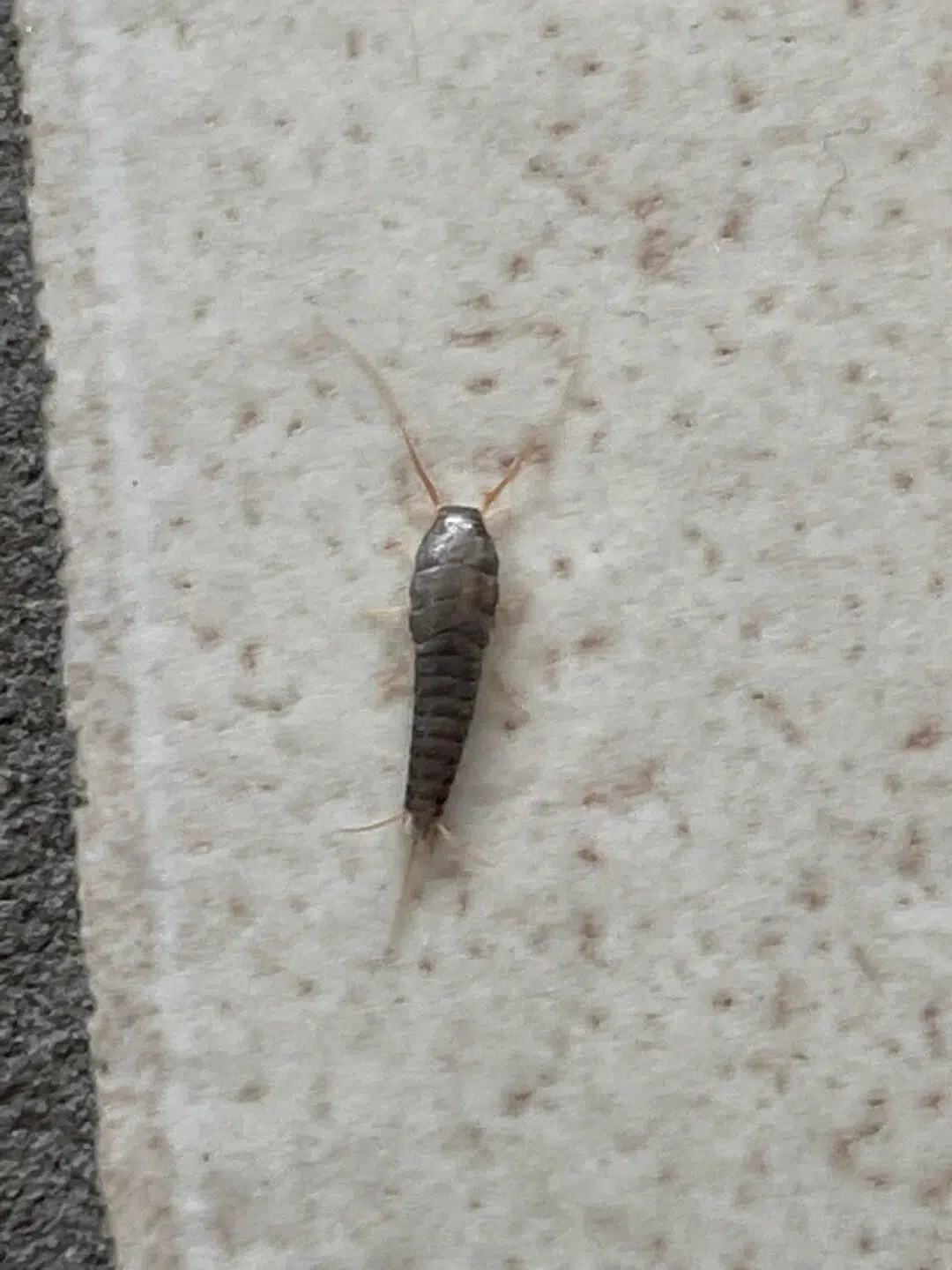
Spotting one on your carpet or flooring usually means there are dozens more hiding out of sight.
Step 1: Lower Indoor Humidity to Starve Them Out
Silverfish require relative humidity levels above 75% to thrive and reproduce. Therefore, drying out your living space is your strongest first defense.
Run a high-capacity smart dehumidifier in your basement, crawl space, and laundry room. Your goal is to keep baseline indoor humidity consistently below 50% across all seasons.
In addition, run your bathroom exhaust fans for at least twenty minutes after every hot shower. Check under your kitchen and bathroom sinks regularly for tiny plumbing leaks, dripping pipe traps, or damp supply lines.
Step 2: Clear Out Their Hidden Food Supply
Once you cut off moisture, you must eliminate their carb buffet. Silverfish can survive for months without food, so thorough pantry management is essential.
Move your flour, rice, rolled oats, and dry pet food into heavy-duty, airtight pantry storage containers. Discard flimsy cardboard packaging immediately, as glue-backed paper boxes are their favorite midnight snack.
Next, declutter old storage bins. Swap out musty cardboard boxes in your attic or closets for secure, airtight plastic storage totes to protect your valuable keepsakes.
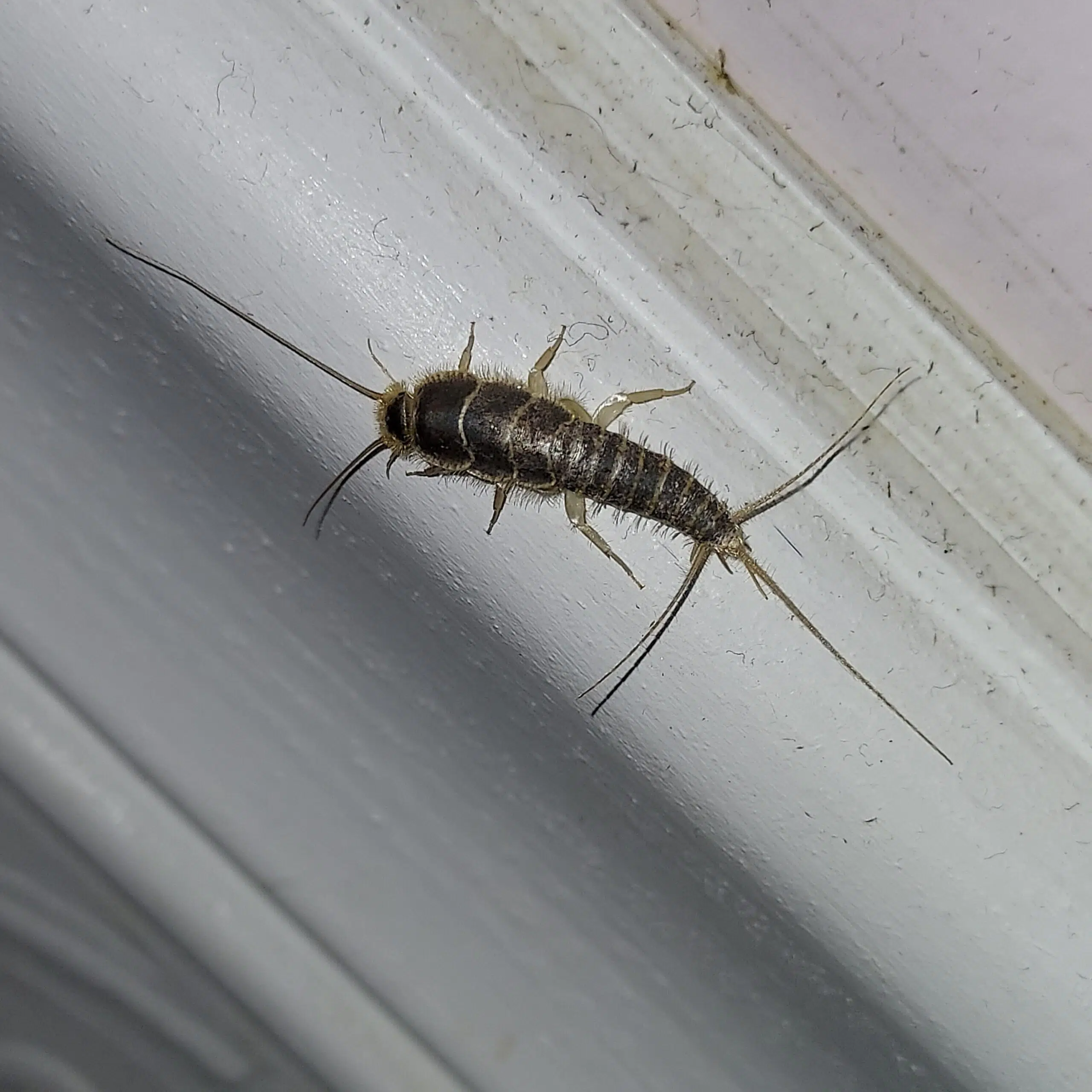
Silverfish thrive in dark baseboard gaps where moisture and dust accumulate.
Step 3: Seal Gaps, Baseboards, and Entry Points
Silverfish squeeze through hairline cracks around wall trim, plumbing pipes, and heating vents. Naturally, blocking these access points traps them and prevents fresh invaders from moving inside.
Grab a tube of paintable silicone acrylic caulk and inspect every room systematically. Seal wide gaps along baseboards, door moldings, bathroom vanity kicks, and window frames.
Furthermore, use expanding foam or metal mesh around drain pipes where they enter drywall. A tightly sealed wall boundary makes your living areas instantly inhospitable to all kinds of crawling pests.
Step 4: Use Non-Toxic Elimination Methods
You do not need heavy chemical sprays to clear out these insects. Instead, rely on natural, mineral-based fixes that destroy their protective waxy outer coating without harming your pets.
Lightly dust food-grade diatomaceous earth along baseboards, behind large appliances, and inside dark closets. When a silverfish walks through this fine powder, it dehydrates and dies within hours.
You can also set simple DIY jar traps. Wrap the outside of a smooth glass mason jar with textured masking tape, then drop a small piece of bread inside. The pests climb up the rough tape easily, but they cannot grip the smooth interior glass to escape.
Pro Tip: Natural Scent Repellents
While scents alone will not eradicate an active breeding nest, silverfish dislike strong essential oils. Wipe your closet shelving with cedarwood, sweet citrus, or lavender oil sprays to keep clean linens fresh and pest-free.
When to Call a Professional Pest Control Expert
Have you sealed entry cracks, maintained low humidity, and still spot silverfish scurrying across floors daily? If so, you may be dealing with a severe infestation nested deep within your attic insulation or subflooring.
In this situation, contact a licensed professional pest control company. They can deploy targeted, safe perimeter treatments and inspect hidden structural voids that DIY tools simply cannot reach.
Keep Your Home Free of Silverfish for Good
Dealing with an insect invasion is never pleasant, but catching the problem early saves your books, linens, and wallpaper from costly damage. Focus on maintaining dry air, sealing cracks, and locking up dry pantry goods.
Once your indoor environment stays dry and clutter-free, the stubborn silverfish problem will quickly become a thing of the past. Consistency is your best tool for long-term pest prevention.